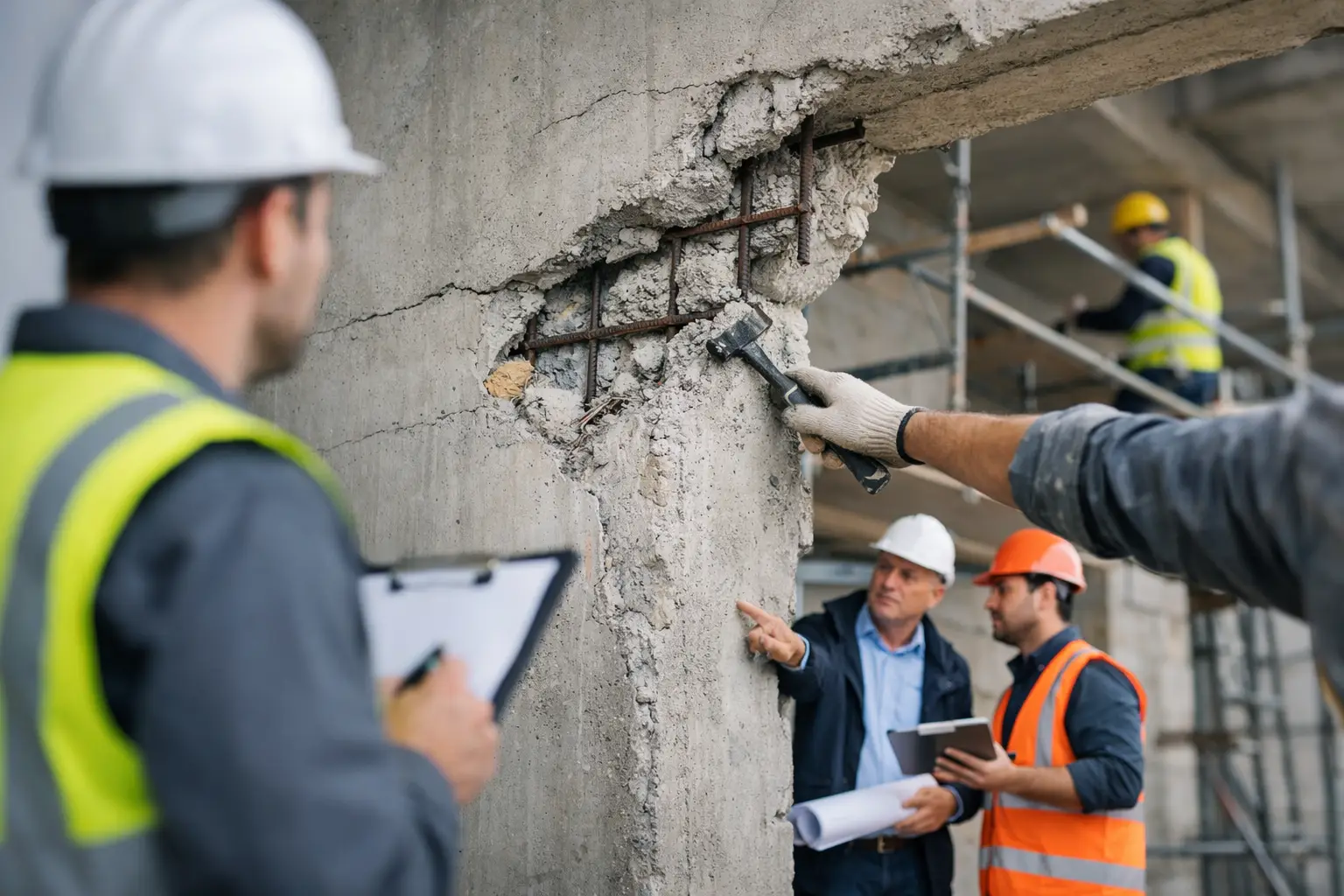
A crack that keeps reopening, a slab that shows movement, or concrete spalling that exposes reinforcing steel is rarely an isolated defect. In most cases, the structural defect rectification process begins when building stakeholders realise the visible damage is only the surface expression of a deeper problem. For strata managers, owners corporations, developers, and asset owners, the real risk is not just repair cost – it is acting too early with the wrong scope, or too late after the defect has progressed.
That is why structural rectification should be treated as a disciplined process rather than a repair event. Effective outcomes depend on proper diagnosis, engineering coordination, compliant design, and construction delivery that addresses root cause. Cosmetic patching may improve appearance for a short period, but it does not restore structural performance, manage liability, or protect the asset over time.
What the structural defect rectification process is really meant to achieve
At its core, the structural defect rectification process is about restoring safety, serviceability, and durability. Those three objectives sound straightforward, but they are not always solved by the same intervention. A defect may be structurally significant, primarily durability-related, or the result of water ingress that has begun to compromise structural elements.
For example, concrete cancer may appear to be a localised repair issue, yet the actual driver could be long-term moisture penetration through failed waterproofing or facade joints. Likewise, cracking may be caused by slab deflection, footing movement, corrosion, thermal movement, poor detailing, overloading, or a combination of factors. If the cause is misunderstood, the repair strategy can fail even when the workmanship itself is acceptable.
This is where an investigation-led approach matters. The goal is not merely to repair what is visible. It is to identify why the defect occurred, assess how far it has progressed, determine whether related building elements are affected, and implement a repair methodology that satisfies both engineering requirements and practical site conditions.
Stage 1 – Defect identification and preliminary risk assessment
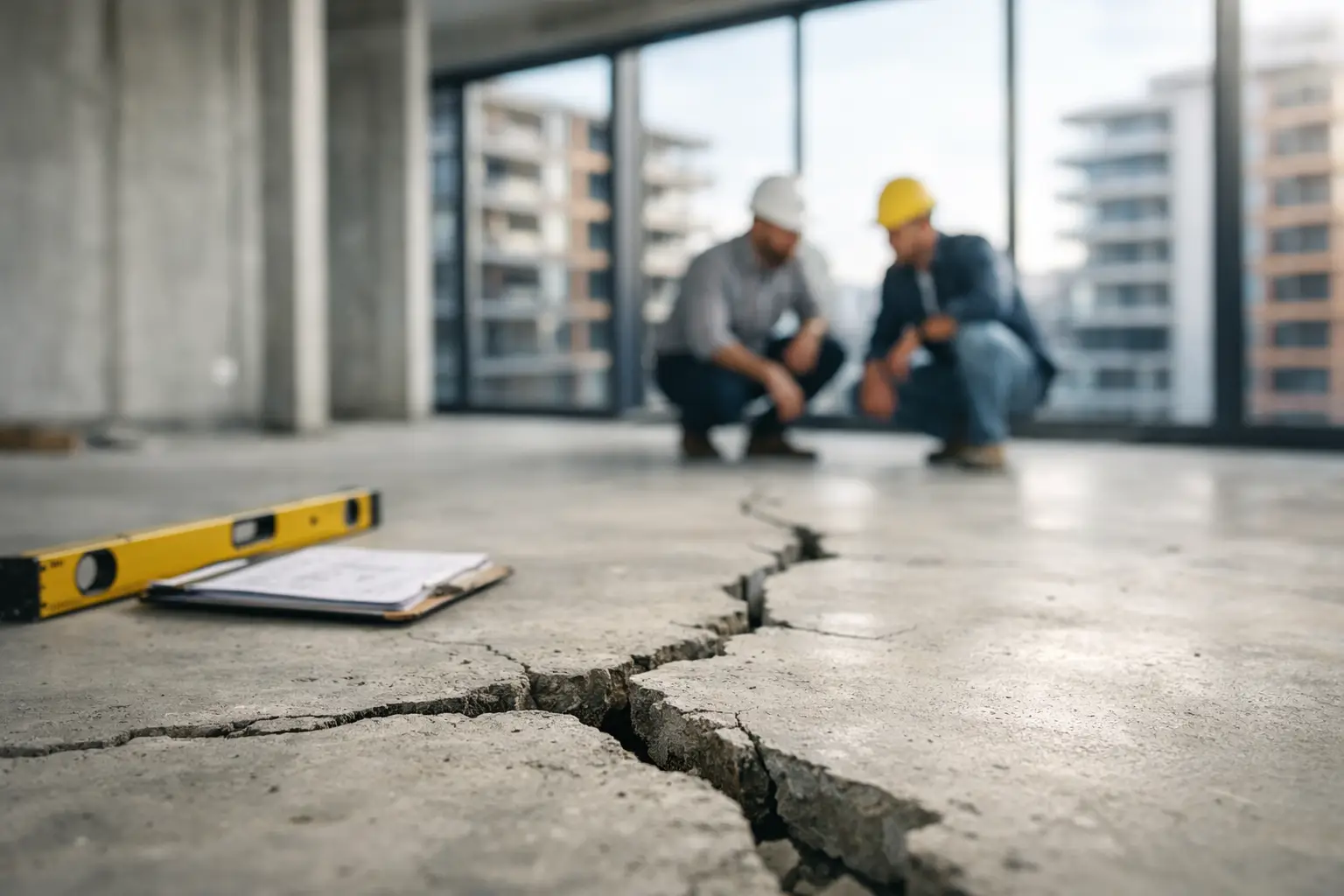
Most projects start with observations from residents, building managers, consultants, or maintenance teams. Common triggers include cracking in structural walls or slabs, water ingress linked to deterioration, signs of movement, rust staining, drummy concrete, façade distress, or recurring repair failures.
At this stage, the priority is to establish the level of risk. Not every defect means the structure is unsafe, but some signs require urgent attention. Progressive spalling, significant displacement, worsening structural cracking, or deterioration in load-bearing elements should never be treated as routine maintenance. A preliminary assessment helps determine whether temporary safety controls, access restrictions, or urgent stabilisation works are required before the full methodology is developed.
For building stakeholders, this early phase is also when documentation becomes important. Existing drawings, prior reports, maintenance records, defect history, waterproofing failures, and earlier repair scopes can all help explain how the issue developed.
Stage 2 – Investigation and root-cause analysis
This is the point where many remediation outcomes are won or lost. A proper investigation does more than confirm that damage exists. It builds the technical basis for the repair strategy.
Depending on the defect, the investigation may include visual assessment, sounding, concrete testing, cover surveys, moisture mapping, crack monitoring, destructive opening-up works, structural review, or facade and waterproofing inspections. In some cases, multiple consultants or registered design practitioners may need to be involved because the defect spans structural, waterproofing, and building envelope systems.
The findings should answer several practical questions. Is the defect active or historic? Is the damage isolated or systemic? Is it caused by design deficiency, construction failure, water ingress, age-related deterioration, lack of movement allowance, corrosion, or environmental exposure? Has the defect affected only finishes, or has it reduced structural capacity or long-term durability?
There is rarely value in rushing through this phase. A narrow investigation can produce a narrow repair scope, and that often leads to variations, delays, or recurrent failures once construction begins.
Stage 3 – Engineering design and rectification methodology
Once the cause and extent of the defect are understood, the next stage is to translate that information into an engineered rectification approach. This is not simply a matter of selecting a repair product. The methodology needs to suit the substrate condition, loading requirements, exposure environment, sequencing constraints, and compliance obligations.
A structural repair design may involve concrete breakout and reinstatement, reinforcement treatment or replacement, crack injection, structural stitching, slab strengthening, section rebuilds, protective coatings, waterproofing integration, facade replacement, or local demolition and reconstruction. In more complex buildings, the final solution may combine several of these.
Trade-offs matter here. A more extensive repair can have higher upfront cost, but it may reduce future maintenance, access costs, and repeat disruption. A localised intervention may be appropriate where deterioration is genuinely isolated, yet it is the wrong choice if surrounding elements are already affected. The best methodology is not always the cheapest initial option. It is the one that fits the building’s condition, expected service life, and risk profile.
Stage 4 – Approvals, compliance, and stakeholder coordination
In regulated environments, structural rectification does not sit outside compliance. Depending on the building type and scope, there may be requirements relating to design declarations, approvals, certification pathways, access management, occupied building constraints, and coordination with strata committees or asset stakeholders.
This stage tends to be underestimated. Even technically sound repair concepts can stall if the documentation is incomplete, consultant responsibilities are unclear, or stakeholders do not understand the scope, programme, and disruption involved. On strata and commercial sites, poor coordination often creates as much project risk as the defect itself.
A disciplined project team should clarify responsibilities early, align design and construction documentation, and communicate the likely sequence of works in practical terms. Residents and occupants may not need engineering detail, but they do need certainty around access, noise, protection measures, staging, and expected duration.
Stage 5 – Construction delivery under controlled conditions
The construction stage is where rectification methodology is tested against real building conditions. Hidden substrate issues, previously concealed deterioration, weather exposure, and occupied-site constraints can all affect sequencing.
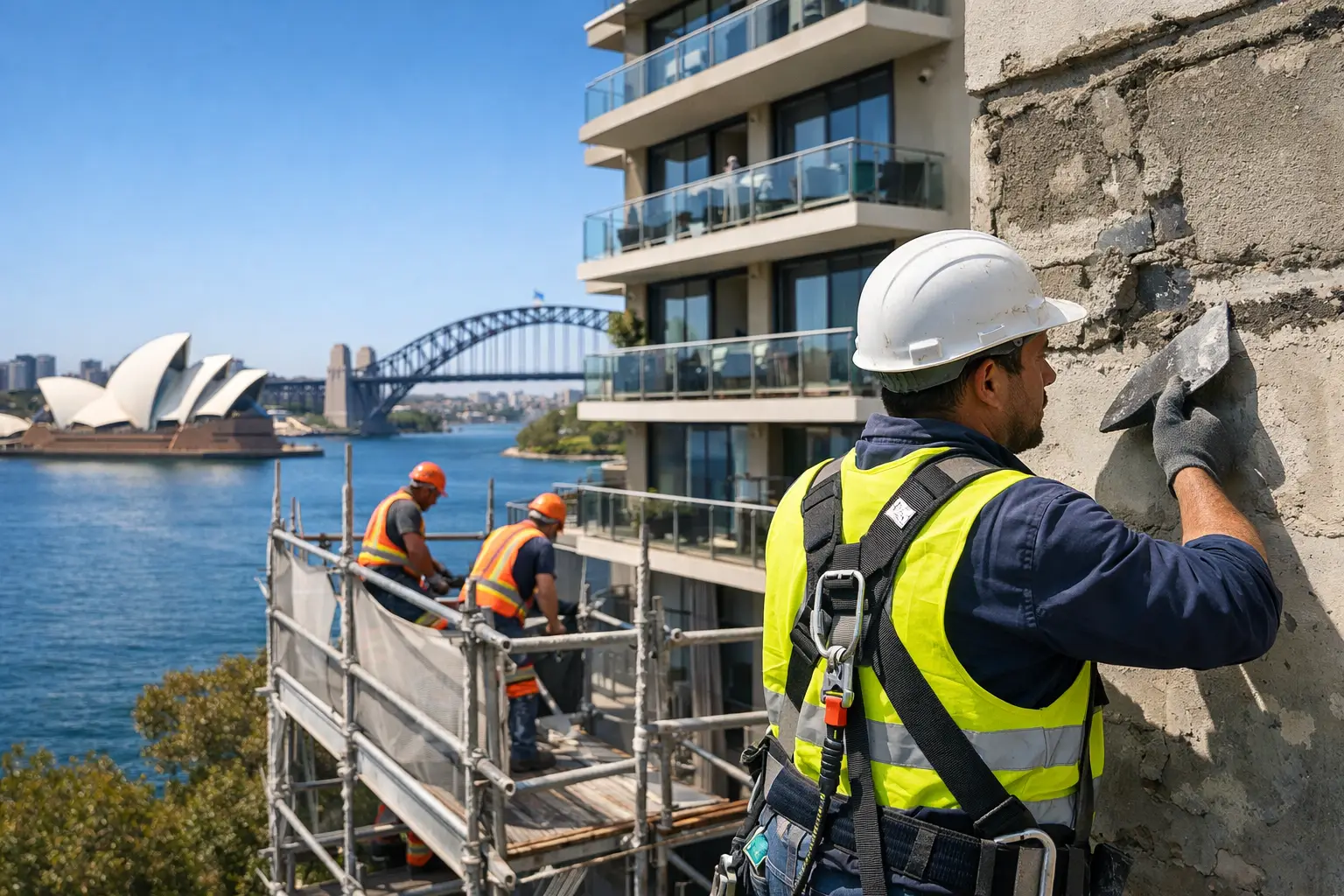
That is why experienced remedial contractors do not treat the works as ordinary replacement construction. Defect rectification often requires staged demolition, temporary support, careful removal around live structure, treatment of adjacent deterioration, and strict quality control around preparation and reinstatement. If concrete repairs are involved, for example, the success of the repair depends heavily on breakout extent, steel preparation, corrosion treatment, bond, repair mortar selection, curing, and interface compatibility with surrounding materials.
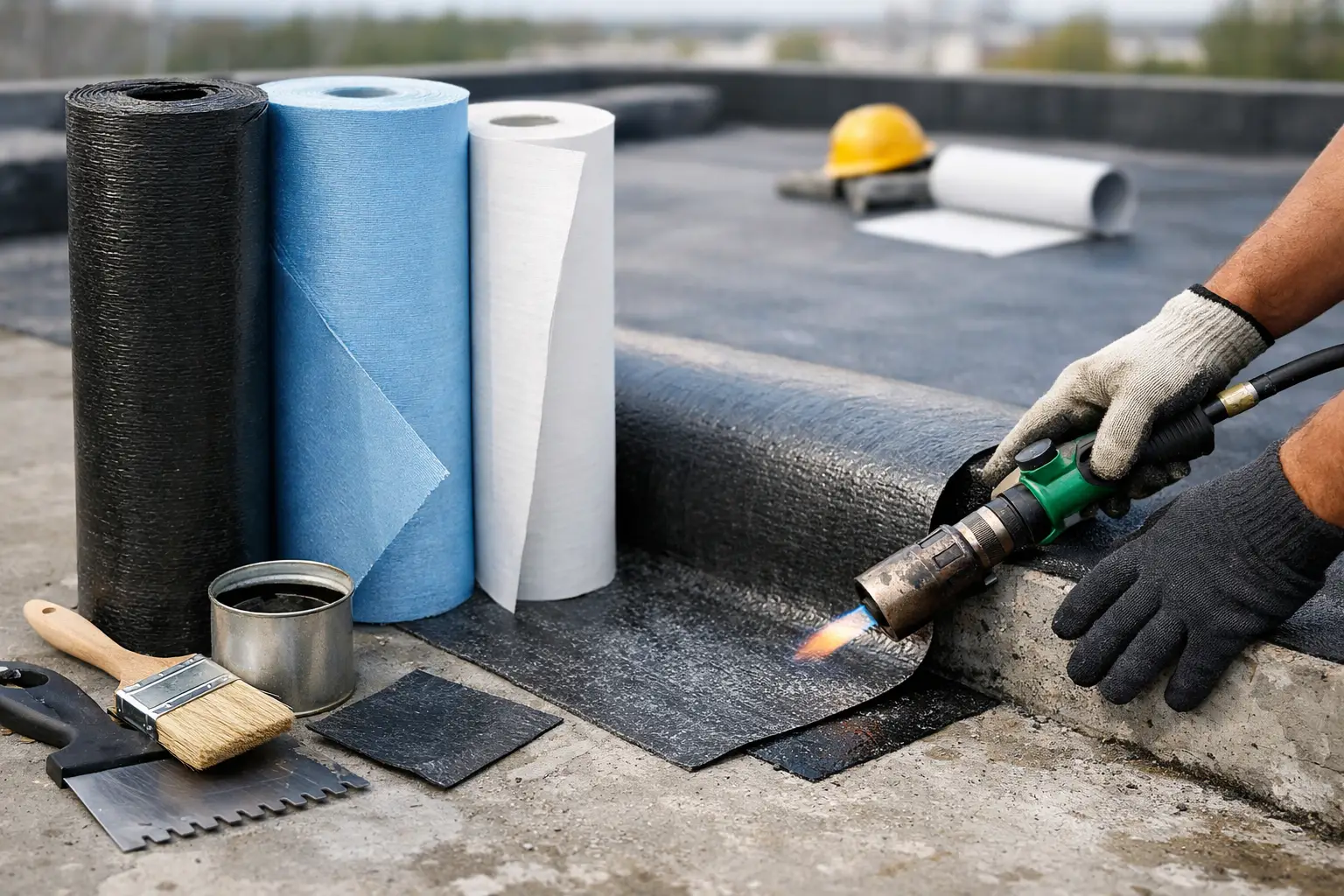
Where water ingress is part of the defect pathway, structural repairs may need to be coordinated with waterproofing and facade works rather than performed in isolation. Repairing damaged concrete while leaving the moisture source untreated is a common reason defects return.
For occupied buildings, site management is just as important as the technical repair. Safe access, dust control, facade protection, staging, and clear communication help keep the project workable for residents, tenants, and facility teams.
Why quality assurance is central to the structural defect rectification process
The structural defect rectification process does not end when materials are installed. Verification is essential. This may include hold points, inspections, photographic records, testing, engineer sign-off, and close-out documentation showing that the works were completed in accordance with the design intent.
Quality assurance is particularly important in remedial projects because much of the critical work becomes concealed. Once concrete is reinstated or finishes are reapplied, poor substrate preparation or incomplete treatment is difficult to detect. A contractor who documents methodology, variations in site condition, and completed repair stages provides more than paperwork – they provide accountability.
This matters for future asset management as well. Building stakeholders need a clear record of what was repaired, where, why, and to what standard. That record supports maintenance planning, future capital works, and regulatory confidence.
When the process needs to expand beyond the obvious defect
One of the more difficult conversations in remediation is explaining why the initial issue is not the full scope. Owners may report one crack, one leaking wall, or one area of spalling, but the investigation may show a broader pattern of deterioration across balconies, planter boxes, podium slabs, facades, or structural frame elements.
That can be frustrating, but it is often the reality of ageing or defective buildings. A narrow scope may feel economical in the short term, yet it can leave the underlying failure mechanism active elsewhere. In Sydney, this is especially relevant in coastal or moisture-prone environments where chlorides, water ingress, and exposure conditions accelerate deterioration.
A credible rectification partner should be direct about that risk. Not every project needs full-scale replacement, but every project does need an honest assessment of what is likely to fail next if only the most visible damage is addressed.
The right process gives building stakeholders something more useful than a repair quote. It gives them a defensible pathway from defect identification to compliant, durable rectification. When that pathway is investigation-led, engineer-coordinated, and delivered with construction discipline, the building is not just patched up – it is put back into service with greater confidence. That is ultimately what owners, strata committees, and asset managers need when defects carry safety, financial, and reputational consequences.