
A remedial project can fail long before construction starts. If water ingress is treated as a sealing issue when it is actually a façade, drainage or structural movement issue, even well-executed work can deliver a short-lived result. That is why the choice between a design and construct vs traditional contract matters: it determines who investigates the defect, develops the repair methodology, coordinates consultants and carries responsibility for the completed outcome.
For strata committees, owners corporations and commercial asset managers, this is not simply a procurement decision. The right contract model should suit the building’s known condition, the level of design certainty, approval requirements and the consequences of getting the diagnosis wrong.
What is a traditional contract?
Under a traditional contract, the client typically appoints architects, engineers and other consultants to investigate the issue and prepare a defined design, specification and tender documentation. Construction contractors then price and deliver the works in accordance with those documents.
The principal advantage is separation. The design team works for the client and can develop a repair strategy before a builder is selected. This can give the client strong control over material selections, detailing, scope and the tender process. Contractors are pricing the same documented scope, which can make comparisons more straightforward where the information is complete.
For a planned façade restoration, a heritage repair package or a major refurbishment with well-developed drawings, this approach can be appropriate. It is particularly useful when an owner wants extensive design input before committing to a construction contractor.
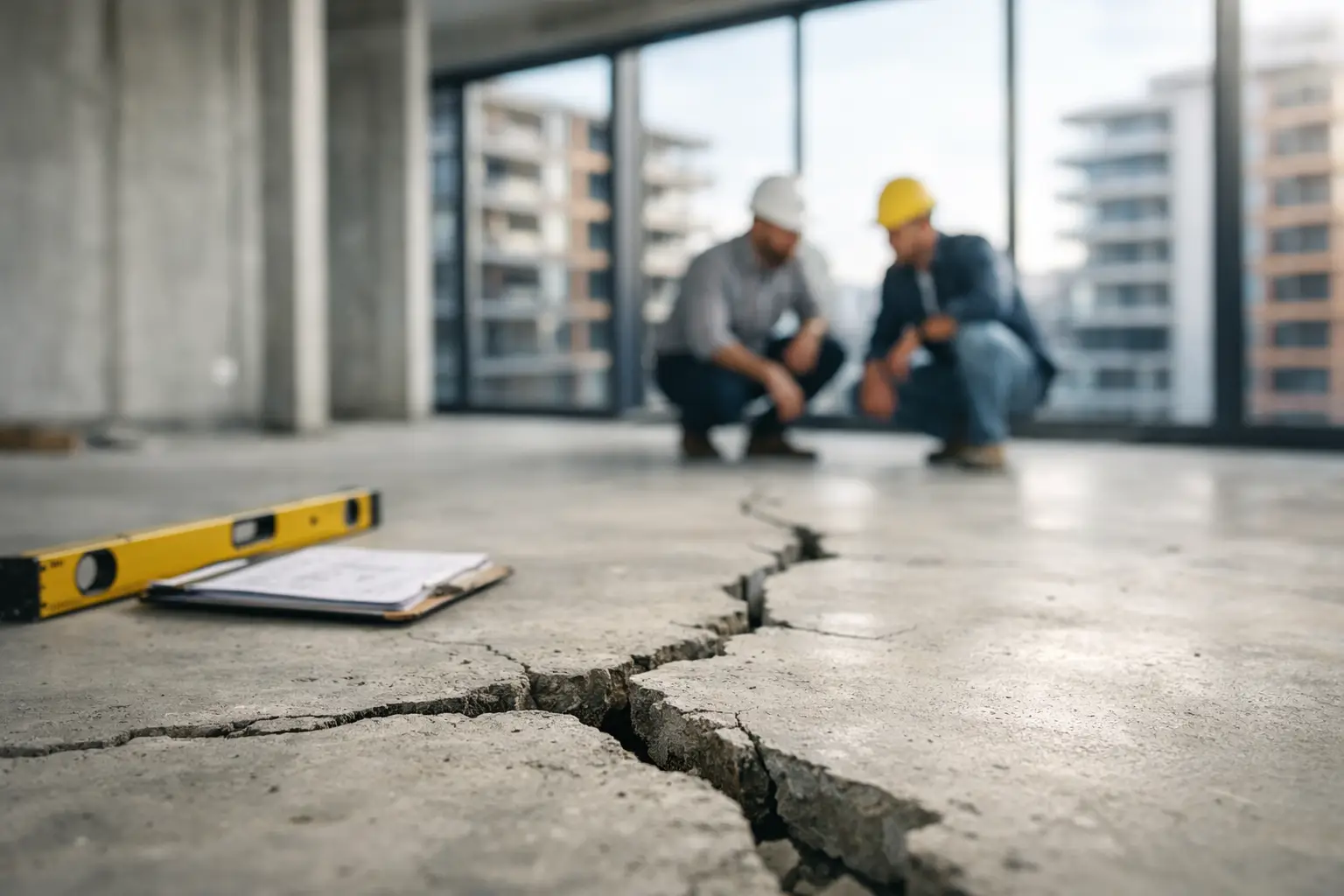
The limitation is that remedial works are rarely completely predictable. Investigations may identify likely causes, but opening up a wall, removing failed membrane systems or exposing concrete reinforcement can reveal additional deterioration. If the original documents do not allow for those conditions, the project can require variations, redesign and further approvals. The contractual distinction between a design issue and a construction issue may also become difficult when several parties have contributed to the outcome.
How Design and Construct changes accountability
A Design & Construct contract places design development and construction delivery under one coordinated contractor. The contractor may engage engineers, registered design practitioners, architects and specialist suppliers as required, then manages the interface between diagnosis, design, approvals, programming and site delivery.
For remedial building work, this structure can be valuable because the repair strategy must remain connected to the condition found on site. The team conducting investigations can communicate directly with those developing the methodology and those installing it. If new information is uncovered during demolition or testing, the response can be assessed through the same delivery framework rather than passed between separately appointed parties.
This does not mean a client gives up visibility or accepts an undefined outcome. A disciplined Design & Construct process should establish a clear brief, known constraints, investigation findings, assumptions, exclusions, performance requirements and approval pathway before the contract is finalised. The contractor should explain what has been confirmed, what remains uncertain and how latent conditions will be managed.
The practical difference is accountability. Rather than the client coordinating a consultant’s design with a builder’s delivery, one party is responsible for coordinating the full pathway from defect diagnosis to completed works. That can reduce gaps between design intent and site execution, provided the contractor has the technical capability and governance to manage both.
Design and construct vs traditional contract: the key differences
The central difference is not whether consultants are involved. Complex remedial work needs engineering, building science and, in some cases, heritage expertise under either model. The difference is who appoints and coordinates those disciplines, and who carries responsibility for resolving interfaces.
In a traditional model, the client generally retains the design team and the builder delivers the issued documents. In Design & Construct, the contractor takes responsibility for completing the design and delivering the agreed performance outcome. This can create a clearer line of responsibility, but only when the contract describes that outcome precisely.
Pricing also works differently. A traditional tender may produce competitive prices based on detailed documentation, but that price can change if site conditions differ from the tender information. A Design & Construct price may be developed earlier through staged investigation and design, often allowing the contractor to identify constructability issues before works begin. Neither model automatically guarantees a lower final cost. A low tender based on incomplete information can become expensive, while a carefully developed Design & Construct proposal may better account for the risks that are already visible.
Programme is another consideration. Traditional procurement is commonly sequential: investigate, design, tender, appoint, then build. Design & Construct can overlap some of these activities, with buildability, procurement and access planning considered while the design is being developed. This can be useful where ongoing water ingress, public safety concerns or vacant tenancy periods create urgency. It should not be used to rush essential investigation, particularly where structural deterioration or concealed waterproofing failures are suspected.
When a traditional contract may be the better fit
A traditional arrangement may suit a project where the scope is already well understood and the owner wants the design completed independently before contractor selection. It can also work well where a statutory authority, insurer, funder or heritage stakeholder requires a highly developed design package before construction is committed.
It may be preferable where an owners corporation has a preferred consultant team with detailed knowledge of the building and wishes to retain direct control over design decisions. The client should still ensure the tender documents are coordinated, sufficiently detailed and realistic about access, staging, occupied premises and latent-condition risk.
The critical question is whether the design team has been given enough time and access to investigate the root cause. A complete-looking specification is not necessarily a complete remedial solution if it has been developed without opening-up works, moisture testing, concrete assessment or appropriate engineering review.
When Design & Construct is often more suitable
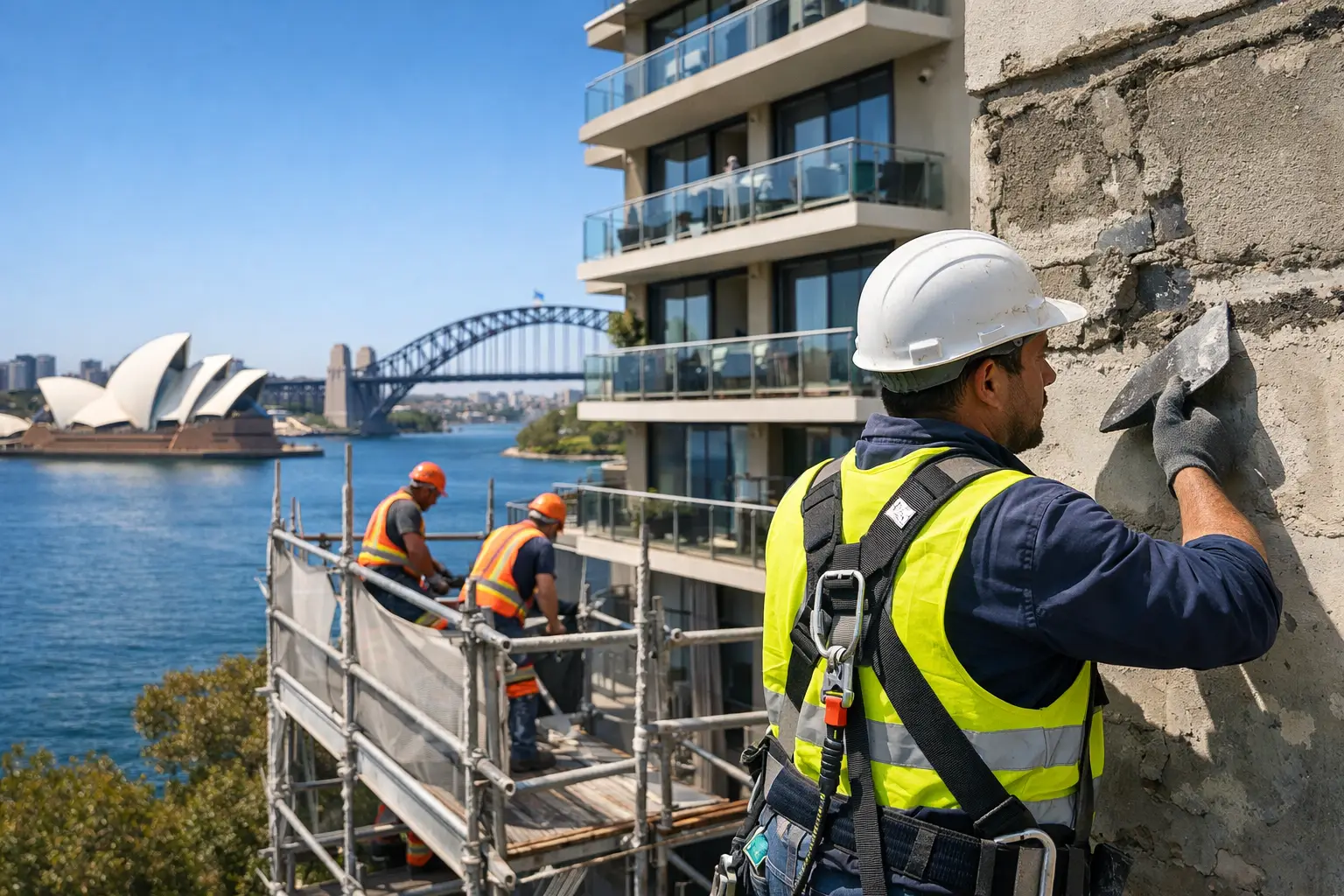
Design & Construct is often well suited to building defects with several connected causes. For example, a concrete spalling project may involve carbonation testing, corrosion assessment, repair design, coating compatibility, façade access, waterproofing interfaces and structural engineering. Managing those elements through one accountable team can help protect the overall repair strategy.
It is also useful where site findings will influence the final methodology. Water ingress through a podium, balcony or façade may require staged investigation before the full extent of failed membranes, drainage defects or substrate damage is known. A contractor that can investigate, coordinate engineering advice and adjust the work plan within a transparent framework is better placed to maintain progress without treating every discovery as a disconnected event.
For Class 2 remediation in NSW, the model must also accommodate applicable design and building practitioner obligations, declarations, regulated designs and approval requirements. Design & Construct does not reduce compliance responsibilities. It requires them to be properly coordinated from the start, with the right practitioners engaged for the work and records maintained throughout the project.
The risks clients should address before signing
The label on the contract is less important than the quality of the project definition. Before appointing any party, clients should be able to identify the known defects, the investigation undertaken, the required performance outcome and the approvals likely to apply. Where there are unresolved uncertainties, they should be stated rather than hidden inside a fixed price.
A useful contract framework deals clearly with latent conditions, design assumptions, provisional work, access restrictions, resident or tenant communication, temporary weather protection, quality assurance and defect rectification. It should also define decision-making authority. On an occupied strata site, a delayed decision about access, colour selection or an unforeseen repair area can affect programme and cost as much as a technical issue.
Transparency is especially important in Design & Construct. Clients should receive a proposal that explains the investigation findings, methodology, materials, engineering coordination, staging and exclusions in plain terms. The goal is not to eliminate every risk before work begins. That is rarely possible in remediation. The goal is to allocate and manage risk openly, using evidence rather than assumptions.
Choosing the model for your building
Start with the condition of the asset, not a preferred contract form. If the defect is well investigated, the scope is stable and independent design control is a priority, a traditional contract may provide the right structure. If the building requires further diagnosis, coordinated specialist input and a direct line from repair design to construction delivery, Design & Construct may offer stronger accountability.
For both models, the most valuable early investment is a thorough assessment of the root cause. Remedial Building Practitioners approaches this work as a coordinated process because durable outcomes depend on more than repairing visible damage. They depend on understanding why the damage occurred, designing the right response and delivering it with the evidence, compliance and workmanship the building requires.
The best contract is the one that makes responsibility clear before the building is opened up, not after water has returned or defects have reappeared.