
A remedial project usually starts the same way: water ingress has been patched three times, concrete is still spalling, residents are frustrated, and no one is confident the next contractor will solve the actual problem. That is why knowing how to plan remedial works matters. Good planning is not paperwork for its own sake. It is the difference between treating symptoms and delivering repairs that stand up over time.
For strata committees, owners corporations, asset managers and property owners, the risk is rarely just construction cost. A poorly planned remedial job can lead to repeated failures, safety concerns, insurance disputes, access issues, resident complaints and compliance exposure. The planning stage is where those risks are either controlled or carried into site.
How to plan remedial works starts with the defect, not the finish
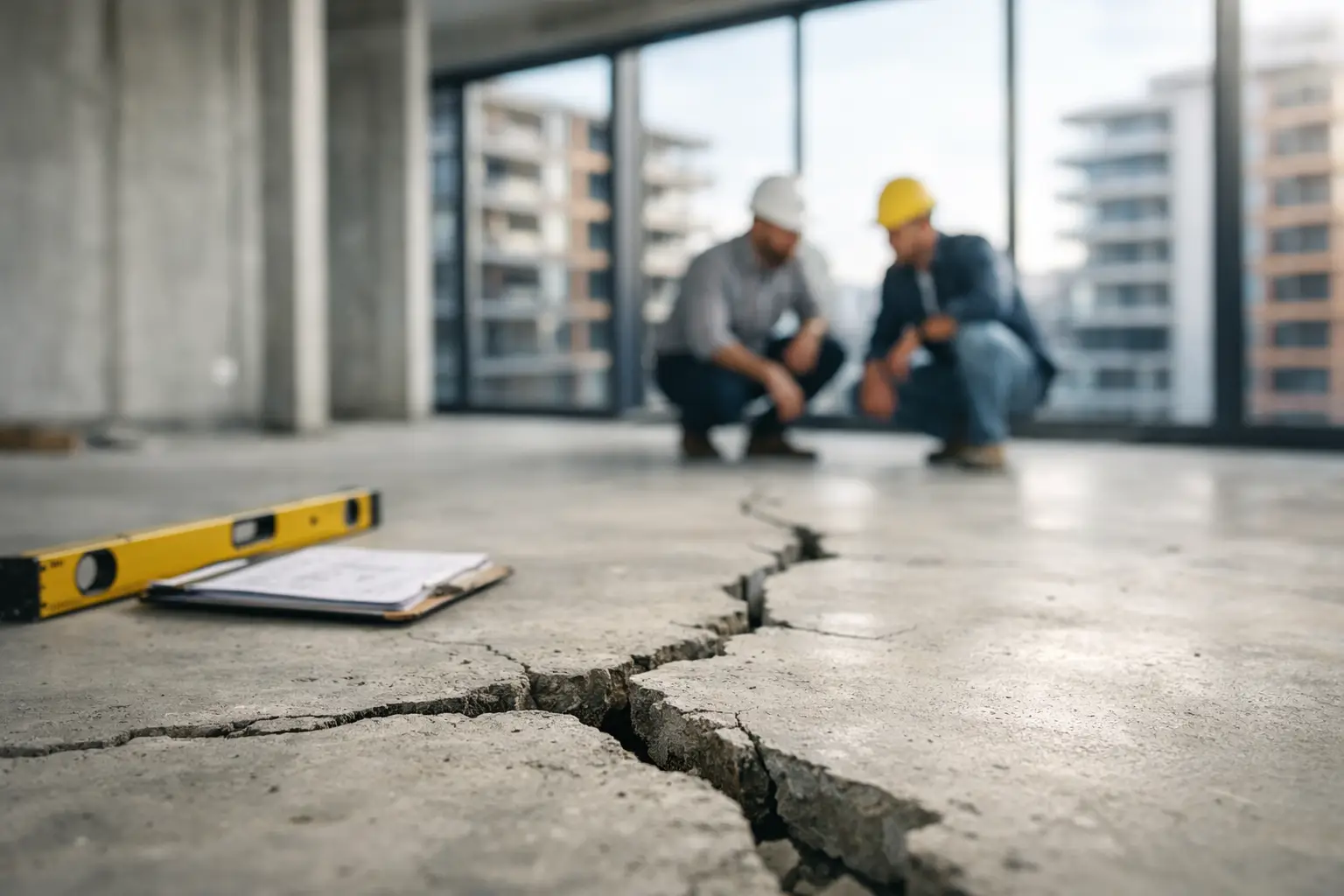
One of the most common mistakes in remedial building is starting with a preferred repair before the cause of failure is confirmed. If a balcony leaks, the temptation is to specify waterproofing replacement. If concrete is cracking, the quick answer might be patch repair. But the visible damage is not always the primary defect.
A sound remedial plan begins with investigation. That may include visual inspections, moisture testing, hammer sounding, concrete cover surveys, destructive opening-up, facade assessments or engineering review, depending on the issue. In Class 2 buildings and more complex commercial assets, this stage needs to be especially disciplined because repair decisions may affect compliance, structural performance and occupied areas.
The purpose of investigation is to answer a few practical questions. What is failing? Why is it failing? How far has the issue progressed? What secondary damage has developed around it? And what repair method is suitable for the building as it actually exists, not as the original drawings suggest it should exist?
Without that groundwork, the project scope is little more than an assumption.
Set the repair objective before you set the budget
Owners often ask for a cost before the methodology has been tested. That is understandable, particularly when a committee needs to plan levies or an asset manager needs to forecast expenditure. Still, budget should follow repair strategy, not the other way around.
A remedial plan needs a clear objective. In some cases, the aim is targeted defect rectification with minimal disturbance. In others, it is broader building restoration to recover performance, appearance and service life. Heritage assets add another layer again, where preservation requirements may limit material choices or repair sequencing.
This is where trade-offs need to be discussed openly. A lower upfront option may only address accessible areas and leave hidden deterioration in place. A more extensive programme may cost more initially but reduce repeat mobilisation, occupant disruption and future maintenance. Neither option is automatically right. It depends on the condition of the asset, the risk profile, the ownership horizon and the consequences of failure if works are deferred.
When the objective is agreed early, budgeting becomes more realistic because it is based on the required outcome rather than a rough guess.
Build a scope that reflects real site conditions
The scope of works is where planning becomes operational. It should be detailed enough to guide pricing, approvals, procurement and delivery, but flexible enough to deal with what remedial projects often reveal once works commence.
Existing buildings are rarely straightforward. Drawings may be incomplete. Earlier repairs may have altered details. Latent conditions may only become visible after demolition or opening-up. That means a remedial scope should define the known defects, the proposed methodology, material requirements, sequencing assumptions, access needs, testing requirements and any provisional areas that may expand based on findings.
The more complex the building, the more important coordination becomes. Waterproofing failures may overlap with structural cracking. Facade deterioration may involve concrete repair, sealant replacement, coating systems and access constraints all at once. If each element is planned separately, scope gaps appear quickly. A coordinated remedial plan brings these interfaces together before they become claims, delays or rework on site.
For many property stakeholders, this is the point where an end-to-end Design & Construct approach becomes valuable. It aligns investigation, engineering input, buildability and delivery responsibility within one framework, rather than leaving coordination gaps between consultants and contractors.
Allow for approvals, compliance and design responsibilities
Remedial works can look like straightforward repair from the outside, but the compliance pathway is often more involved than expected. Depending on the building type, location and extent of work, the project may require consultant input, regulated design documentation, council or certifier engagement, heritage consultation, fire safety consideration or Class 2 compliance coordination.
This is one of the biggest reasons projects stall after the committee has already agreed to proceed. The works seem urgent, but approvals, documentation and procurement have not been factored into the timeline.
A practical plan should identify early which approvals are likely, who is responsible for design coordination, what documentation is needed for pricing and construction, and how compliance obligations will be managed during the project. If the works affect structural elements, waterproofing design, facade systems or regulated building components, those responsibilities cannot be left vague.
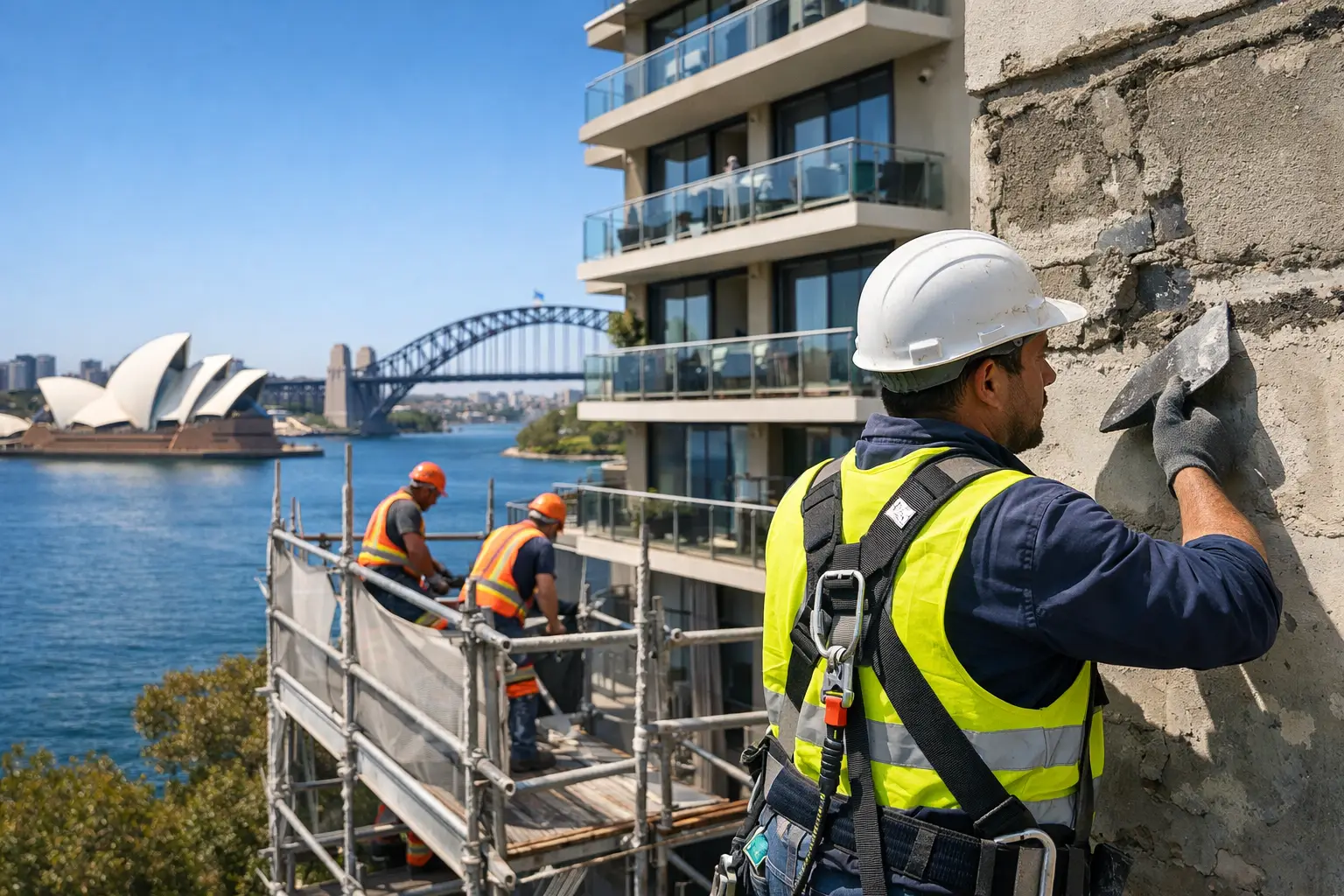
For Sydney properties in particular, planning should also account for occupied-site constraints, neighbouring properties, access licences, traffic impacts and local approval pathways where relevant. These issues may not change the repair method itself, but they can materially affect programme and cost.
Programme the works around risk, not convenience
Every stakeholder wants certainty on timing, but remedial programmes need to be built around risk management rather than best-case assumptions. The sequence should reflect safety, weather exposure, access complexity, resident impact and the dependencies between trades, design review and inspections.
For example, facade and waterproofing works can be highly sensitive to weather windows and substrate conditions. Structural repairs may need staged demolition, temporary support or engineer hold points. Occupied residential buildings may require careful notice periods, restricted working zones and protection of common areas. Commercial assets may need after-hours staging to reduce disruption to tenants.
A realistic programme allows for these site conditions. It should also allow for investigation findings during construction. In remedial work, some level of scope movement is normal. The goal is not to pretend it will not happen. The goal is to have a process for identifying, pricing and approving changes without losing control of the project.
Procurement should reward capability, not just price
Choosing a contractor for remedial works is not the same as procuring a simple replacement trade. The cheapest price can become the most expensive decision if the contractor has not properly interpreted the defect, underestimated access complexity or excluded critical compliance obligations.
When assessing tenders or proposals, stakeholders should look beyond headline cost. Methodology, defect understanding, experience with similar building types, safety systems, supervision structure, quality assurance and programme logic all matter. So does the contractor’s ability to communicate clearly when latent conditions arise.
This is especially important where multiple defects overlap. A contractor may be competent in patch repairs but not in integrated facade restoration. Another may price waterproofing competitively but have limited experience in structural remediation or occupied strata environments. Planning should filter for the team most capable of delivering the whole repair outcome, not just the first trade package.
Communication is part of the works plan
Even technically sound projects can become difficult if communication is poor. Strata residents, commercial tenants, committee members and project representatives all experience remedial works differently. One group wants progress, another wants quiet access, and another wants certainty on cost.
A good remedial plan sets communication expectations early. Who issues notices? How often are updates provided? What happens if scope changes? Who signs off variations? How are resident complaints managed? On occupied sites, these questions are not administrative extras. They affect site access, programme continuity and stakeholder confidence.
Transparent communication also supports accountability. When reporting is regular and grounded in actual site conditions, decisions are made faster and disputes are less likely to escalate.
How to plan remedial works for long-term performance
The final measure of a remedial project is not whether the site was busy or the defect looked improved at handover. It is whether the building performs as intended after the contractor leaves.
That is why planning should include quality controls, inspection hold points, testing, documentation and maintenance considerations from the outset. Coating systems need the right substrate preparation. Waterproofing needs compatible detailing and protection. Concrete repairs need proper treatment of reinforcement and repair interfaces. None of this is glamorous, but it is what separates durable remediation from cosmetic repair.
It also helps to think beyond the immediate defect. If one section of the building has failed due to age, exposure or poor detailing, adjacent areas may be on the same path. Sometimes the right plan is a staged remediation programme rather than repeated emergency works. That approach may feel larger at the start, but it often gives owners better control over cost, access and asset performance over several years.
The strongest remedial plans are grounded in evidence, coordinated across design and delivery, and honest about risk. If you are working through how to plan remedial works, the most useful starting point is not the patch, coating or membrane. It is a clear understanding of the building, the defect and the outcome the repair needs to achieve for the long term.