A water stain beneath a balcony door, cracking across a rendered wall or rust staining on a concrete soffit can appear isolated. For a strata committee or asset manager, however, each may signal a failure in waterproofing, drainage, corrosion protection or structural movement. This guide to building defect reporting explains how to turn site observations into a reliable basis for investigation, decisions and remedial works.
A useful defect report does not simply record what can be seen. It establishes where the defect is, describes its condition, identifies the evidence available, assesses immediate risk and sets out the next technically appropriate step. That distinction matters. Repairs based on surface appearance alone can conceal the underlying cause, waste levy funds and leave the building exposed to further deterioration.
What building defect reporting needs to achieve
Building defect reporting is a structured process for documenting defects, assessing their likely cause and defining the level of investigation or rectification required. The report should give owners corporations, property owners and project teams a clear, traceable record rather than a collection of photographs and general observations.
For simple maintenance matters, a concise inspection record may be enough. A damaged sealant joint, for example, may be visible, accessible and readily assessed. More complex issues require a deeper approach. Persistent water ingress, concrete spalling, façade cracking or movement around windows can have multiple contributing factors. The visible symptom may be some distance from the point of water entry or the source of structural stress.
The report should therefore separate facts from assumptions. It can identify probable causes based on the evidence, but it should also state where further testing, opening-up works or engineering review is needed before a repair methodology is finalised. This protects decision-makers from treating an early observation as a confirmed diagnosis.
Start with evidence, not a repair preference
The quality of a report is often determined before the writer arrives on site. Clear instructions should identify the areas of concern, when the problem occurs, previous repair attempts, access limitations and any available building records. Maintenance logs, prior reports, waterproofing warranties, photographs and resident correspondence can provide useful context.
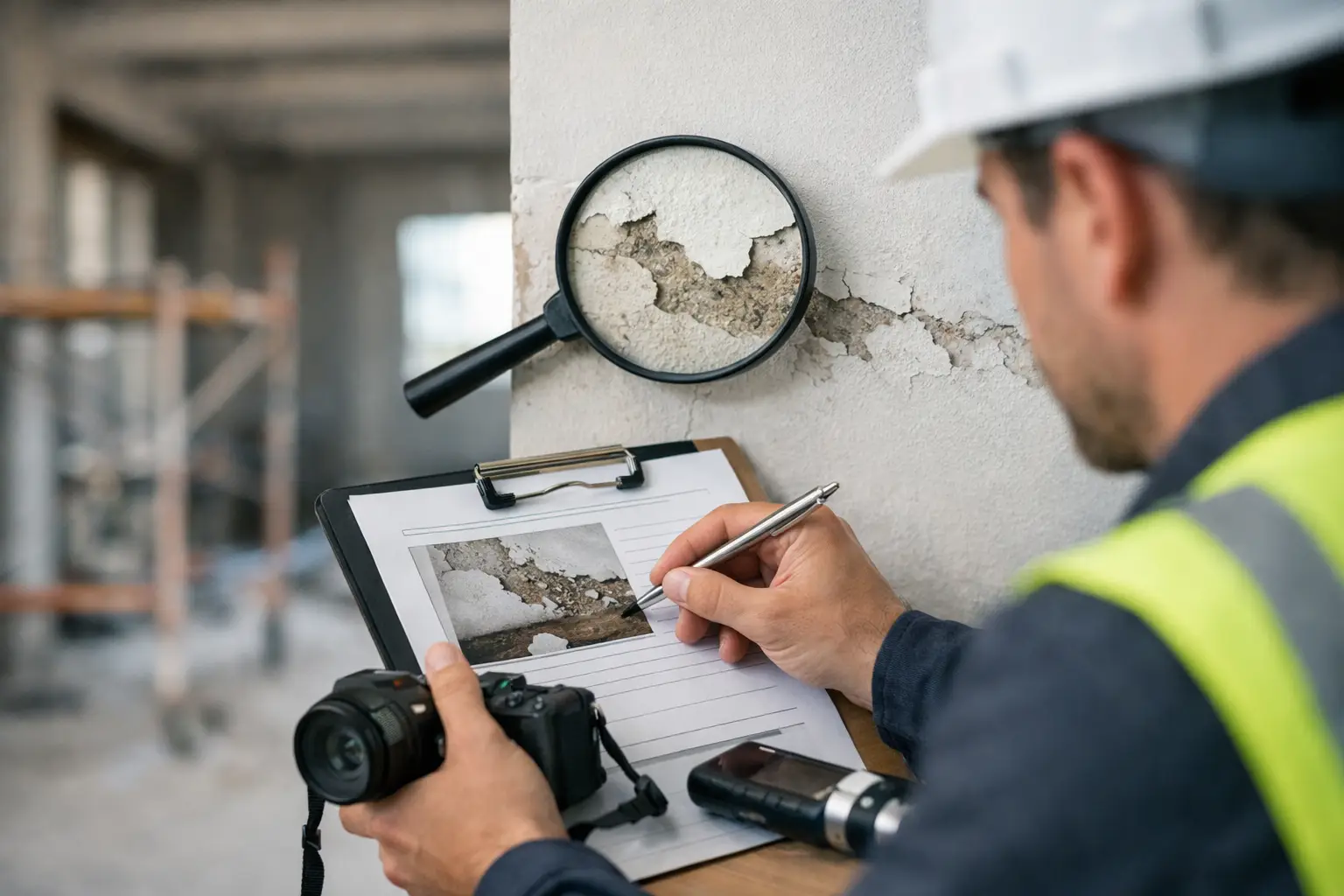
During inspection, each defect should be recorded consistently. Location is critical: identify the building, elevation, level, unit or common-property area, and use marked-up plans where available. Photographs should include both close-up detail and wider context so the reader can understand scale and position. Dates, weather conditions and relevant observations, such as active moisture or ponding water, should also be captured.
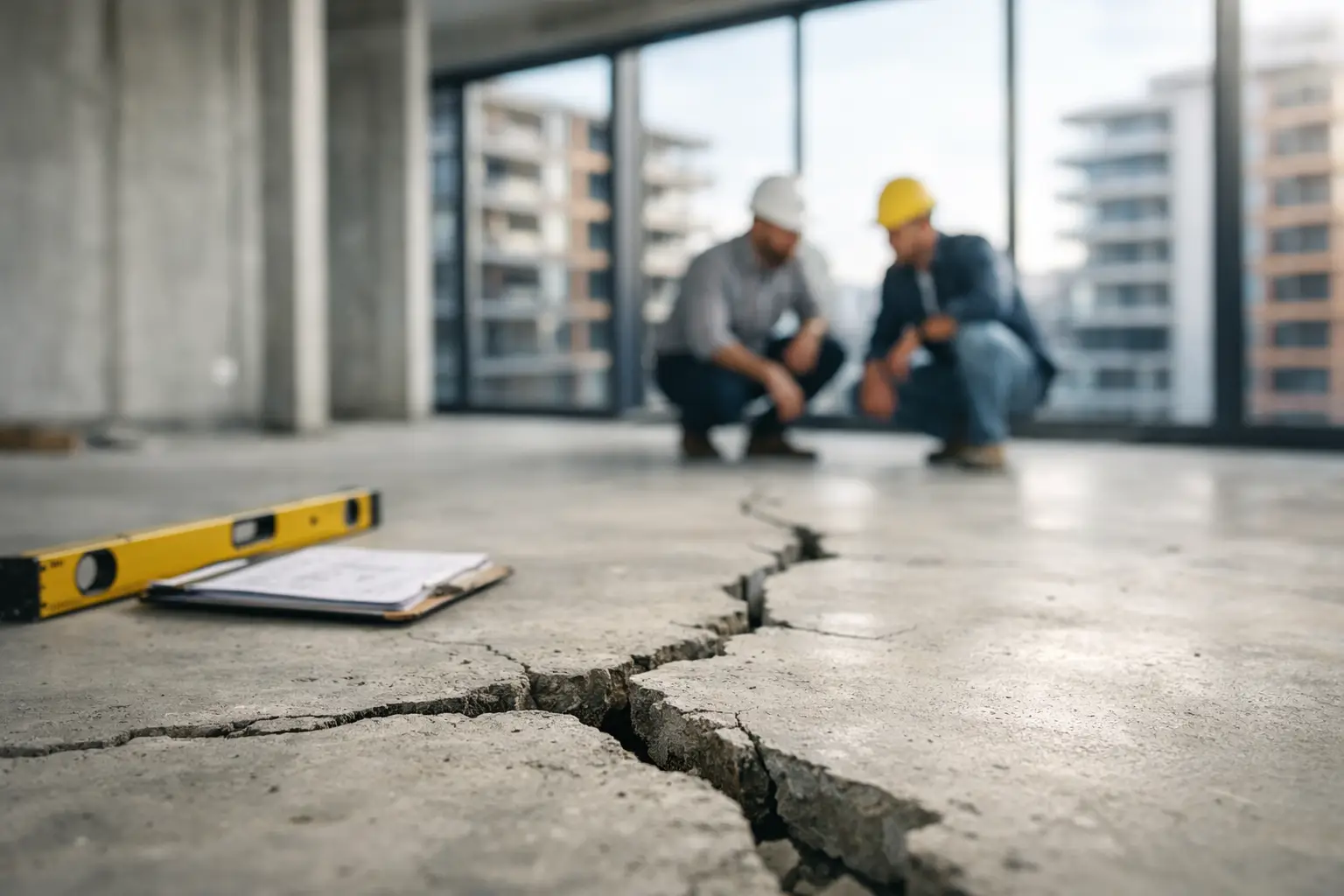
Descriptions need to be specific. Rather than writing “cracked wall”, record the crack location, approximate width, direction, length, whether it steps through masonry or crosses a rendered finish, and whether there are signs of displacement, moisture or prior patching. Rather than “concrete cancer”, document delamination, exposed reinforcement, rust staining, cracking, spall size and the condition of adjacent concrete.
This level of detail supports comparison over time. It also allows engineers and remedial contractors to interpret the condition without relying solely on a site walk-through months later.
Use targeted investigation where the evidence demands it
Visual inspection is a starting point, not always a final answer. Non-destructive testing, moisture readings, thermal imaging, hammer sounding, drainage testing or targeted opening-up may be appropriate depending on the defect. For concrete deterioration, investigation may include cover meter surveys, carbonation testing and chloride testing to help determine the corrosion mechanism and repair extent.
There is a practical trade-off. More testing adds cost and may disrupt occupants, but insufficient investigation increases the risk of an underscoped repair. The right level of investigation depends on the defect’s consequences, the building’s age and construction, the extent of prior failures and the likely cost of getting the repair wrong.
Classify risk before setting priorities
Not every defect carries the same urgency. A report should distinguish between issues requiring immediate action and those that can be planned through a maintenance or capital works programme. This helps committees allocate funds responsibly and address safety obligations without reacting to every visible imperfection as an emergency.
Priority should be informed by safety, active deterioration, weather exposure, potential for consequential damage and statutory or compliance implications. Loose façade elements, significant concrete spalling above pedestrian areas, unstable balustrades, water ingress affecting electrical services and signs of structural distress require prompt escalation. Interim controls may include restricting access, installing protection, isolating affected services or arranging urgent engineering advice.
Defects with lower immediate risk can still be financially significant. Failed roof drainage, deteriorated movement joints or minor balcony membrane defects may not create an immediate hazard, yet deferring them can lead to concealed timber decay, corrosion, mould growth or damage to occupied lots. Good reporting explains both the current condition and the likely consequence of delay.
A clear priority framework is more useful than vague terms such as “monitor”. If monitoring is appropriate, specify what is to be monitored, how often, what change would trigger action and who is responsible for recording the results.
Structure the report for decisions and delivery
A building defect report should be easy for non-technical stakeholders to follow while retaining the detail needed by consultants and contractors. In most cases, it should cover the property and inspection scope, methodology and limitations, defect findings, photographic evidence, risk assessment, likely causes, recommended next steps and budget or programme considerations where they can be responsibly estimated.
Recommendations should be proportionate and actionable. “Repair water ingress” is not a useful scope. A stronger recommendation might call for investigation of balcony falls, drainage outlets, membrane terminations and door thresholds, followed by an engineered waterproofing rectification design. The latter defines the pathway to a durable solution without pretending that a final repair scope can be confirmed before the cause is proven.
Where extensive works are likely, the report should identify dependencies. These may include structural engineering, architectural detailing, heritage approvals, access design, resident communication, waterproofing specifications or staged works to maintain safe occupation. For NSW Class 2 buildings, design and compliance responsibilities must be considered early, particularly where the proposed remedial work falls within regulated building elements or involves significant changes to waterproofing, structure or façades.
Avoid the reporting failures that lead to repeat repairs
The most expensive reports are often those that appear inexpensive at the outset. A brief report that lacks investigation, omits limitations or recommends a generic repair can lead to variations, disputes and repeat failures once works begin.
One common problem is treating evidence of water as proof of a single waterproofing failure. Water can enter through roofs, façades, windows, planter boxes, balconies, service penetrations and failed drainage. It can also travel within cavities before appearing at a ceiling or wall. A repair recommendation should reflect this uncertainty until testing or opening-up confirms the pathway.
Another is confusing cosmetic cracking with structural cracking, or assuming all cracking is cosmetic. Crack patterns must be read in context, alongside building movement, substrate condition, moisture exposure and any signs of displacement. Where structural performance is in question, an engineer should assess the issue rather than relying on visual judgement alone.
Finally, reports can fail at handover. If a recommended repair proceeds, the project record should preserve the investigation findings, approved design, product information, inspection hold points, photographs of concealed work and completion documentation. This creates accountability and gives future building managers a usable maintenance history.
From report to remedial strategy
A defect report is most valuable when it becomes the first controlled stage of delivery. Following diagnosis, the project team can develop a repair strategy that addresses cause, extent, access, sequencing, approvals and quality assurance. For larger remediation projects, coordinated delivery reduces the gap between investigation, design intent and construction reality.
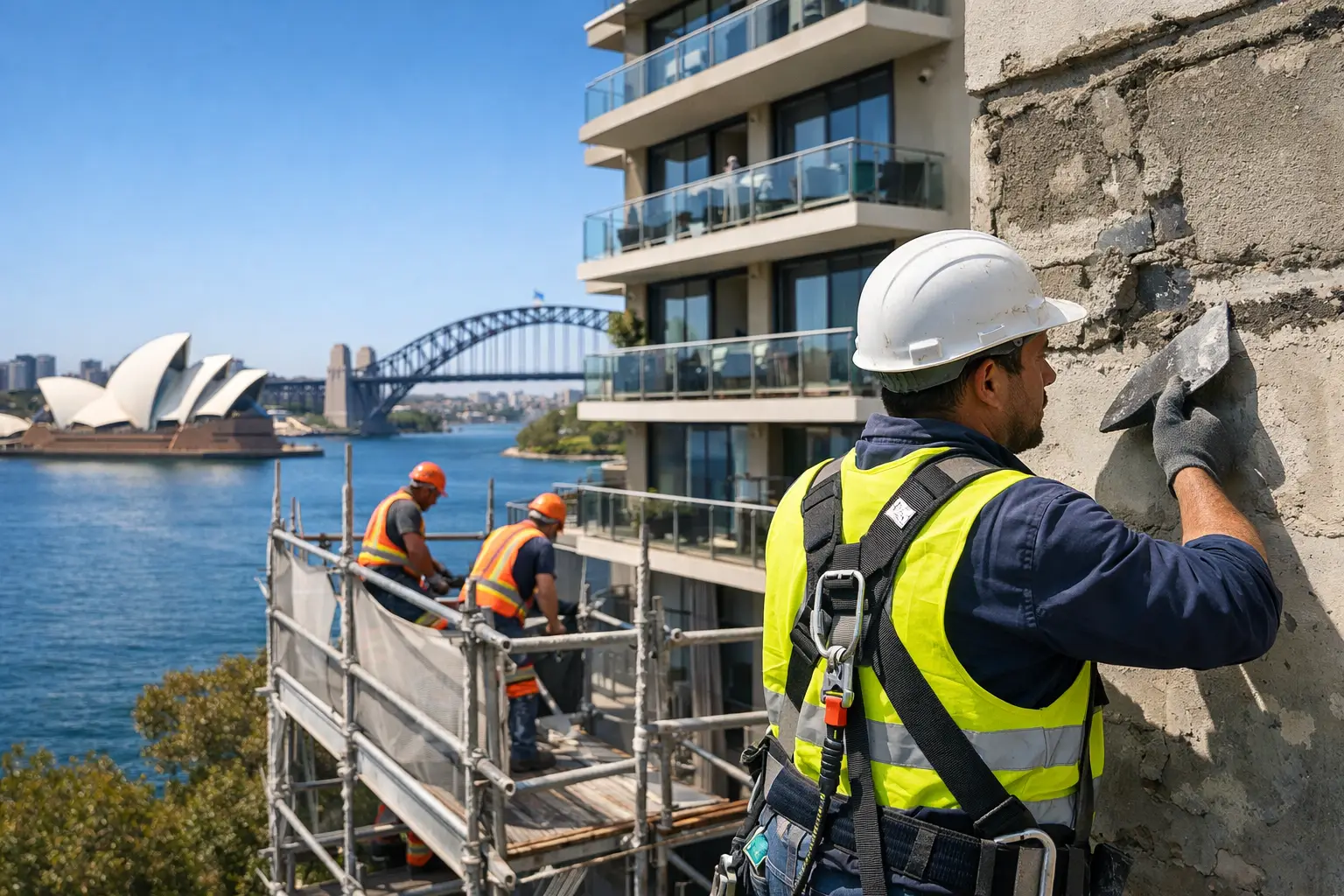
This is particularly relevant where defects overlap. A façade restoration project may involve failed sealants, cracking, corroding lintels, damaged coatings and water management issues at once. Packaging each item as an isolated repair may seem simpler, but it can create conflicting scopes and repeated access costs. A coordinated approach can address interfaces, protect occupied areas and sequence works around the building’s operational needs.
For Sydney strata and commercial properties, this approach also supports clearer communication with owners, occupants and consultants. Stakeholders need to know what has been found, what remains uncertain, what action is proposed and how the work will be controlled. Transparency is not an administrative extra – it is part of managing risk in a live building environment.
A well-prepared report gives decision-makers enough certainty to act, while being honest about what still needs to be tested or designed. That balance is the foundation for remedial works that do more than improve appearance: they protect the building’s safety, compliance and long-term performance.