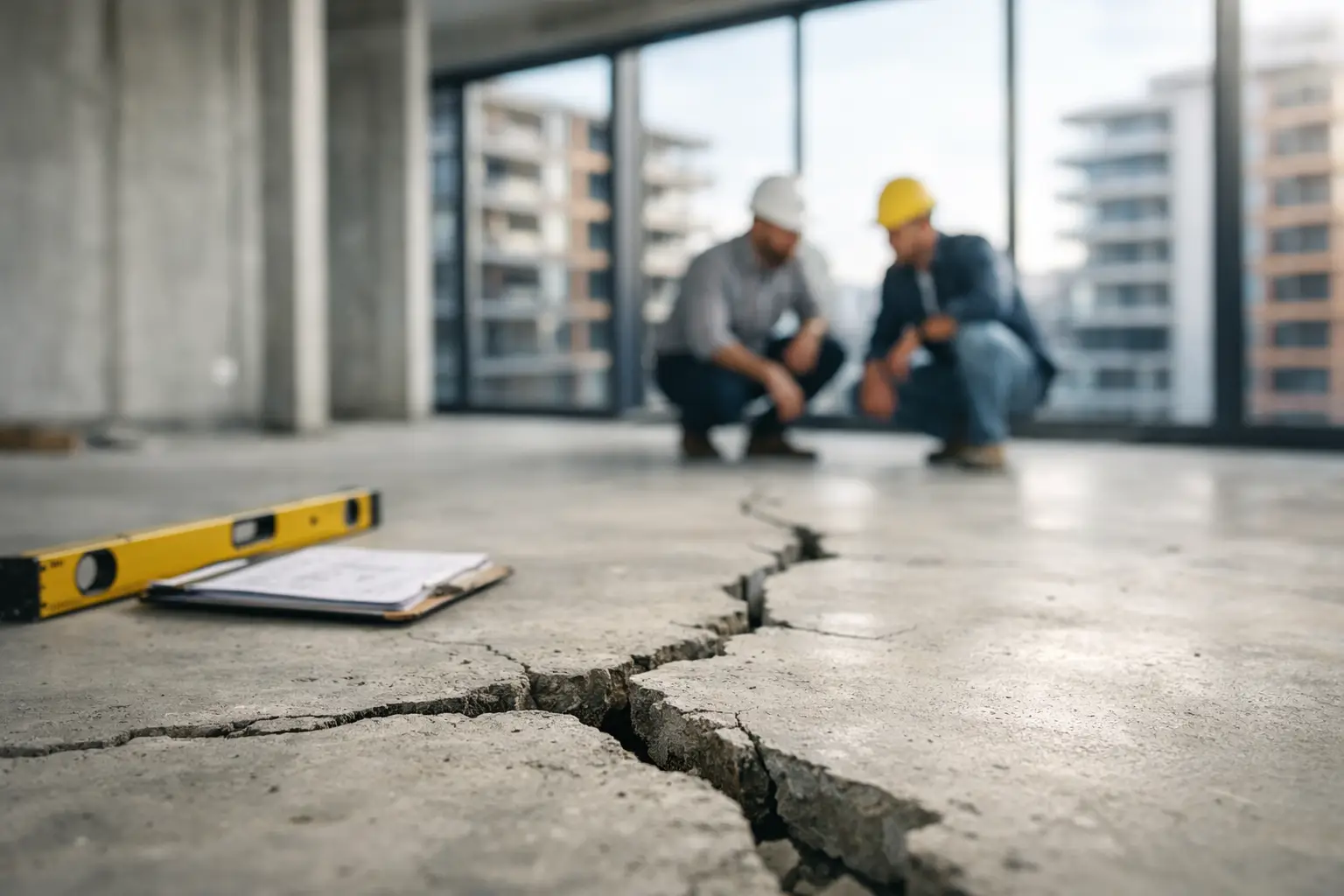

When a building starts showing the same problem twice, the issue is rarely the surface symptom. A balcony that keeps leaking, a façade that continues to crack, or concrete that spalls again after patching usually points to a failure in diagnosis, not just repair. That is where engineer led remedial construction matters. It brings technical investigation, repair design and construction delivery into one accountable process so defects are treated at their source.
For strata committees, owners corporations, asset managers and developers, that distinction is significant. Remedial works often sit in the uncomfortable space between maintenance and major construction. They affect safety, compliance, insurance exposure, tenant satisfaction and long-term asset value. If the process is fragmented, responsibility becomes blurred. If the process is engineer led, decisions are grounded in evidence, repair methodology is aligned to the defect mechanism, and construction can be delivered with clearer technical control.
What engineer led remedial construction actually means
Engineer led remedial construction is not simply a project where an engineer is copied into the email chain. It is a remediation model in which engineering input shapes the project from investigation through to completion. The engineer helps identify the root cause of deterioration, defines the repair intent, coordinates with design practitioners where required, and supports a construction methodology that matches the condition of the asset.
That approach matters because building defects are often interconnected. Water ingress may be a waterproofing failure, but it can also be driven by cracked render, failed sealants, poor falls, membrane termination issues, concrete movement, inadequate drainage or structural settlement. Treating one element in isolation can reduce the visible symptom without resolving the actual pathway of failure.
In practical terms, an engineer led model is most valuable when the project involves structural deterioration, concrete cancer, cracking, façade instability, water penetration, balcony defects, ageing building fabric or compliance-sensitive Class 2 rectification. It is also highly relevant where multiple trades must work to a coordinated repair strategy rather than improvising onsite.
Why this model reduces risk for building stakeholders
Many remedial projects go off course for a simple reason: diagnosis, scope development and construction are handled by separate parties with different assumptions. The consultant may nominate a repair detail, the contractor may adjust it for buildability, and the client is left trying to work out whether the variation reflects a genuine site condition or a gap in the original scope.
Engineer led remedial construction reduces that disconnect. It creates a stronger line between observed defects, technical reasoning and the works being carried out. That does not mean every project becomes simpler or cheaper. Some become more complex once the true extent of deterioration is uncovered. But complexity identified early is easier to manage than failure discovered after money has already been spent.
For owners corporations and commercial asset managers, the value is often in accountability. There is a clearer basis for explaining why repairs are needed, what standard is being targeted, how compliance will be addressed and what risks remain if works are deferred or reduced. That clarity supports better decision-making, particularly where budgets, access constraints and stakeholder expectations must all be balanced.
Engineer led remedial construction in practice
A disciplined remediation process usually starts with investigation, not pricing. That may involve condition assessments, intrusive inspections, moisture mapping, concrete testing, crack monitoring or review of past repairs and available building documentation. The purpose is to understand the mechanism of failure, its extent and the consequences of leaving it untreated.
From there, the repair methodology can be developed around actual conditions rather than assumptions. If concrete spalling is linked to reinforcement corrosion, the response may involve breakout, steel treatment or replacement, reinstatement with compatible repair mortars, protective coatings and addressing the source of water entry. If façade cracking is movement-related, the solution may need to consider substrate behaviour, articulation, joint treatment and broader envelope performance rather than a cosmetic patch.
During delivery, site conditions still matter. Remedial works rarely unfold exactly as drawn because older buildings often conceal deterioration until demolition or opening-up begins. An engineer led process helps assess these discoveries in a controlled way. Instead of ad hoc decisions by disconnected parties, there is a technical framework for reviewing findings, adjusting methodology where justified and documenting what has changed.
Where owners get caught out without proper coordination
A common problem in remedial construction is false economy. A cheaper scope may appear attractive at tender stage, especially when the visible issue seems straightforward. But if that scope excludes investigation, omits enabling works, underestimates deterioration or treats symptoms only, the apparent saving can disappear quickly.
Take recurrent water ingress. Replacing internal finishes may temporarily improve presentation, but if the external envelope, flashing details or membrane terminations remain defective, the building is still exposed. The same applies to surface crack repairs where structural movement, corrosion or substrate failure has not been examined. Repairing the wrong thing is not cost control. It is deferred expenditure.
Poor coordination also creates program risk. Access systems, traffic management, resident communication, sequencing of wet weather-sensitive works, heritage constraints and compliance approvals all affect delivery. On occupied sites, these issues are not peripheral. They shape whether the work can be completed safely and with minimal disruption. A coordinated remedial team is better placed to align engineering intent with practical site execution.
Compliance is not a side issue
In Sydney, and across NSW more broadly, compliance obligations around building work have sharpened expectations for documentation, design responsibility and construction accountability. That is particularly relevant for Class 2 buildings and projects where regulated design and declared works may apply.
Engineer led remedial construction supports compliance because it encourages a documented chain of reasoning. Defects are investigated, repair designs are coordinated, site conditions are reviewed, and construction is delivered against an identified methodology. That does not remove statutory obligations or replace the need for appropriate practitioners, approvals or certifications. But it does create a more reliable foundation for meeting them.
For clients, this is not just about satisfying regulation. It is about protecting the asset from incomplete, non-compliant or poorly substantiated works that may create further liability later. Buildings with unresolved defects can face escalating maintenance costs, occupant complaints, financing concerns and diminished market confidence.
Not every project needs the same level of engineering input
There is a practical point here. Not every remedial job requires a heavy engineering footprint. Minor maintenance items, isolated sealant failures or straightforward replacement works may be managed with a lighter process. The right model depends on the building, the defect type, the consequences of failure and the level of uncertainty.
The question is not whether an engineer should be involved in every decision. The question is whether the defect mechanism, compliance context and project risk justify engineering leadership. Where there is structural movement, repeated failure, significant water ingress, concrete deterioration, public safety risk or complex stakeholder exposure, the answer is often yes.
That is why early assessment matters. It helps separate routine maintenance from genuine remediation and allows clients to allocate budget more intelligently. Spending on investigation at the start can avoid much larger waste later.
What to look for in an engineer led remedial construction partner
For building stakeholders, the most useful indicator is not marketing language. It is whether the contractor can show a process that connects diagnosis, scope development, engineering coordination and onsite delivery. Remedial construction is rarely successful when those functions are siloed.
Look for a team that speaks clearly about root-cause analysis, not just repair products. Ask how latent conditions are managed, how variations are assessed, how quality is verified and how communication is handled across consultants, strata representatives and occupants. A dependable remedial contractor should be able to explain why a repair method is appropriate, where its limitations sit and what long-term maintenance obligations may remain.
It also helps to work with practitioners who understand the difference between restoring appearance and restoring performance. Buildings do need to present well, particularly in residential and commercial settings, but presentation should follow technical resolution, not replace it. Long-term performance comes from compatible materials, sound detailing, proper preparation, controlled installation and realistic expectations around exposure and ageing.
For clients managing complex defects, this is where an end-to-end model becomes valuable. Businesses such as Remedial Building Practitioners structure projects around investigation, engineering coordination, approvals and construction delivery so responsibility is not diluted across too many disconnected parties.
Better decisions start with the right question
When a building defect appears, the first question should not be, how quickly can this be patched? It should be, what is causing it, how far has it progressed, and what repair pathway is technically defensible? That shift in thinking changes the quality of the outcome.
Engineer led remedial construction does not promise that every issue will be simple or inexpensive. What it offers is a more disciplined path through uncertainty. For owners and asset managers carrying the risk of deteriorating buildings, that discipline is often the difference between repeated repair cycles and a solution that genuinely holds up over time.
The most useful next step is usually not to rush into works, but to get the defect properly understood. Once the cause is clear, better construction decisions tend to follow.