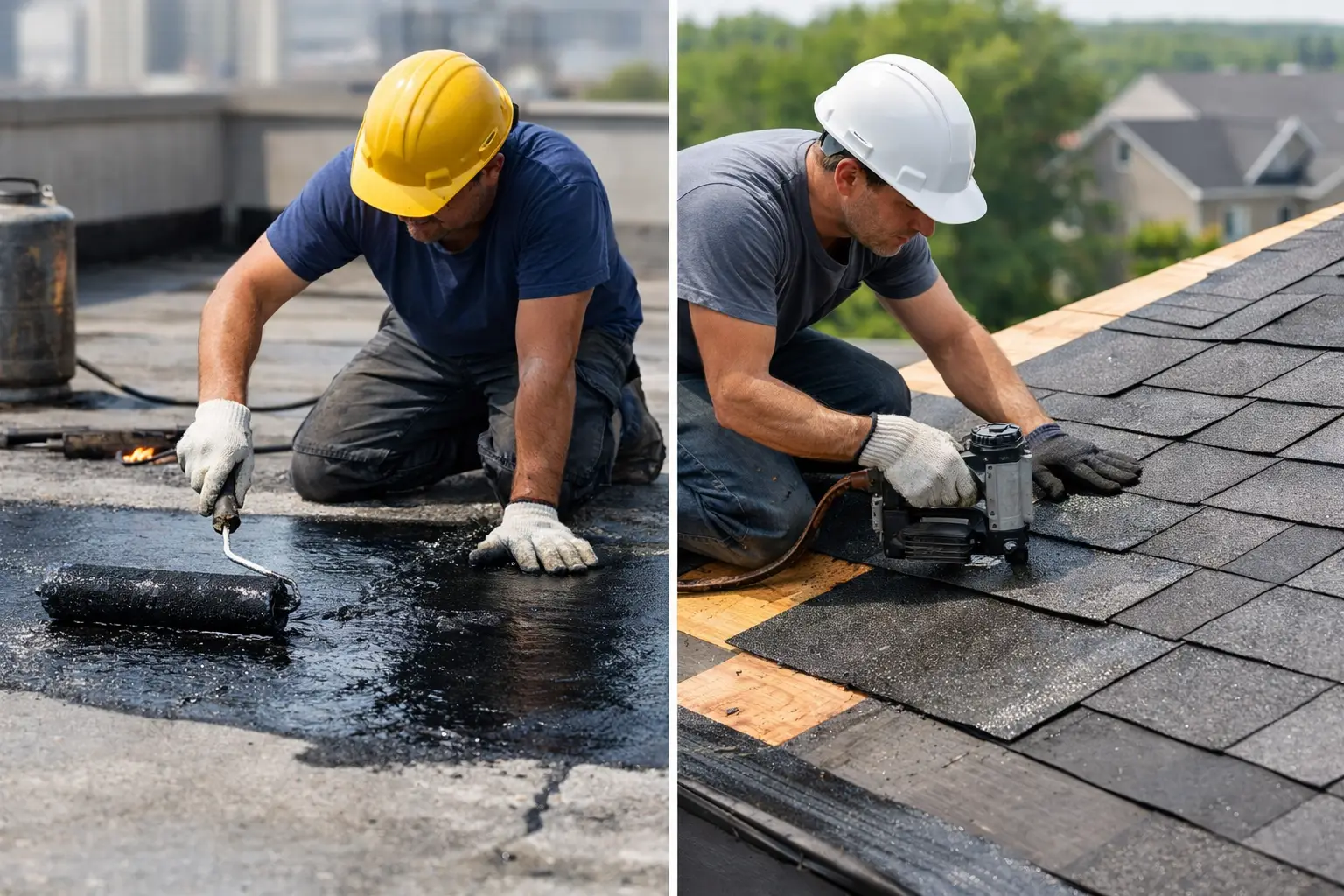
A leak beneath a tiled balcony, podium deck or roof membrane rarely presents as a simple maintenance issue. By the time water staining, mould, delaminated finishes or concrete deterioration becomes visible, moisture may have travelled well beyond the apparent entry point. The decision between waterproofing repair vs full replacement should therefore be based on evidence, not on the lowest initial price or the most accessible symptom.
For strata committees, building managers and commercial asset owners, the right scope depends on the membrane’s condition, the cause of failure, the affected area and the consequence of future leakage. A properly targeted repair can be an efficient and durable outcome. Where defects are widespread or the system has reached the end of its serviceable life, however, full replacement is often the more accountable long-term decision.
Start with the cause of water ingress
Waterproofing fails for different reasons, and each demands a different response. A puncture from later trade work, an isolated failed joint, deteriorated sealant at a penetration or a localised flashing defect may be suitable for repair. These failures are often confined to a defined detail and can be rectified without disturbing the entire waterproofing assembly.
A broader failure pattern requires more caution. Cracking across multiple areas, widespread loss of adhesion, blistering, poor falls, incompatible materials, inadequate terminations or an incorrectly installed original membrane can indicate a systemic defect. Applying a patch over those conditions may temporarily reduce visible leakage while allowing water to continue tracking within the substrate or adjoining construction.
The investigation must also distinguish between the point where water appears and the point where it enters. Water can migrate through screeds, behind cladding, along slab edges, through wall cavities and around service penetrations. Repairing the stained ceiling below without tracing the moisture path is cosmetic work, not remedial waterproofing.
When a waterproofing repair is the right scope
A localised repair is most appropriate when the existing system remains generally sound and the defect can be clearly identified, accessed and treated. This may include a damaged membrane at a balcony door threshold, a failed expansion joint on a podium, a leaking penetration on a roof or isolated deterioration at a planter-box junction.
The value of repair is not simply that it costs less. It can preserve serviceable finishes, minimise disruption to residents or tenants, reduce programme duration and avoid unnecessary removal of otherwise sound building elements. On an occupied strata building, those benefits can be significant.
For a repair to be reliable, the new work must be compatible with the existing waterproofing system and detailed to manage movement, drainage and terminations. The substrate needs to be prepared correctly, moisture conditions assessed, and surrounding details examined rather than assumed to be sound. A repair membrane that bonds poorly to an aged or contaminated surface is unlikely to provide a durable outcome.
Repairs also need clear boundaries. If an investigation identifies one failed detail but confirms the surrounding membrane through appropriate testing and inspection, a defined repair scope can be justified. If multiple defects are discovered as finishes are opened, the scope should be reassessed before works proceed.
Testing gives repairs a defensible basis
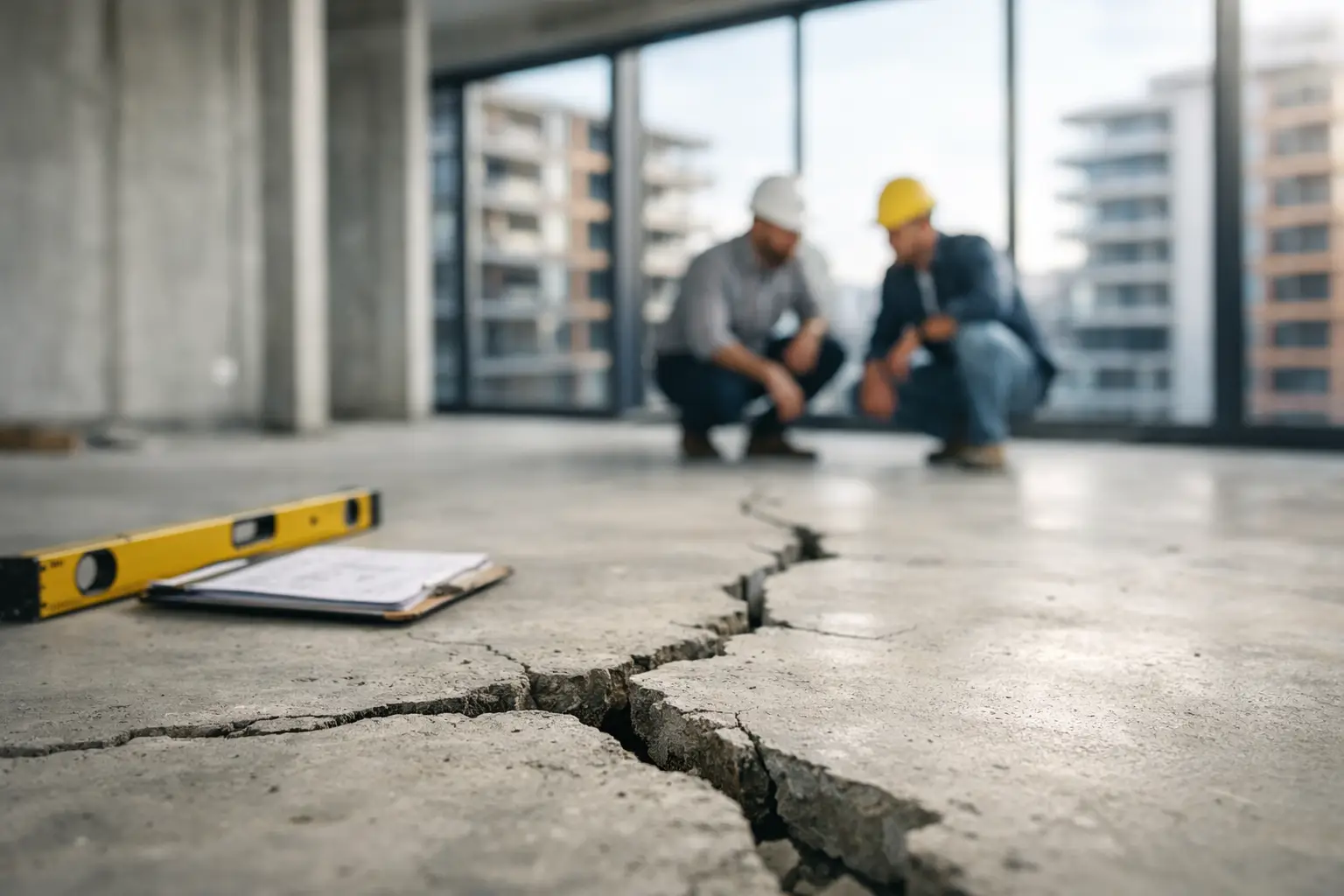
Depending on the construction type and access available, investigation may involve visual inspection, moisture mapping, flood testing, electronic leak detection, thermal imaging, exploratory openings and review of original construction details. No single method is suitable for every building.
The purpose is to establish the extent of moisture impact and identify the mechanism of failure. This is particularly important where water ingress has reached concrete slabs, structural timber, wall framing or occupied spaces. The waterproofing decision may need to be coordinated with concrete repair, façade rectification, replacement of damaged linings or structural works.
When full replacement is the responsible option
Full replacement becomes more compelling when the waterproofing system is broadly deteriorated, poorly installed or unable to meet the building’s current performance requirements. In these cases, repeated repairs can become a cycle of escalating expenditure, disruption and uncertainty.
Common indicators include recurring leaks in different locations, extensive membrane cracking or debonding, aged systems with a limited remaining service life, failed falls causing ponding, and defects concealed beneath finishes across a large area. A membrane may also require replacement where it cannot be safely or effectively integrated with a repair at critical junctions, such as door thresholds, parapets, drainage outlets and wall upturns.
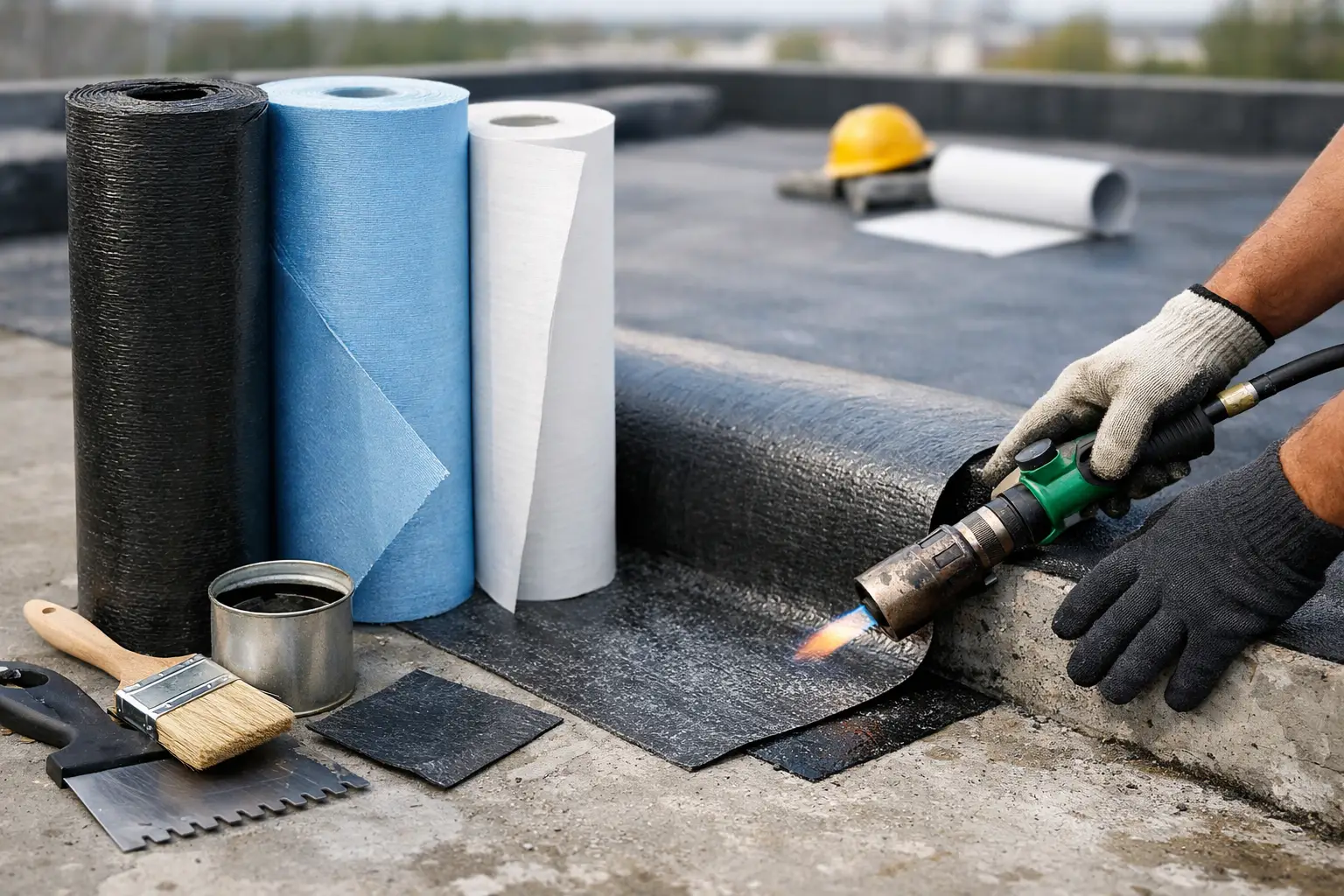
Replacement provides the opportunity to rebuild the waterproofing assembly as a complete system. That may include removing failed finishes and screeds, repairing the substrate, correcting falls, upgrading drainage, installing compatible primers and membranes, and reinstating protective layers and finishes. It is a larger intervention, but it addresses the interfaces where many waterproofing failures originate.
For roofs, balconies and podiums over occupied areas, the consequences of another failure are often greater than the cost difference between a patch and a properly designed replacement. Ongoing water ingress can damage internal finishes, affect tenant operations, contribute to corrosion and concrete spalling, and create disputes around responsibility for recurring defects.
Replacement is not automatically better
A full replacement should not be treated as a default response simply because a leak has occurred. Unnecessary removal can increase cost, prolong access restrictions and create avoidable disturbance to residents or commercial occupants. It may also expose latent conditions that need careful management.
The decision should be proportionate to the evidence. Where a membrane has a long remaining service life and the defect is isolated, a well-designed repair can protect the asset effectively. Where the underlying system is compromised, retaining it may transfer risk into the future rather than resolving it.
Assess the whole assembly, not just the membrane
Waterproofing performance relies on more than the membrane itself. Drainage design, substrate condition, falls, flashing, movement joints, penetrations, protective layers and finish installation all affect whether water is directed away from the building.
Consider a tiled balcony with persistent leakage. The issue may be cracked grout, but it may also involve a failed membrane beneath the tiles, inadequate falls towards the outlet, blocked drainage, a missing threshold upturn or an incorrectly detailed balustrade penetration. Regrouting alone will not correct a membrane or detailing failure. Similarly, coating over a leaking roof without addressing ponding or failed outlets can shorten the life of the new coating.
This whole-of-system view is especially relevant in older buildings and complex Class 2 projects, where waterproofing may interface with façade systems, fire-rated construction, structural elements and occupied apartments. Coordinated investigation helps prevent one trade from rectifying a visible defect while another concealed issue remains untreated.
Cost, access and risk should be assessed together
The initial quote is only one part of the decision. A lower-cost repair can be economical when its expected service life and likelihood of success are clear. It becomes poor value when it must be repeated, causes ongoing damage or delays a necessary replacement until conditions deteriorate further.
Full replacement generally requires greater upfront expenditure because it can involve demolition, waste removal, substrate rectification, membrane installation, testing and reinstatement of finishes. Access requirements may also affect cost, particularly on occupied buildings or sites with limited loading, noise restrictions and programmed tenant operations.
Decision-makers should consider the cost of failure as well as the cost of works. This includes internal damage, temporary protection, resident disruption, business interruption, insurance implications, potential safety hazards and the risk of moisture reaching structural or concealed components. For owners corporations, a staged programme may sometimes be appropriate where investigation confirms different areas have different levels of deterioration.
A disciplined process for waterproofing decisions
An accountable remedial approach begins with defining the defect rather than prescribing a solution too early. The process should establish where water is entering, how far it has travelled, whether the existing system is serviceable and what related building elements may be affected.
From there, the repair strategy can be developed with appropriate technical coordination. Complex sites may require input from engineers, registered design practitioners, waterproofing specialists and other relevant consultants. The proposed works should set out the scope, materials, substrate preparation, critical detailing, protection measures, testing requirements and reinstatement methodology.
During construction, quality control matters as much as the selected membrane. Waterproofing is often concealed by screeds, tiles, pavers or finishes, so inspection and testing need to occur before those layers are reinstated. Clear records, staged hold points and transparent communication help strata stakeholders understand what has been found, what is being repaired and why the selected scope is appropriate.
For Sydney buildings dealing with recurring water ingress, Remedial Building Practitioners applies this investigation-led approach to align waterproofing works with the broader condition of the asset, not just the immediate leak.
The most useful question is not whether repair or replacement is cheaper today. It is whether the proposed work removes the actual failure mechanism and gives the building a defensible path to long-term performance.