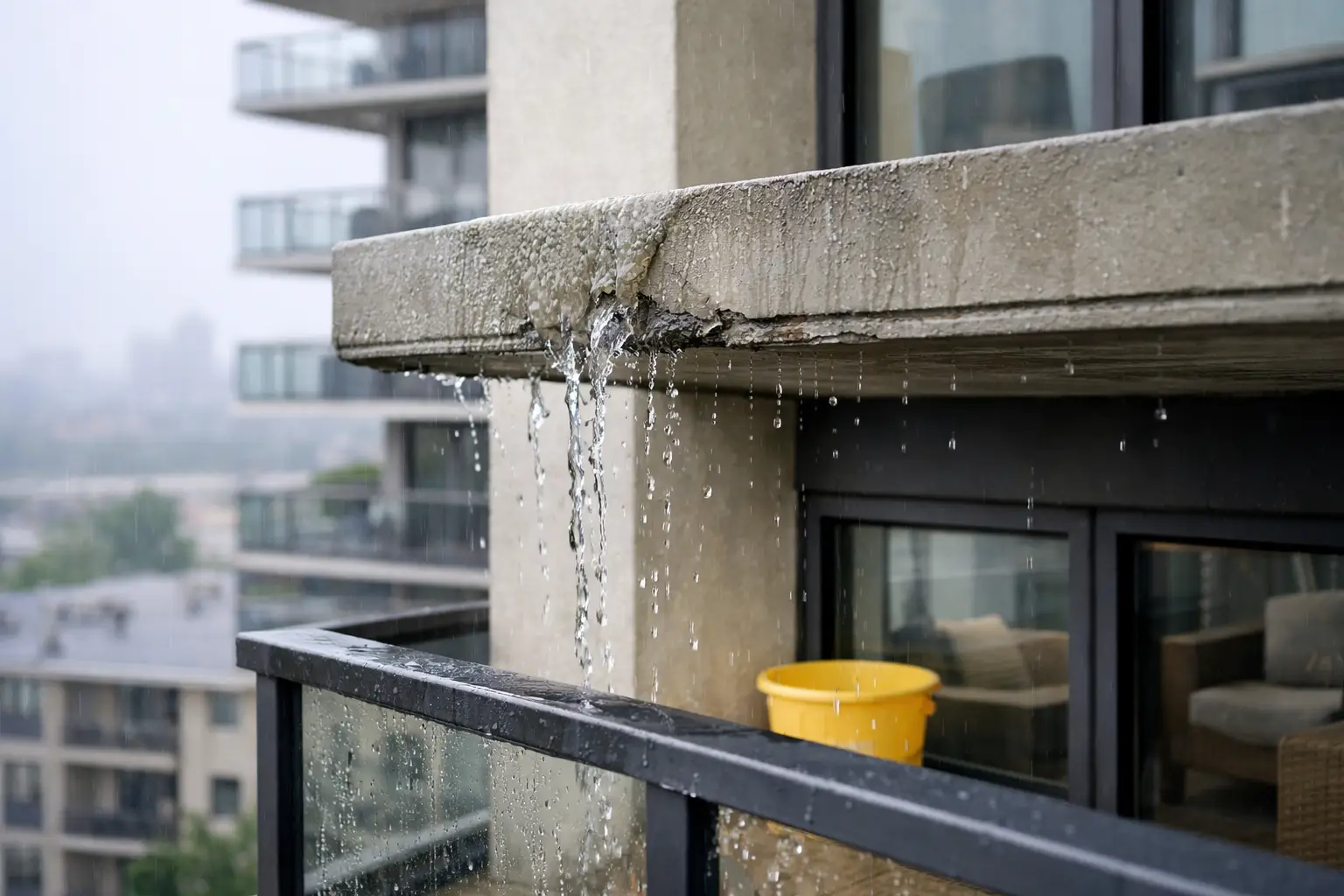
A balcony that leaks once is a defect. A balcony that keeps leaking after patch repairs is usually a sign that the real failure mechanism has not been identified. That is why the question, why do balconies keep leaking, rarely has a single-answer explanation. In most cases, repeated water ingress points to a combination of failed waterproofing, poor detailing, movement, drainage issues, and repair work that addressed symptoms rather than the full defect pathway.
For strata managers, owners corporations, and property stakeholders, this is where balcony leaks become expensive. Water does not stay where it first appears. It migrates into slabs, wall junctions, soffits, internal finishes and embedded reinforcement. By the time staining appears on the apartment below, the defect has often been active for some time.
Why do balconies keep leaking after repairs?
The short answer is that many balcony repairs are not true remedial works. They are localised interventions carried out without a complete defect investigation. Replacing grout, sealing tiles, injecting cracks, or applying a surface coating can reduce visible water entry for a period, but those measures do not necessarily restore the balcony waterproofing system or correct faulty construction details.
A balcony is not just a tiled surface. It is a system made up of the substrate, falls, drainage, waterproofing membrane, thresholds, upturns, balustrade penetrations, joints, and adjacent wall interfaces. If one part fails, or if multiple parts were never built correctly, water can bypass the apparent repair area and continue travelling through the structure.
This is why recurring leaks should be treated as a building envelope problem, not a simple maintenance issue.
The most common reasons balconies leak
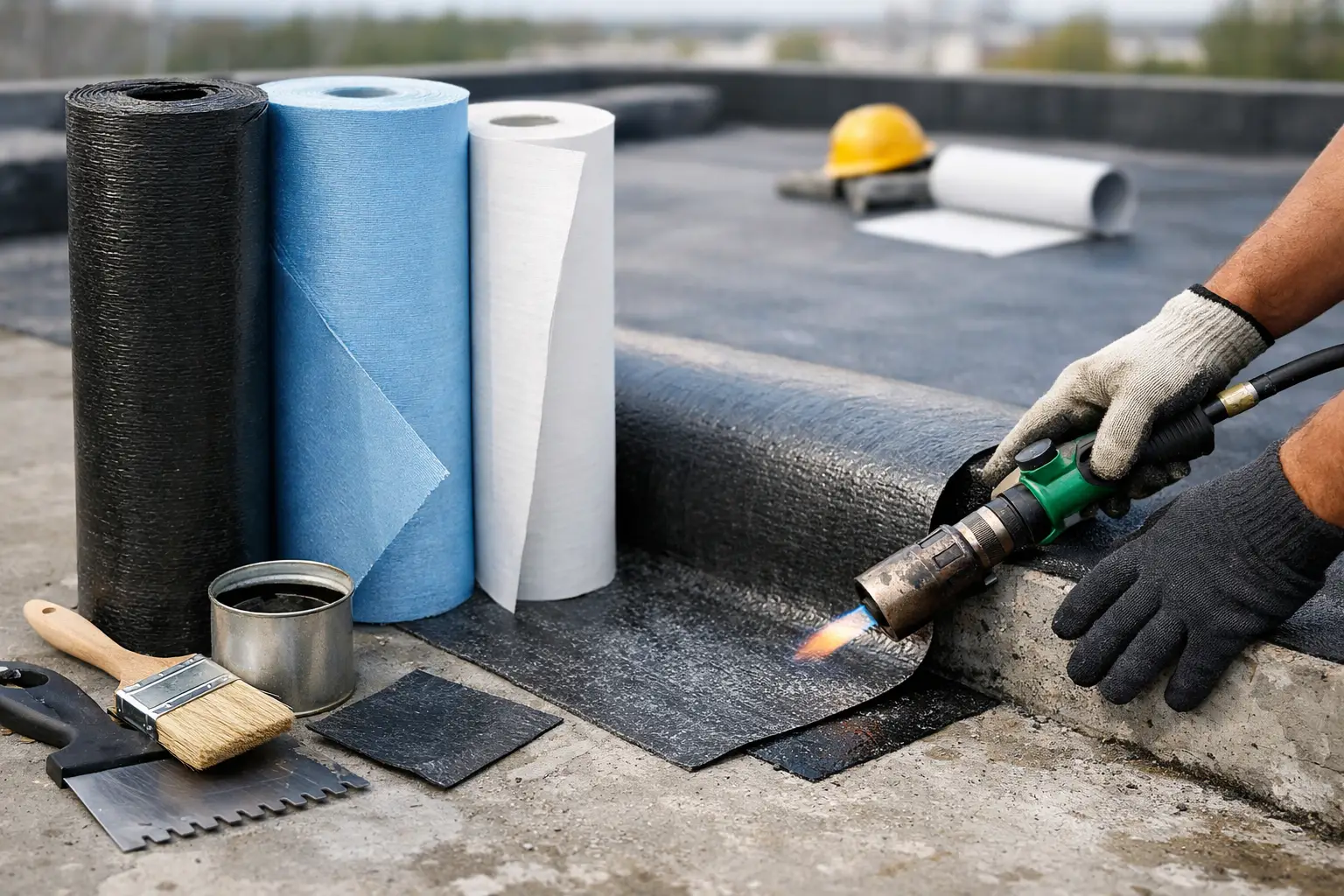
Failed or deteriorated waterproofing membranes remain one of the leading causes. Membranes age, become brittle, lose adhesion, or were poorly installed from the outset. In older buildings, the membrane may simply be at the end of its service life. In newer buildings, failure can occur much earlier if the system was incompatible with site conditions or was not installed to specification.
Just as common is inadequate surface fall. Balconies should direct water efficiently towards drainage points. Where the surface is flat, back-falls toward the building, or contains low spots, water ponds. Standing water places greater stress on finishes, joints and membranes and increases the likelihood of slow ingress over time.
Drainage defects also play a major role. Blocked outlets are the obvious problem, but undersized drainage, poor set-downs, incorrect outlet placement and lack of overflow consideration can all contribute. If water cannot leave the balcony quickly, it will find another path.
Thresholds and door interfaces are another frequent weak point. Sliding door tracks, low upstands and poorly detailed transitions between balcony and internal floor finishes create vulnerable entry points. During heavy rain, especially in exposed elevations, wind-driven water can overwhelm inadequate detailing.
Then there are penetrations. Balustrade posts, handrail fixings, service penetrations and other fixings that breach the membrane are common sources of leakage. If these were not properly detailed and sealed, they create direct water entry paths into the slab or wall junctions.
Movement must also be considered. Balconies are exposed elements. They expand, contract and deflect under thermal change and structural loading. Where movement joints are missing, poorly located, or deteriorated, rigid finishes can crack and membranes can rupture. In concrete balconies, cracking may be both a symptom and a cause of water ingress, depending on the extent and location.
Why surface fixes often fail
A common misunderstanding is that tiled finishes are the waterproof layer. They are not. Tiles and grout shed some water, but they are not the primary waterproofing system. Water can pass through grout lines, tile interfaces and cracked bedding layers. If the membrane below has failed, resealing the tile surface may only delay further leakage.
Similarly, applying a coating over existing finishes without understanding substrate condition, moisture content, adhesion performance and junction detailing can create a false sense of resolution. Some coating systems have a place, but only where the existing assembly and defect cause have been properly assessed.
This is where trade-offs matter. A limited repair may be appropriate for a localised defect in a relatively new balcony with otherwise sound construction. But where there is broad membrane failure, non-compliant detailing, concrete deterioration or recurring leaks across multiple units, a partial repair often becomes a temporary cost followed by full remediation later.
Why do balconies keep leaking in strata buildings?
In strata properties, balcony leaks are often more complex because the source, damage location and responsibility issues do not always align neatly. Water entering through one private balcony can affect common property elements, internal lot finishes, and the apartment below. That creates urgency, but it can also encourage reactive repairs before the building has been properly diagnosed.
There is also the complication of repeated contractor attendance by different parties over time. One contractor may seal a door track. Another may replace grout. Another may clear drainage. Each action may address one visible symptom, but without a coordinated investigation, the building never receives a definitive answer on the root cause.
For older apartment buildings in Sydney, exposure conditions, ageing materials and cumulative maintenance gaps can compound the issue. For newer Class 2 buildings, recurring balcony leaks may raise broader questions around original detailing, workmanship, compliance and whether related defects exist elsewhere in the façade or wet area interfaces.
The hidden damage behind recurring balcony leaks
The visible leak is rarely the full extent of the problem. Ongoing water ingress can saturate screeds, damage internal plasterboard, stain soffits and deteriorate paint finishes. More seriously, if moisture reaches embedded steel reinforcement, corrosion can begin. That can lead to concrete cracking, delamination and spalling, which turns a waterproofing issue into a structural durability issue.
Timber-framed adjacent elements, where present, can also be affected by prolonged moisture exposure. Mould growth, internal humidity problems and occupant complaints often follow. By that stage, the cost of rectification is no longer limited to the balcony surface.
This is why recurring balcony leaks should be investigated early and methodically. Delay increases both the repair scope and the risk profile.
What proper investigation should include
A reliable diagnosis starts with understanding how the balcony was constructed and where water is likely travelling. That usually involves a combination of visual inspection, moisture assessment, review of available design and construction documentation, and selective invasive inspection where necessary.
In many cases, the leak point seen inside the building is not directly below the point of entry. Water can track laterally through screeds, slab interfaces and wall junctions before becoming visible. Without opening up key areas, assumptions can be misleading.
An effective investigation also considers whether the issue is isolated or systemic. If several balconies show similar distress, there may be a repeated construction defect rather than an individual failure. That distinction matters because it affects scope, budgeting, sequencing and compliance planning.
For higher-risk or more complex situations, engineer coordination and a documented remedial methodology are often necessary. That is particularly relevant where there is structural cracking, concrete cancer, widespread façade interface failure or occupied building constraints.
Repair strategy depends on the cause
There is no single repair method that suits every leaking balcony. In some cases, targeted rectification of a door threshold, outlet detail or local penetration may be sufficient. In others, the only durable option is a full balcony strip-out, substrate preparation, correction of falls, membrane replacement, detail reconstruction and reinstatement of finishes.
Where concrete deterioration is present, waterproofing works alone are not enough. Corroded reinforcement and damaged concrete need to be properly repaired, then integrated into the new waterproofing system. If movement is part of the problem, joint design and material selection must accommodate the balcony’s service conditions.
This is also where accountability matters. Balcony remediation involves multiple interfaces between design, product selection, substrate condition, sequencing and workmanship. If those responsibilities are fragmented, defects can be repeated. A coordinated remedial approach reduces that risk by aligning investigation, scope development and construction delivery around the same defect logic.
When replacement is more economical than repeated patching
Property stakeholders are often asked to choose between a cheaper immediate repair and a more comprehensive remedial solution. The right answer depends on the age of the balcony, the extent of damage, the number of affected areas and the consequences of failure.
If the balcony has leaked several times, if internal damage is recurring, or if surrounding elements show distress, repeated patching is rarely economical in the long term. It can extend disruption, create budget uncertainty and leave the owners corporation exposed to escalating repair claims.
A more complete rectification scope may appear larger upfront, but it usually provides better cost certainty and asset protection when the defect mechanism is clearly understood.
Balcony leaks rarely persist because water is unusually stubborn. They persist because the defect pathway remains open. The useful question is not just where the water is showing up, but why the system is letting it in and what needs to change so it stops for good.