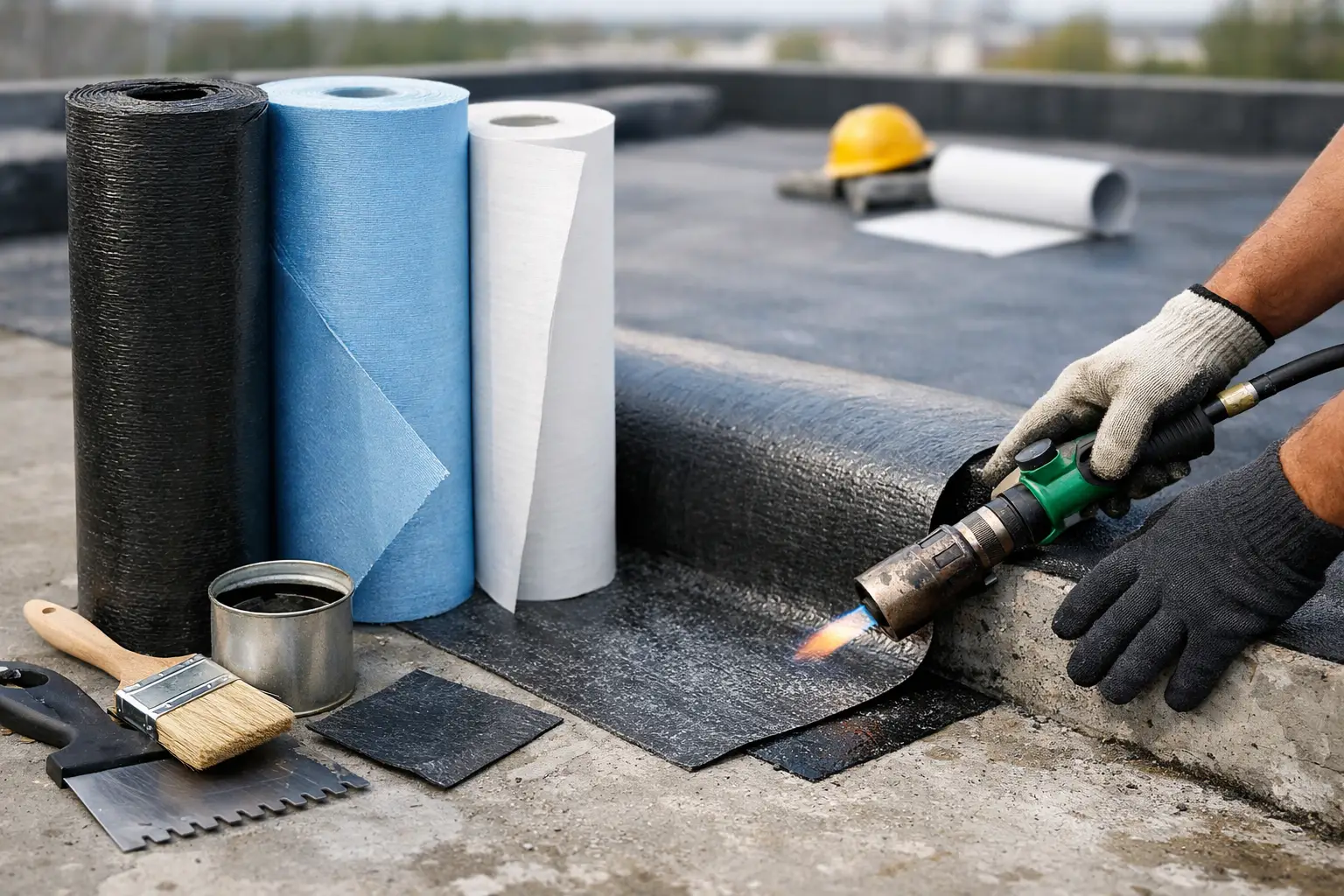
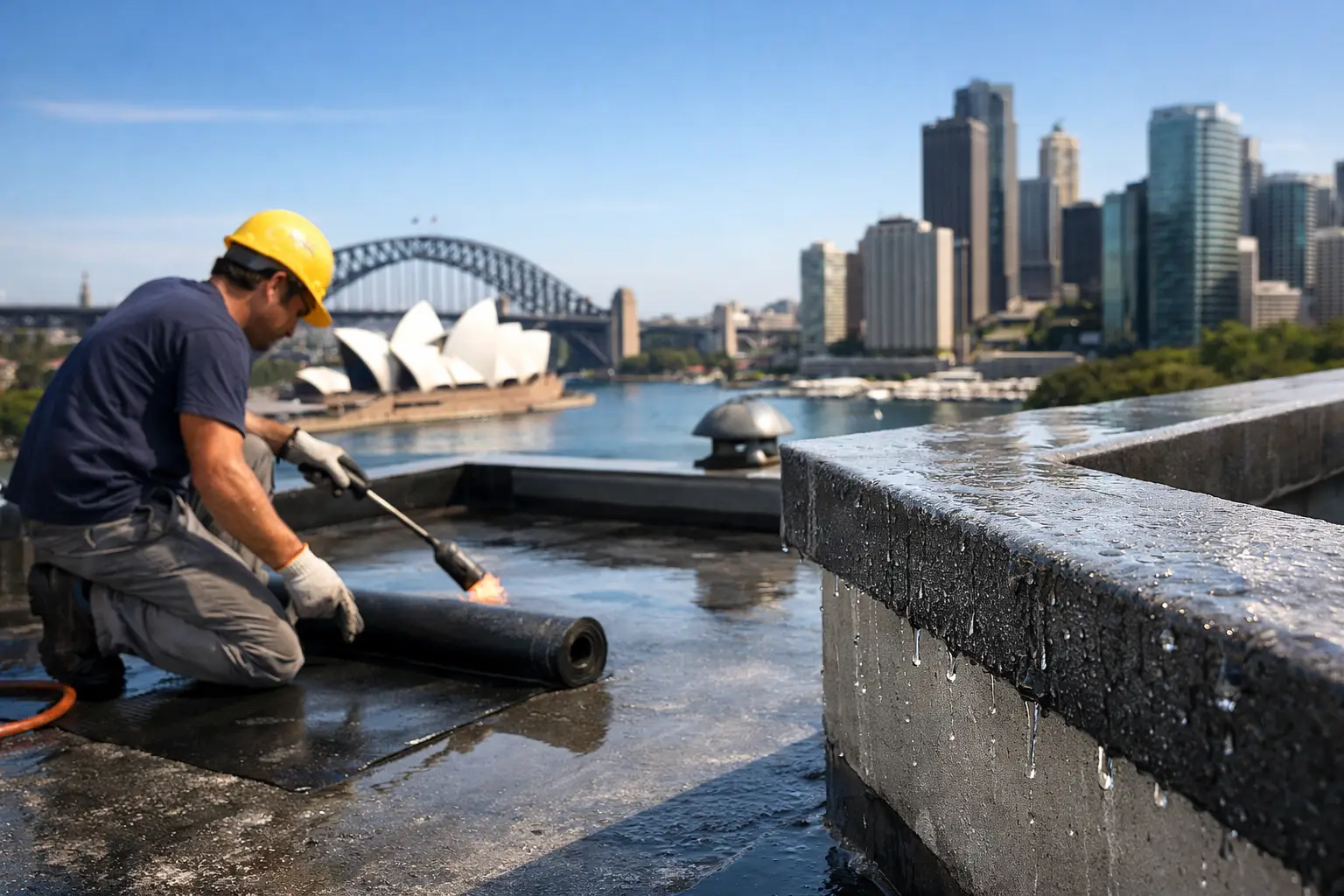
A leaking balcony after heavy rain is rarely just a balcony problem. In strata and commercial buildings, water ingress tends to travel, collect and reappear far from the original failure point. That is why effective waterproofing solutions Sydney property stakeholders rely on need more than a membrane replacement. They need proper diagnosis, compliant detailing and a repair strategy that deals with the cause, not only the visible damage.
Why waterproofing failures become major building defects
Waterproofing sits at the intersection of design, construction sequencing, material compatibility and ongoing building movement. When one part of that system is wrong, the consequences spread quickly. Internal finishes stain, concrete begins to deteriorate, reinforcement corrodes, mould risk increases and occupants lose confidence in the building.
For owners corporations, strata managers and asset managers, the real cost is not limited to the leak itself. Delayed action can trigger broader remedial works, resident disruption, insurance complications and difficult conversations about responsibility. In Class 2 and mixed-use buildings, there may also be compliance implications if defects point to failures in design documentation, installation or certification.
This is where many projects go off track. A contractor is asked to stop a leak, a localised patch is applied and the issue returns in the next weather event. Waterproofing rarely rewards guesswork.
What reliable waterproofing solutions in Sydney should involve
The right approach depends on where the failure sits and how the building has been constructed, but strong outcomes usually begin with investigation. Before recommending products or opening up finishes, it is necessary to understand the substrate condition, the drainage path, movement joints, upturn heights, junctions, penetrations and any related facade or structural issues.
In Sydney, climate exposure adds another layer. Coastal conditions can accelerate deterioration in concrete and metal components, while older buildings often present with outdated detailing, failed sealants and membrane systems that have exceeded their service life. Newer buildings may have different problems, particularly where defects stem from installation quality, interface detailing or incomplete coordination between trades.
That is why waterproofing solutions Sydney buildings actually benefit from are usually part of a wider remedial process. The membrane matters, but so do falls, flashings, screeds, thresholds, drainage outlets, balustrade fixings and adjacent building elements.
Diagnosis before rectification
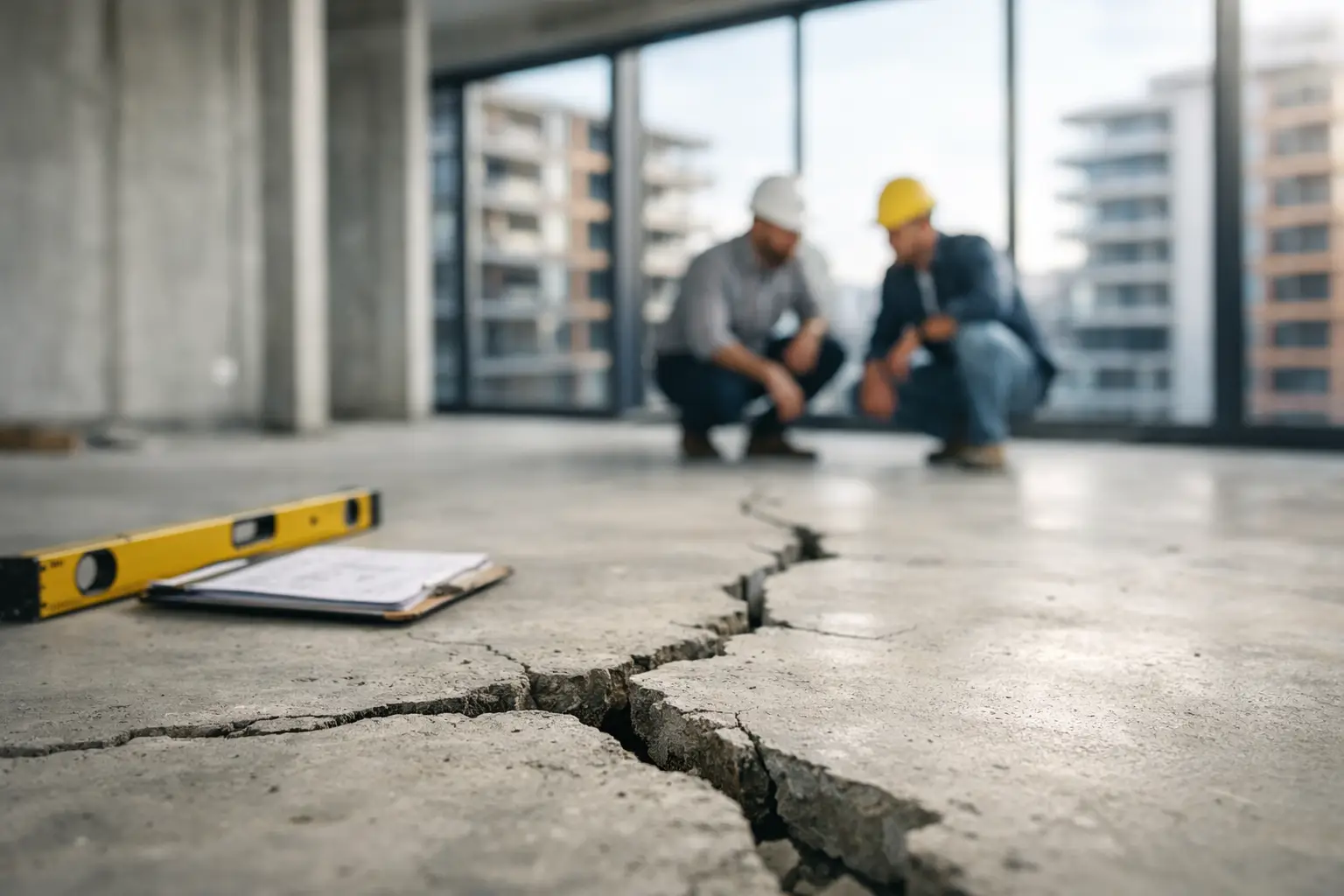
A disciplined investigation phase helps avoid unnecessary demolition and reduces the risk of treating the wrong problem. Depending on the building, this may include moisture mapping, flood testing, selective opening-up works, concrete assessment and review of original drawings or previous repair history.
What matters most is clarity. Stakeholders need to know where water is entering, how it is moving through the structure and what else may already be affected. Without that baseline, scope and cost can shift mid-project, which is exactly what owners and committees want to avoid.
Design and compliance are not optional extras
Waterproofing works on larger residential and commercial buildings need to align with relevant codes, standards and project-specific design requirements. In remedial environments, this often means coordinating with engineers and registered design practitioners where the defect interacts with structural elements, facade systems or Class 2 compliance obligations.
A product-led quote that skips this step may look efficient, but it can create long-term exposure. If detailing is not resolved properly at terminations, joints, planter boxes, podiums or wet area interfaces, failure can recur even when the membrane itself has been installed correctly.
Common areas where waterproofing fails
Balconies remain one of the most common sources of water ingress because they combine external exposure, movement, drainage and multiple junctions in a relatively small area. Failed tile beds, inadequate falls, blocked outlets and poorly detailed door thresholds are recurring issues.
Podium decks are another high-risk zone. These areas often sit above occupied spaces such as car parks, retail tenancies or plant rooms, so a leak at the surface can have significant consequences below. In many cases, repairs need to consider trafficable finishes, planter interfaces, expansion joints and the impact of staged access.
Basements bring a different set of challenges. Hydrostatic pressure, construction joints, retaining wall interfaces and service penetrations can all contribute to water ingress. These are not typically resolved by surface coatings alone. The repair methodology needs to match the source and pressure conditions.
Wet areas within apartments and common property can also become systemic when original installation quality is poor. Isolated repairs may be suitable in some cases, but repeated failures across multiple lots often point to a broader defect pattern that requires a coordinated response.
The trade-off between patch repairs and full replacement
Not every waterproofing defect requires a complete strip-out. In some cases, localised repairs are appropriate, particularly where the failure is confined, the surrounding system remains sound and testing supports the proposed methodology.
However, patch repairs have limits. If the membrane is at the end of its service life, if moisture has migrated widely through the substrate, or if detailing is fundamentally non-compliant, partial repair can become false economy. Stakeholders then pay twice – once for the temporary fix and again for the inevitable full rectification.
The right decision usually comes down to condition, access, lifecycle value and risk tolerance. A building with active concrete spalling below a leaking balcony should be assessed differently from one showing minor early-stage staining. Both need attention, but not necessarily the same solution.
Why coordination matters in remedial waterproofing
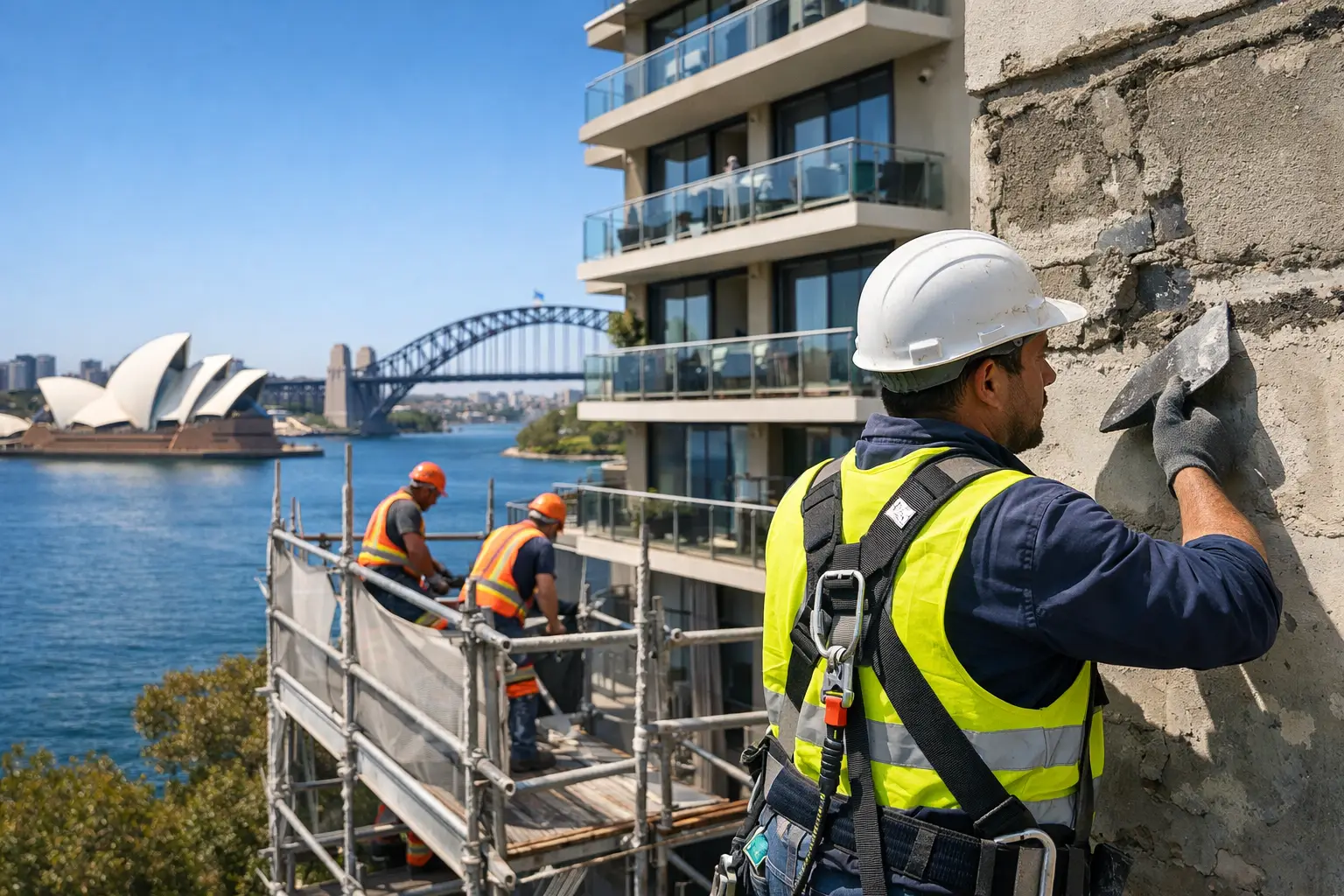
Waterproofing defects rarely sit neatly inside one trade package. A failed membrane may coincide with cracked concrete, deteriorated render, corroded balustrade fixings, non-compliant thresholds or facade defects allowing water into the same zone. Treating these issues separately can create scope gaps and disputes over responsibility.
A coordinated remedial model is more effective because it brings investigation, design input, scope development and on-site delivery into one accountable framework. That reduces fragmentation and helps ensure the repair sequence makes sense. There is little value replacing a membrane if substrate repairs, joint treatment or drainage upgrades have not been resolved first.
For strata and commercial stakeholders, coordination also improves communication. Program impacts, access requirements, approvals and resident notifications can be planned properly instead of being managed reactively after works begin.
Choosing waterproofing solutions Sydney asset owners can trust
The best contractor is not the one who promises the fastest fix. It is the one who can explain the failure mechanism, document the proposed methodology and deliver a repair that stands up technically as well as practically.
Look for a team that can investigate before pricing in detail, identify related building defects and explain whether the issue is isolated or systemic. Ask how the scope will be validated, what assumptions sit behind the proposal and how compliance requirements will be addressed. On complex sites, it is also worth understanding who is coordinating design input, approvals and sequencing with other remedial trades.
A dependable waterproofing contractor should be transparent about uncertainty as well. Some defects only become fully visible after opening up. That is normal in remediation. What matters is having a process for managing discoveries without losing control of quality, cost or accountability.
A better standard for waterproofing outcomes
In practice, good waterproofing is less about applying a product and more about restoring performance to the building envelope. That may involve membrane replacement, but it can also require concrete repairs, screed correction, drainage improvements, sealant renewal, facade rectification or threshold redesign.
For building stakeholders managing ageing assets, defect claims or recurrent leaks, the goal should be durable performance rather than visual improvement alone. A dry surface after one rain event does not prove a problem has been solved. The measure of success is whether the system has been properly diagnosed, correctly detailed and delivered to suit the building’s conditions.
That is the standard Remedial Building Practitioners applies to waterproofing and broader building remediation works. When the issue is treated as part of the building system, rather than an isolated surface defect, decisions become clearer and outcomes become more reliable.
If water ingress has started to affect finishes, structure or occupant confidence, early investigation is usually the most cost-effective step. The longer moisture remains active in a building, the more likely a simple defect turns into a broader remedial project.