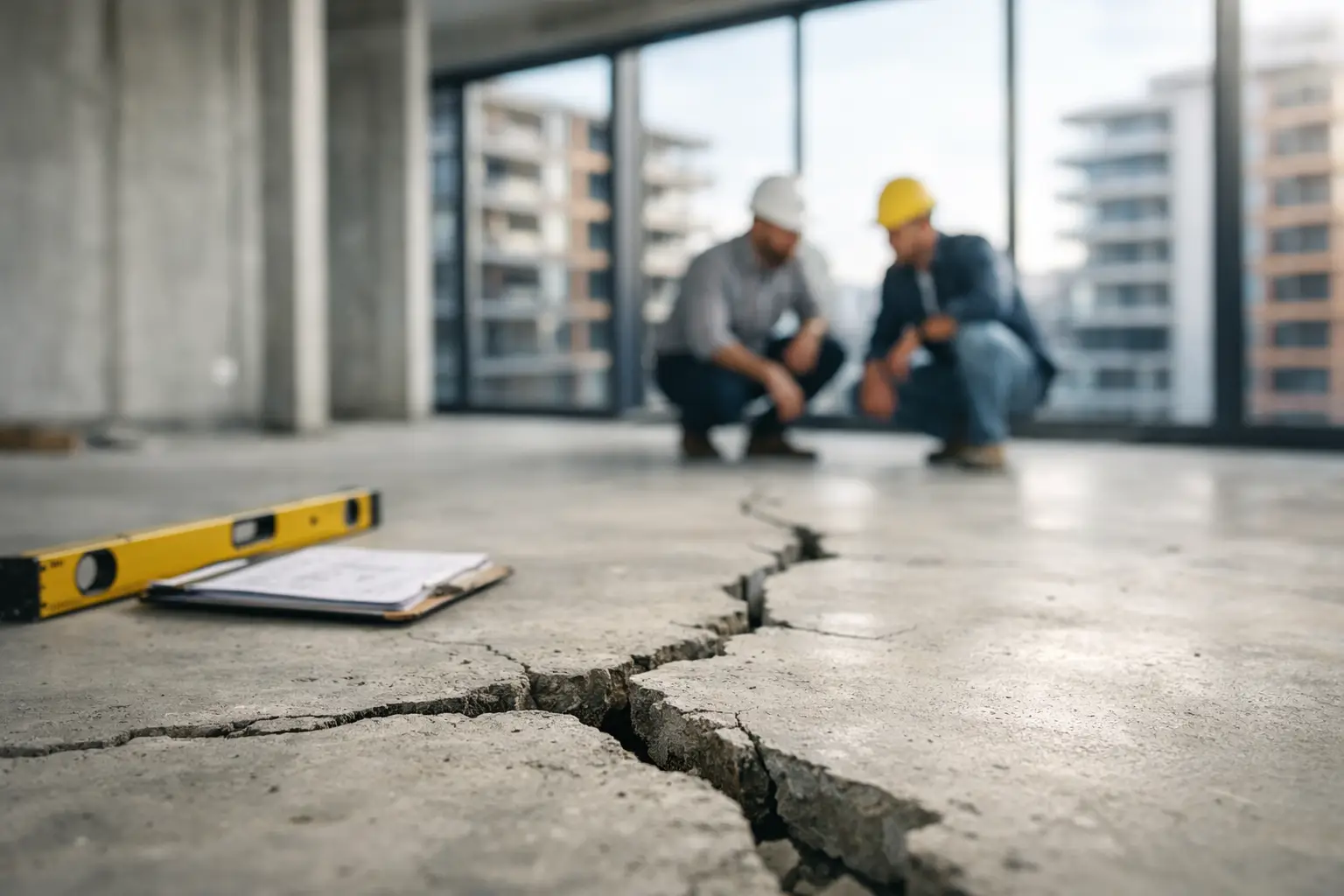

When a building starts showing signs of distress – recurring water ingress, cracked concrete, facade movement or membrane failure – the question is not simply who can carry out the work. It is whether you need a remedial builder vs general contractor, because the answer affects scope, liability, compliance and the long-term performance of the asset.
For strata committees, owners corporations, asset managers and commercial property stakeholders, that distinction matters early. A poor appointment at the front end often leads to temporary repairs, fragmented trade packages and repeated costs. The right appointment tends to start with diagnosis, then engineering, then a coordinated repair methodology that addresses the actual cause of failure.
What is the difference between a remedial builder vs general contractor?
A general contractor is typically engaged to deliver construction works in line with a defined set of drawings, specifications and programme requirements. Their strength is execution – managing trades, sequencing work, supervising site activity and delivering a project that has already been substantially designed.
A remedial builder works in a different problem set. They are usually engaged where a building has existing defects, deterioration or performance failure that must be investigated, understood and rectified. That means the work does not begin with simple construction delivery. It begins with defect identification, root-cause analysis, risk assessment and repair planning.
This is why the two roles can look similar on paper but operate very differently in practice. Both may manage trades, site safety and procurement. Only one is typically structured around forensic investigation, engineered rectification strategies, compliance pathways and the repair of buildings that have already gone wrong.
A general contractor builds to a scope
In many standard construction environments, the general contractor is given a clear brief. The design is prepared by others, approvals are largely in place and the task is to construct what has been documented. If the documentation is complete and the site conditions are reasonably predictable, this model can work well.
That does not mean general contractors lack capability. Many are highly competent builders. The issue is fit for purpose. If the job involves straightforward refurbishment, new-build works or fitout under a complete design package, a general contractor may be the right commercial and operational choice.
The limitation appears when the scope is not stable because the underlying problem has not been properly identified. For example, a contractor may replace failed render, repaint a facade or patch a slab edge, but if water is entering through movement joints, failed membranes or corroded reinforcement, the visible repair will not hold. The building defect remains active underneath the new finish.
A remedial builder starts with why the building failed
A remedial builder is engaged to deal with deterioration, defects and building failure in a more disciplined way. The central question is not only what needs to be repaired, but why the problem occurred and what coordinated works are required to stop it recurring.
That often involves intrusive investigations, review of existing conditions, coordination with engineers and design practitioners, staging plans for occupied buildings, and repair methodologies tailored to the asset type. In Class 2, strata and commercial environments, those steps are not optional extras. They are often critical to compliance, budgeting and stakeholder risk management.
Take concrete spalling as an example. A general contractor may be able to remove loose material and reinstate the surface. A remedial builder is more likely to assess the extent of reinforcement corrosion, identify moisture pathways, coordinate the repair design, nominate suitable protection systems and integrate access, sequencing and safety controls across the broader facade or structural zone.
That difference becomes even more significant in heritage buildings, occupied residential properties and assets with multiple linked defects. Once structural movement, waterproofing failure, facade deterioration and compliance issues intersect, piecemeal construction management is rarely enough.
Where the wrong appointment creates risk
The cost of selecting the wrong delivery partner is not always obvious in the first month. It usually appears later, when the repaired area fails again, the scope expands unexpectedly or stakeholders realise the works addressed symptoms rather than causes.
In strata and multi-storey settings, this can create several layers of exposure. There is the direct cost of rework, but also disruption to occupants, access complications, insurance implications and the challenge of explaining why earlier works did not resolve the defect. If the building sits within a more regulated environment, poor documentation and unclear accountability can also become serious issues.
This is where a remedial approach has practical value. It creates a line of sight from investigation through to repair delivery. Instead of separate parties diagnosing, redesigning and constructing in isolation, the process is coordinated so that findings, methodology and on-site execution are aligned.
When a general contractor may be enough
It depends on the nature of the project. If your building does not have significant defects and the work is largely conventional construction under a clear design package, a general contractor can be entirely appropriate.
Examples might include a standard tenancy fitout, non-specialist refurbishment, internal upgrade works or straightforward replacement of like-for-like building elements where no wider defect issue is present. In these cases, the key commercial drivers are usually programme, price and buildability rather than forensic analysis.
Even then, building stakeholders should be careful not to assume a defect is minor simply because it looks localised. Water ingress around windows, for instance, can point to issues with waterproofing transitions, facade interfaces, substrate condition or original construction detailing. What looks like a small maintenance item can become a larger remedial problem once opened up.
When a remedial builder is the better choice
If the project involves defect rectification, structural deterioration, concrete cancer, cracking, waterproofing failure, facade instability, heritage restoration or recurring performance issues, a remedial builder is generally the better fit.
The reason is not just technical experience. It is the delivery model. Remedial works often require early investigation, staged scope confirmation, engineer coordination, approvals management and repair strategies that can adapt as concealed conditions are uncovered. A contractor who is set up only for straightforward construction may struggle with that level of uncertainty.
For owners corporations and commercial asset managers, accountability is often the deciding factor. You need clarity on who is responsible for diagnosis, who is coordinating design input, how latent conditions will be managed and whether the proposed works are likely to deliver durable outcomes rather than short-term presentation.
Questions to ask before you appoint either one
Rather than asking who is cheaper, it is more useful to ask how the builder approaches uncertainty. Have they dealt with live defect environments before? Can they explain how they determine root cause? Do they work closely with engineers and registered design practitioners where required? How do they manage occupied sites, staged access and hidden condition risk?
You should also test whether the proposed scope is investigative enough. If a contractor is willing to price a major defect problem with little inspection, little testing and broad assumptions, caution is warranted. Certainty at tender stage can be misleading when the underlying building condition is not properly understood.
The stronger approach is usually transparent from the outset. It acknowledges what is known, what still needs to be confirmed and how the methodology will respond if the condition of the substrate, structure or waterproofing system differs from the initial assumption.
Why this matters in Sydney remedial projects
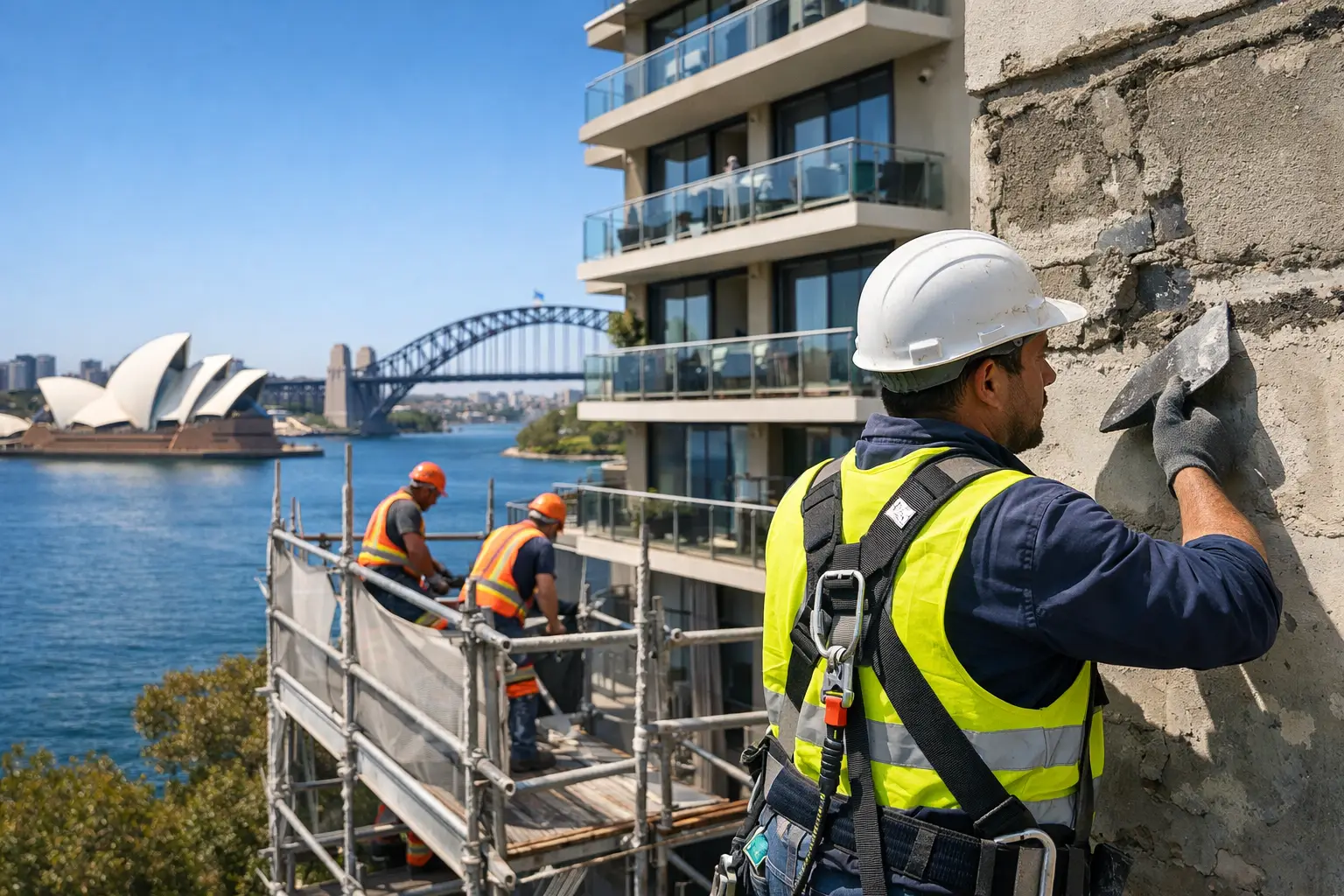
In Sydney, many strata and commercial assets are dealing with ageing concrete, exposed coastal conditions, waterproofing failures, facade deterioration and increasingly close scrutiny around compliance and documentation. These are not projects where generic building delivery is always enough.
A specialist remedial contractor is often better placed to coordinate defect investigations, structural repair methodology, waterproofing interfaces and approval requirements as one connected scope. That is particularly relevant where the building remains occupied and stakeholder communication needs to be consistent throughout the works.
For clients managing complex defects, the real comparison in remedial builder vs general contractor is not about labels. It is about whether the team you engage can diagnose accurately, coordinate properly and deliver repairs that stand up over time.
The safest building decisions are usually made before the scaffold goes up. If the problem is more than cosmetic, choose the party equipped to understand the building first and repair it second.