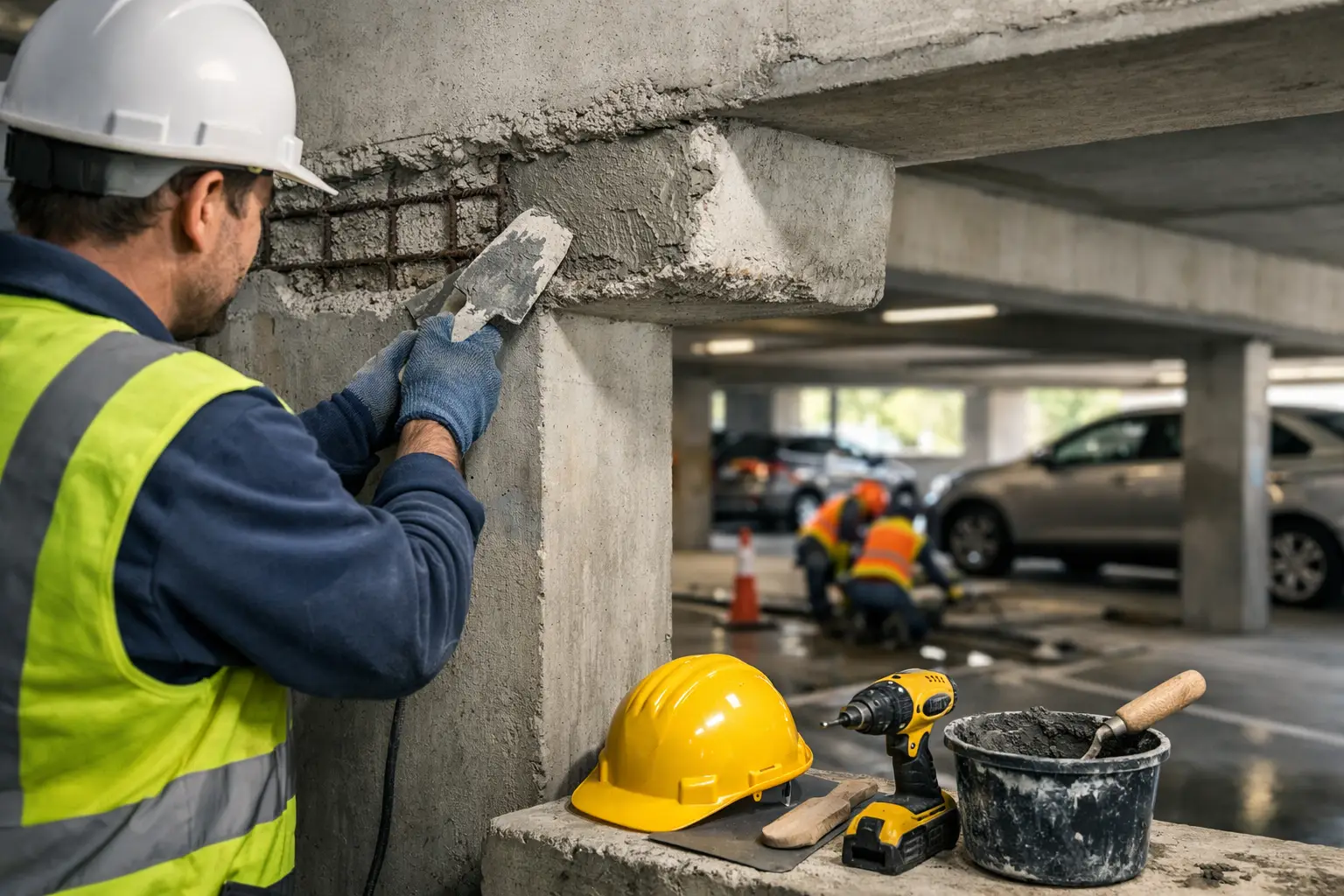
A car park can appear serviceable right up to the point when loose concrete falls, reinforcement becomes exposed or a leaking deck begins damaging occupied areas below. Structural repairs for car parks need to address more than the visible defect. They must establish why deterioration occurred, confirm the extent of damage and restore the structure in a way that supports safe, durable operation.
For strata committees, owners corporations and commercial asset managers, this means treating car park defects as an asset-management and compliance issue, not a maintenance item to be patched at the lowest initial cost. Vehicle loading, water, chlorides, movement and poorly detailed drainage all place sustained pressure on concrete structures. A coordinated remedial approach protects occupants, reduces disruption and helps avoid repeated expenditure on the same failure.
Why car park structures deteriorate
Most multi-level and basement car parks are reinforced concrete structures. The concrete protects the steel reinforcement within it, but that protection is not permanent where moisture and contaminants gain access. Water ingress through failed membranes, cracked slabs, construction joints, planter boxes or inadequate drainage can carry chlorides into the concrete and initiate corrosion of reinforcing steel.
As steel corrodes, it expands. This expansion creates internal pressure that cracks and displaces the surrounding concrete, often seen as spalling, delamination or rust staining. By the time these signs are visible, the affected area may extend beyond the surface defect. Parking decks also experience abrasion from tyres, impact damage, vibration and thermal movement, while basement structures may be exposed to hydrostatic pressure and persistent moisture.
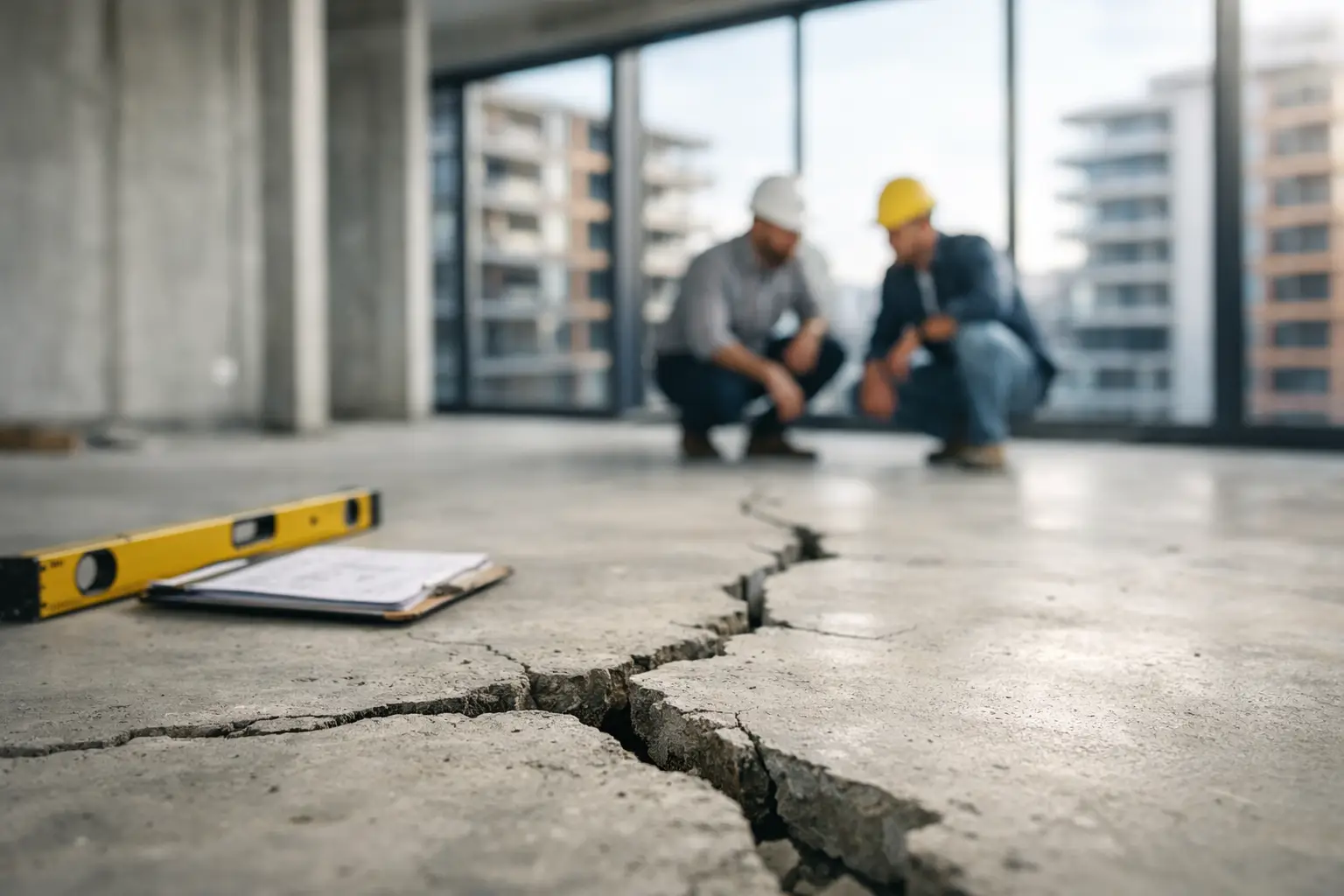
Not every crack indicates structural distress, and not every area of spalling requires the same repair. A fine shrinkage crack in a non-structural topping has a very different risk profile from cracking associated with slab movement, beam deflection or reinforcement corrosion. The distinction matters because the wrong repair method can conceal symptoms without restoring capacity or preventing further deterioration.
Start with investigation, not patching
Effective structural repairs for car parks begin with a methodical investigation. The objective is to define the defect mechanism, the condition of the concrete and reinforcement, and the likely progression of the problem if no work is completed.
A proper assessment may include a visual condition survey, sounding to identify delaminated concrete, crack mapping, cover meter scanning, moisture testing and selective concrete sampling. Where needed, an engineer can assess structural capacity, determine whether temporary propping or exclusion zones are required, and specify the repair design. Drainage and waterproofing interfaces should be reviewed at the same time. Repairing corrosion-damaged concrete while leaving a failed membrane above it will rarely provide a lasting outcome.
This investigation stage also helps owners make informed decisions about scope. Localised defects may be appropriate for targeted repair where testing confirms the surrounding structure is sound. Widespread contamination, recurrent water ingress or deterioration across multiple levels may require a staged remediation programme. The right solution depends on evidence, not the apparent size of the first visible defect.
Common repair scopes and where they apply
Concrete cancer and spalling repairs
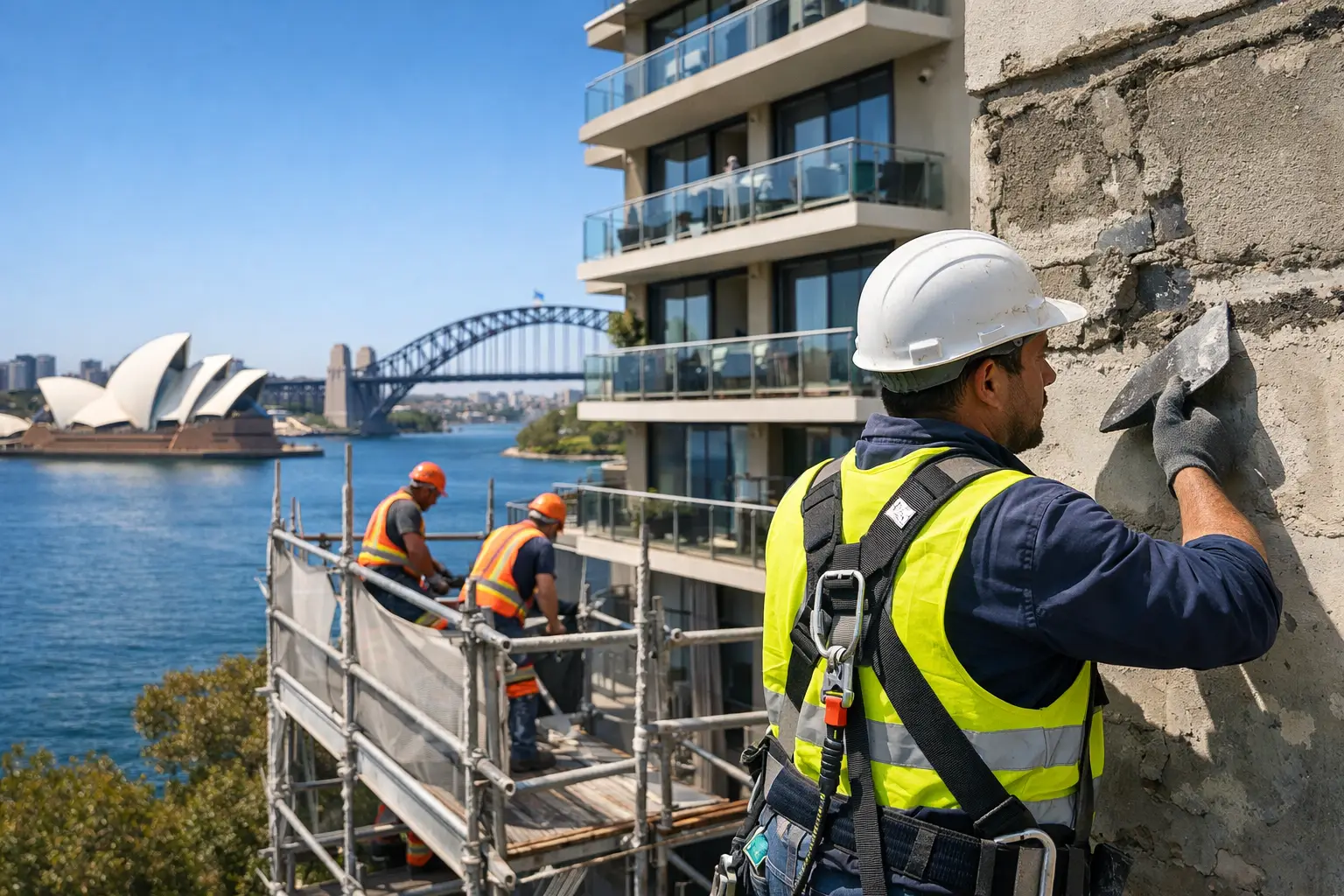
Where corrosion has caused concrete to delaminate or break away, defective concrete is carefully removed to sound substrate. Exposed steel is assessed, cleaned and treated in accordance with the engineered specification. If section loss is significant, supplementary reinforcement or other strengthening measures may be required before the repair mortar is applied.
Compatible repair materials and correct substrate preparation are essential. A repair that is too rigid, poorly bonded or incorrectly cured can crack at its edges and admit water again. The repaired area may also need protective coating or waterproofing to manage the original exposure conditions.
Crack repairs and movement management
Cracks require diagnosis before treatment. Some can be resin injected to restore continuity where the crack is dormant and dry. Others need flexible sealants, routed joints or waterproofing details because they accommodate ongoing movement. Treating an active movement crack with a rigid resin alone can lead to a repeat failure beside the original repair.
Movement joints deserve particular attention in parking decks. Failed joint seals can allow water directly into structural elements and lower levels. Their replacement needs to consider traffic loading, expected movement, surface falls and the connection to the wider waterproofing system.
Waterproofing and drainage rectification
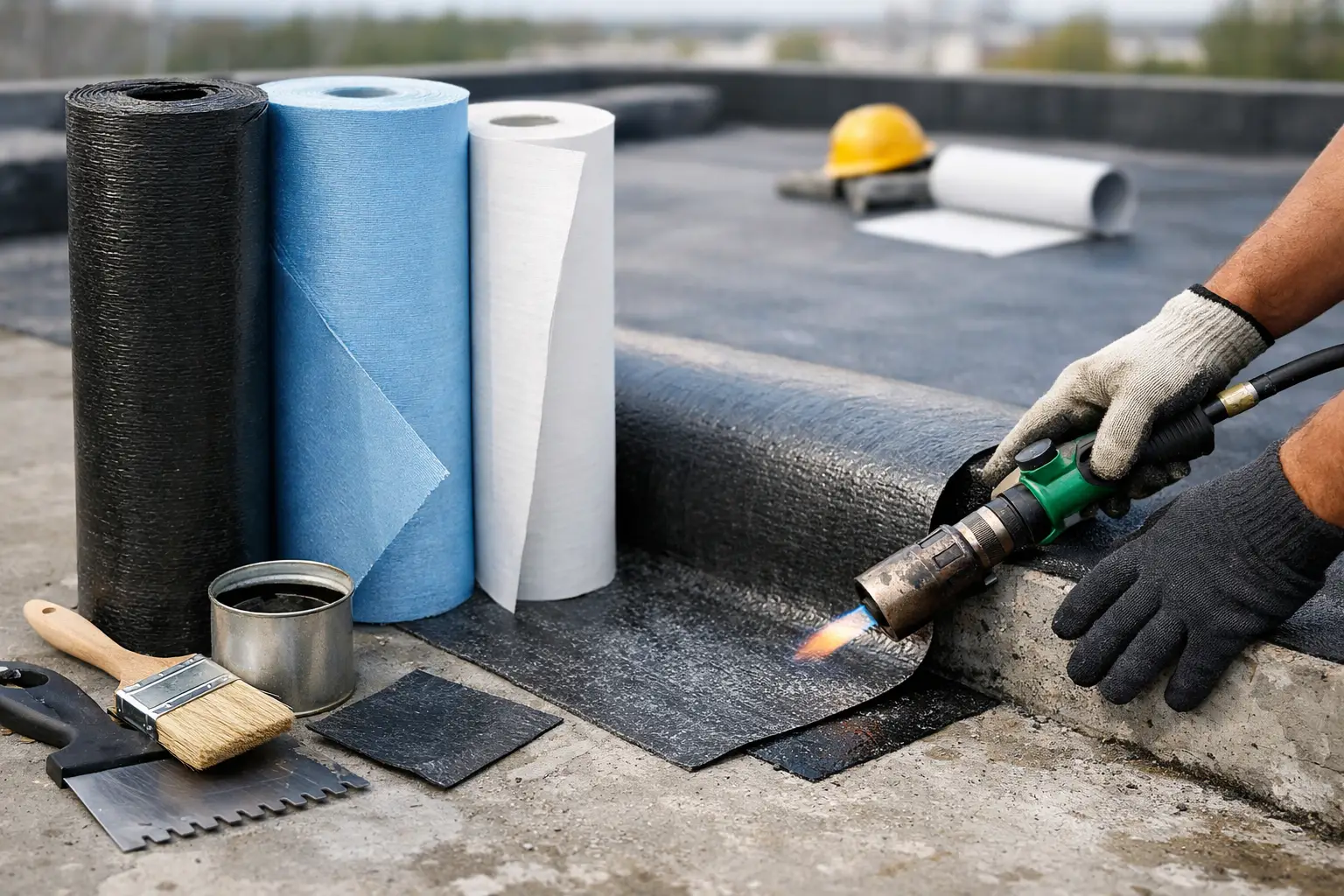
Waterproofing is often inseparable from structural remediation. Exposed rooftop car parks, podium decks and suspended slabs above occupied spaces need a membrane system suited to vehicular traffic and the proposed wearing surface. In basements, failed drainage, leaking construction joints and groundwater pressure may require a different strategy.
The trade-off is practical as well as technical. Full membrane replacement can involve removing finishes, managing access and staging works across parking bays. However, it may be more economical over the asset lifecycle than repeatedly repairing concrete damaged by an unresolved leak. A coordinated scope weighs immediate disruption against the cost and risk of recurring defects.
Engineering, safety and compliance cannot be separated
A car park is a live environment shared by residents, visitors, staff and contractors. Deterioration in slabs, beams, columns or soffits can create falling-concrete hazards and, in more serious cases, affect structural performance. Risk controls may include exclusion zones, catch protection, temporary propping, traffic management and clear communication with users.
For Class 2 buildings and other regulated projects in NSW, the applicable design, approval and documentation requirements must be considered early. The exact pathway depends on the nature and value of the work, whether structural elements are affected, and the building classification. Engaging appropriately qualified engineers and registered practitioners where required provides a clearer basis for compliant design and construction delivery.
Quality assurance during construction is equally important. It should include hold points for concrete breakout, reinforcement treatment, repair mortar placement, membrane application and final protective coatings. Photographic records, product data and inspection documentation provide owners with a useful record of what was repaired and how the work was completed.
Planning works around a functioning car park
Car park remediation is rarely performed in an empty building. Access restrictions, resident expectations, commercial trading hours, fire egress, delivery routes and available alternative parking all influence the delivery plan. A technically sound scope can still cause unnecessary disruption if these constraints are addressed too late.
Staged construction is often the most practical approach. Work can be sequenced by level, bay or zone, with temporary barriers and traffic controls separating construction activity from vehicles and pedestrians. Noisy breakout, dust control, concrete removal and curing periods need to be planned carefully, particularly in residential buildings where the car park connects directly to common areas.
Transparent communication is part of risk management. Stakeholders need clear notice of closures, access changes, expected durations and any restrictions on vehicle movements. For complex projects, a single coordinated team managing investigation, engineering input, approvals and site delivery reduces the gaps that can occur when multiple parties work to separate assumptions.
Choosing a repair partner for long-term performance
The lowest quotation is not necessarily the lowest-cost outcome. A narrowly priced patch repair may exclude investigation, waterproofing interfaces, traffic management, engineering review or the extent of concrete deterioration discovered after breakout. These omissions can become variations, programme delays or repeat works.
A capable remedial contractor should be able to explain the proposed defect diagnosis, the basis of the repair system, likely staging constraints and the records that will be provided at completion. Ask how unexpected conditions will be assessed, who coordinates engineering decisions, and how the repair will prevent the same mechanism from returning.
For Sydney car parks, exposure conditions can vary substantially between coastal sites, enclosed basements and high-traffic commercial facilities. Remedial Building Practitioners applies an investigation-led, Design & Construct approach that brings diagnosis, engineering coordination and on-site delivery into one accountable framework.
A well-planned repair programme does more than make a car park look sound again. It gives owners a documented path to safer operation, controlled expenditure and a structure better prepared for years of use.