A podium membrane rarely fails because of the brochure. It fails at the joints, the falls, the terminations, the planter interfaces, or where movement and traffic were underestimated at design stage. That is why selecting the best waterproofing membranes for podiums is less about chasing a product name and more about matching the membrane system to the building, substrate, exposure and risk profile.
For strata committees, developers and asset managers, podium waterproofing sits in a high-consequence category. When it fails, the result is often not isolated staining. Water can track into car parks, retail tenancies, plant rooms and residential areas below, leading to corrosion, concrete deterioration, mould, service disruption and expensive access constraints. On occupied buildings, the cost of rectification usually extends well beyond the membrane itself.
What makes podium waterproofing different
Podiums are demanding because they combine horizontal exposure with complex use. A rooftop planter deck, communal terrace or mixed-use podium may carry pedestrian traffic, landscaping loads, tiled finishes, pavers on pods, irrigation, drainage cell systems and balustrade penetrations, all while being exposed to UV, thermal cycling and structural movement.
That combination rules out any simplistic view of the best waterproofing membranes for podiums. A system that performs well under protected screed may be the wrong choice for a trafficable exposed deck. Likewise, a membrane suited to a relatively stable new slab may not tolerate the cracking or differential movement seen in an older remedial project.
In practice, the right answer depends on five variables: substrate condition, expected movement, exposure level, overburden or surface finish, and access for future maintenance or replacement. If any of those are assessed poorly, the membrane selection is already compromised.
Best waterproofing membranes for podiums – the main system types
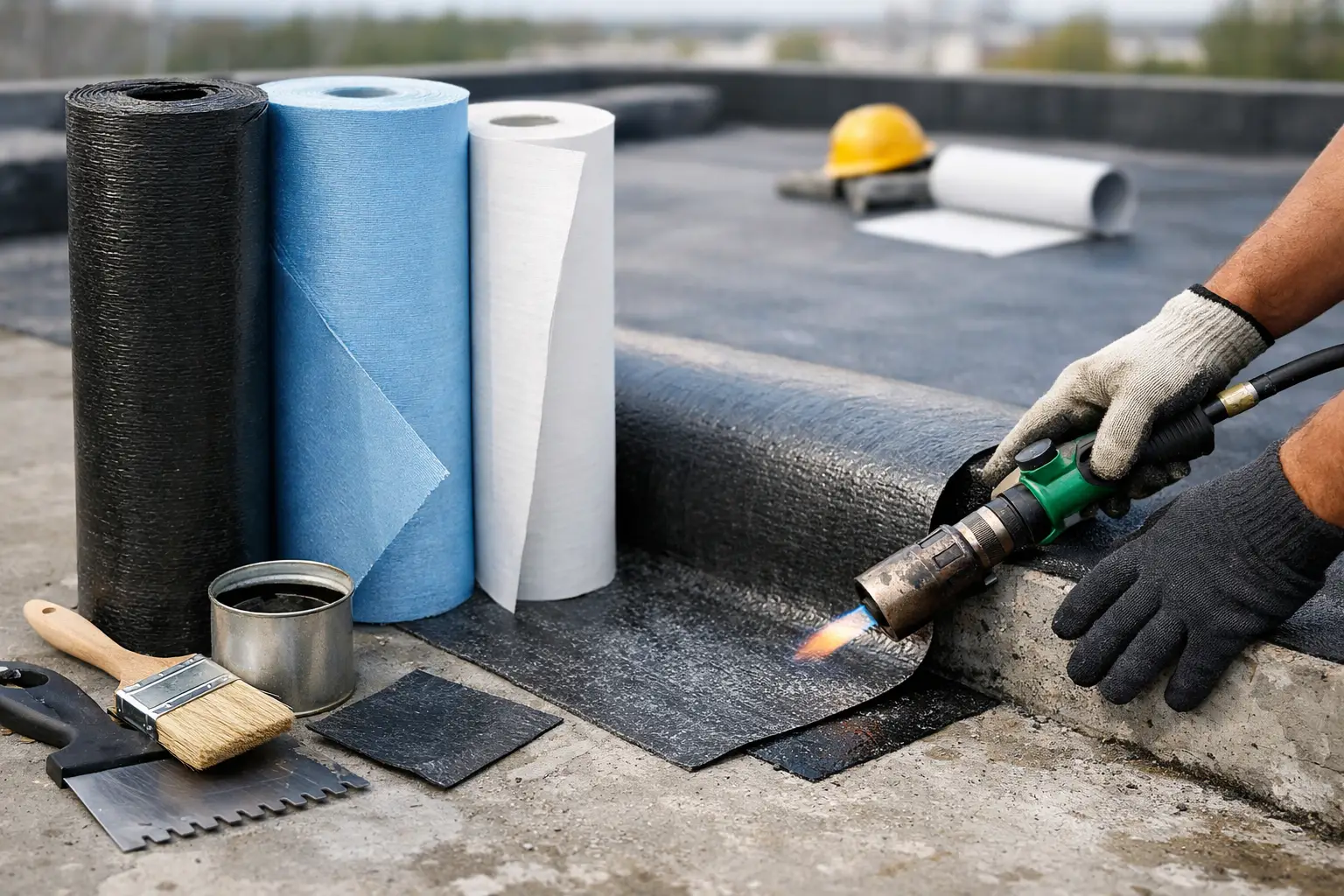
Torch-on bituminous sheet membranes
Torch-on systems remain a common podium solution, particularly where a durable sheet membrane is required beneath protection layers, screeds or overburden. They offer consistent thickness, good puncture resistance and a long performance history when installed correctly.
Their strengths are clear on large open areas with straightforward detailing. They can perform well under landscaped zones, paved podiums and protected build-ups where UV exposure is limited. They are less forgiving, however, at complex penetrations and abrupt transitions, where detailing quality becomes critical. Installation also relies heavily on workmanship, substrate preparation and safe application controls.
For remedial works, torch-on membranes can be effective, but only where the substrate is properly prepared and falls, outlets and upturns are resolved at the same time. Installing a new sheet membrane over a defective or poorly detailed base simply preserves the defect.
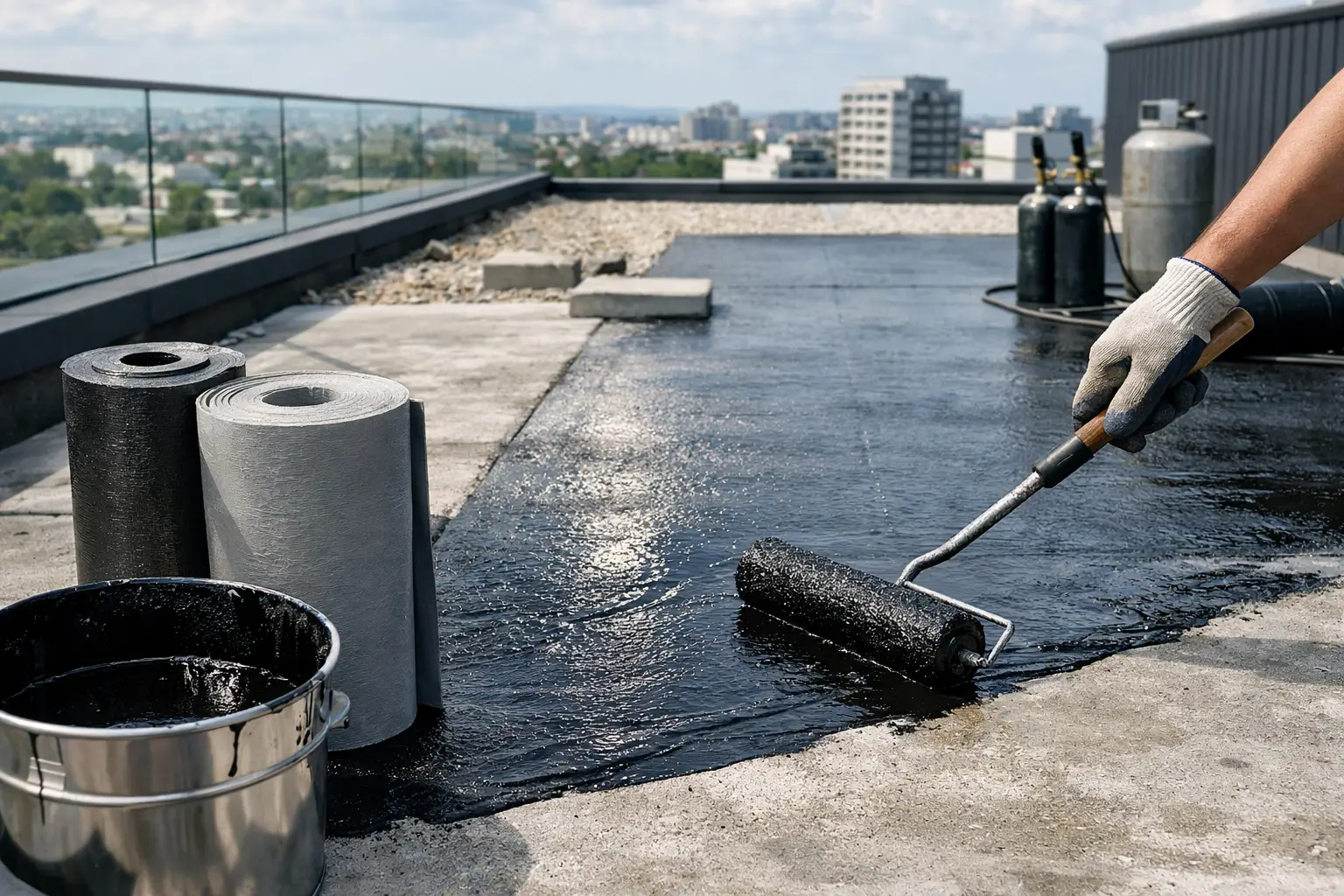
Cold-applied liquid membranes
Liquid-applied membranes are often selected for podiums with difficult geometry, dense penetrations or irregular detailing. They can form a continuous bonded layer without laps, which is a genuine advantage around balustrade posts, planter edges, thresholds and other interruption points.
These systems vary significantly. Polyurethane, polyurea, polyurethane-hybrid and cementitious-modified products each have different movement capability, cure characteristics, UV stability and compatibility with finishes. Some are better suited as protected membranes under toppings, while others can function in exposed trafficable applications when used with the correct wear layer.
The trade-off is that wet film thickness, cure conditions and substrate moisture become critical. A liquid membrane is only as reliable as its application control. On occupied projects, where staging and weather windows matter, that needs close management rather than assumptions.
Self-adhesive sheet membranes
Self-adhesive sheet systems can be useful where heat-free installation is preferred or site conditions make torch application impractical. They provide controlled membrane thickness and can reduce some installation risks associated with open flame.
That said, their performance depends heavily on substrate priming, adhesion integrity and careful treatment of laps and details. On podiums with high movement, standing water risk or complicated interfaces, they need to be evaluated carefully. They are not a default upgrade simply because installation appears cleaner.
Cementitious and crystallising systems
Cementitious membranes and crystallising waterproofing systems have a place in certain podium-related assemblies, particularly where negative-side moisture management or compatibility with concrete substrates is relevant. However, they are rarely the complete answer for an exposed podium deck subject to movement and finish interfaces.
These products can be useful as part of a broader waterproofing strategy, but they should not be mistaken for a universal podium membrane solution. Where the deck is exposed to movement, thermal stress and service penetrations, a more flexible primary membrane is usually required.
How to judge the best membrane for your podium
Movement capability matters more than marketing terms
Podium slabs move. They shrink, expand, crack and deflect under live load. Membranes must accommodate that movement not just on day one, but over years of service. This is especially relevant in older buildings where existing cracking or construction joints already indicate stress points.
A membrane with excellent laboratory data may still underperform if the detailing system at joints, corners and penetrations is inadequate. The membrane and the joint treatment need to work as one system.
Surface finish changes the risk profile
A membrane under pavers on adjustable supports is dealing with a different environment from one under a bonded tile finish. Tiled finishes often introduce additional risk because failure can involve not only water ingress, but also drummy tiles, grout cracking and trapped moisture. Planter zones bring root barriers, moisture retention and drainage management into the equation.
The membrane should never be selected in isolation from the full build-up. Compatibility between primer, membrane, protection layer, screed, adhesives and finishes is not a minor detail. It is central to service life.
Drainage and falls are part of the waterproofing system
No membrane compensates for a deck that does not drain. Ponding increases hydrostatic pressure, accelerates breakdown at weak points and often exposes latent detailing defects. In remedial podium projects, insufficient falls and poorly located outlets are common root causes.
That is why a proper assessment looks beyond the visible leak point. The membrane might be failing, but the drainage design may be the reason it was set up to fail.
Compliance and remedial context
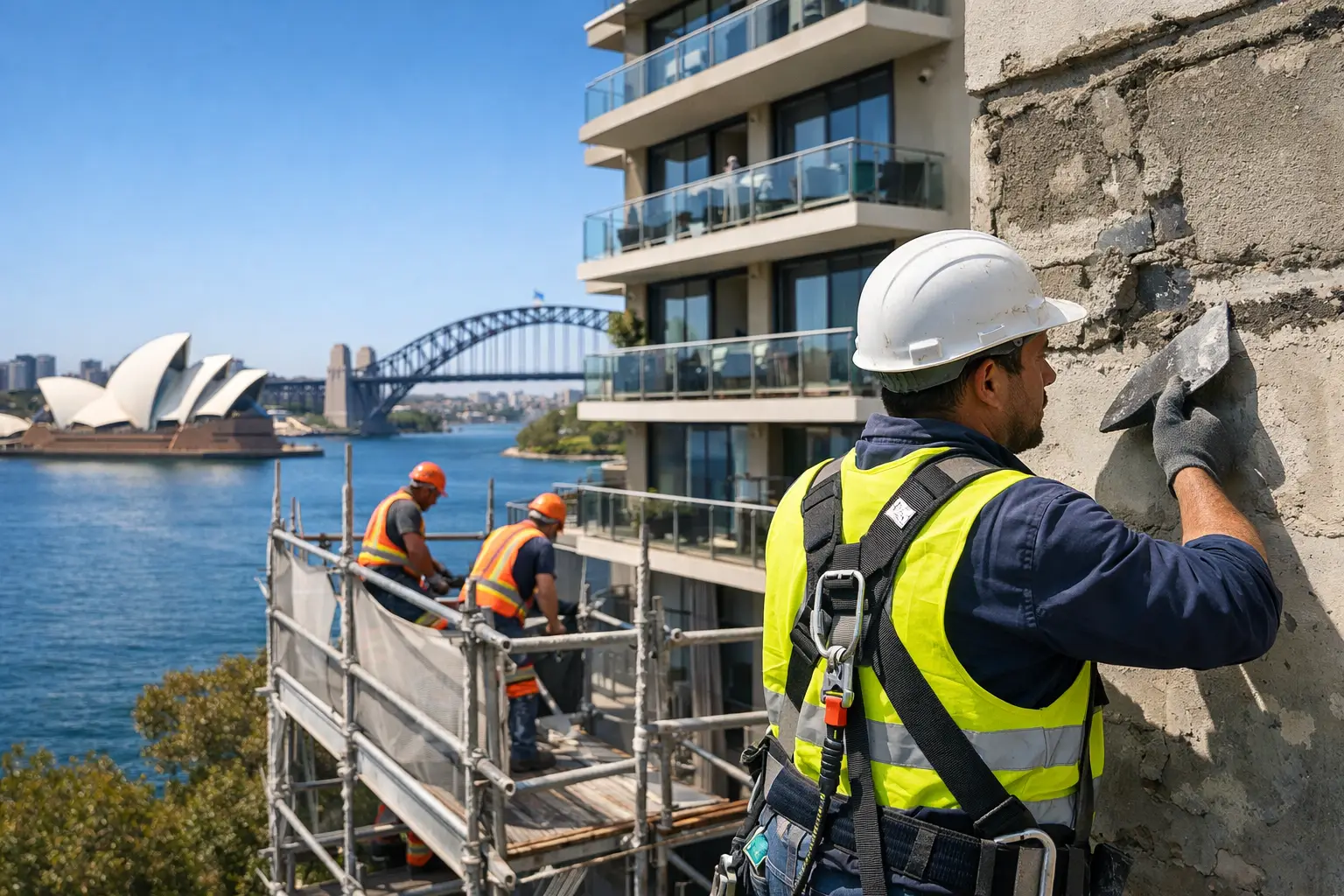
On Australian projects, podium waterproofing selection should align with the relevant NCC requirements, applicable Australian Standards, manufacturer requirements and the project-specific design documentation. For Class 2 buildings and complex remediation works, that also means proper coordination between the remedial builder, waterproofing designer, engineer and other registered practitioners where required.
This is where many projects go wrong. The conversation focuses on product substitution instead of defect diagnosis. A membrane is nominated, installed and covered, but no one has properly resolved substrate cracking, door threshold heights, planter waterproofing interfaces or stormwater discharge issues.
For existing buildings, intrusive investigation is often the most valuable early step. It helps distinguish between membrane failure, detailing failure, drainage failure and structural movement. Without that clarity, even the best waterproofing membranes for podiums can become expensive temporary measures.
Which systems are usually the strongest podium candidates?
If the podium will be protected by screed, pavers or landscaping, a high-quality sheet membrane system often remains a strong option because of thickness control and durability under protection. If the deck has heavy detailing complexity, a high-performance liquid-applied system may be more suitable because it can better address irregular geometry and multiple penetrations.
For exposed trafficable areas, the answer depends on wear demands, UV exposure and maintenance expectations. Some liquid systems with integrated traffic finishes perform well, but only when the substrate condition, falls and detailing are resolved with the same level of rigour.
There is no single best membrane across all podiums. There is only the best membrane for the actual conditions on your project, supported by correct design, detailing and installation control.
In Sydney, where podiums are often exposed to harsh sun, heavy rainfall events and complex mixed-use building conditions, that project-specific approach matters even more. Membrane selection should follow investigation, not precede it.
A sound podium waterproofing outcome comes from treating the membrane as one part of a coordinated remedial system. When the root causes are understood, the specification becomes clearer, the buildability improves, and the asset has a far better chance of performing as intended for the long term.