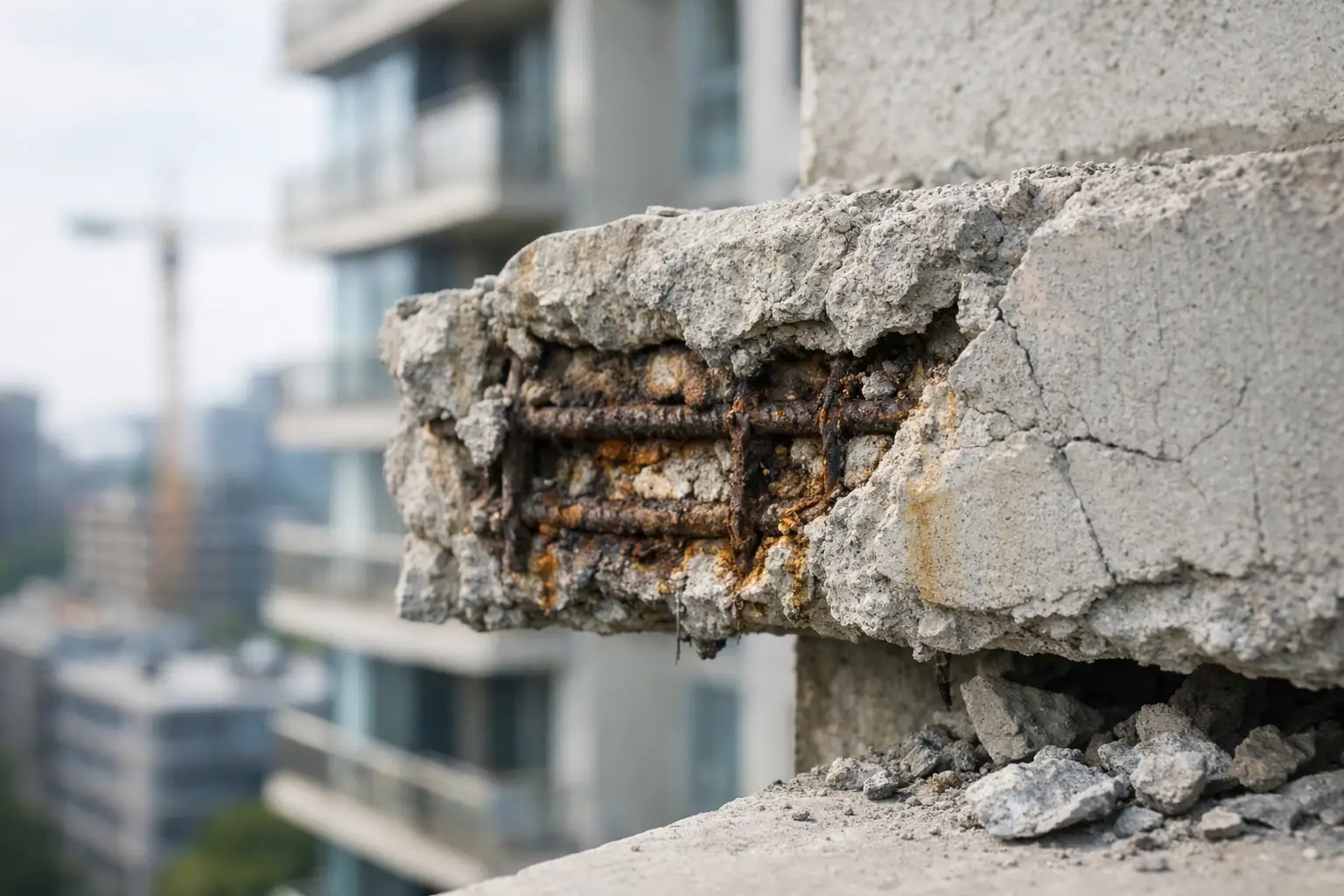
A patch of cracked, rust-stained concrete on a balcony or basement soffit is rarely just a cosmetic issue. When owners ask what causes concrete cancer in buildings, the answer usually starts below the surface – with moisture, steel corrosion and a breakdown in the concrete’s ability to protect its reinforcement.
Concrete cancer is the common term used for deterioration caused when embedded steel reinforcement corrodes, expands and forces the surrounding concrete to crack or break away. In strata, commercial and multi-unit residential buildings, that process can affect structural performance, waterproofing integrity, safety and long-term maintenance costs. It is also one of the clearest examples of why defect rectification should be led by diagnosis rather than patchwork repairs.
What causes concrete cancer in buildings at a material level?
Reinforced concrete works because the concrete and the steel support each other. Concrete handles compressive loads well, while steel reinforcement provides tensile strength. Just as importantly, sound concrete normally creates an alkaline environment around the steel, which helps protect it from corrosion.
That protection is not permanent. Over time, water, oxygen, salts and contaminants can penetrate the concrete. Once the reinforcement loses its passive protection, corrosion can begin. As the steel rusts, it expands. That expansion creates internal pressure, which leads to cracking, delamination and spalling. What appears externally as a small crack or local blowout may indicate a broader deterioration front moving through the element.
In practical terms, concrete cancer is not caused by one single event. It is usually the result of several conditions lining up over time – inadequate cover to reinforcement, ongoing moisture exposure, failed waterproofing, chloride contamination, carbonation, poor workmanship or age-related deterioration.
The main mechanisms behind concrete cancer
Moisture ingress
Water is one of the most common enabling factors. Reinforcement cannot corrode without moisture and oxygen. That is why balconies, planter boxes, rooftops, facades, basements and exposed slabs are frequent problem areas. If waterproofing membranes fail, movement joints are not maintained, drainage is poor or cracks are left untreated, water gains a path into the concrete.
Not all moisture exposure is obvious. Persistent dampness behind facade elements or within concrete upstands can continue for years before visible spalling appears. By the time concrete breaks away, the internal corrosion may already be advanced.
Carbonation
Carbonation occurs when carbon dioxide from the air penetrates the concrete and reacts with hydrated cement, reducing the concrete’s alkalinity. Once the carbonation front reaches the steel, the protective alkaline environment is lost and corrosion becomes far more likely in the presence of moisture.
Older buildings are particularly vulnerable, especially where concrete cover is limited or the original concrete was porous. Carbonation is often overlooked because it is not something a stakeholder can see without testing. Yet it is a common root cause in ageing residential and commercial structures.
Chloride attack
Chlorides can break down the protective layer around reinforcement even when the concrete remains alkaline. In coastal parts of Sydney, airborne salts can accelerate this process, particularly on exposed facades, balconies, car parks and roof structures. Chlorides may also come from contaminated materials or past use of unsuitable additives, depending on the age and history of the building.
Chloride-related corrosion can be aggressive and localised. That matters because a repair strategy based only on what is visibly damaged may leave adjacent contaminated concrete in place, allowing deterioration to continue.
Poor concrete quality or inadequate cover
Concrete is not a perfect barrier. If the original mix was too porous, poorly compacted or inadequately cured, it becomes easier for moisture and contaminants to reach the steel. Similarly, if reinforcement was placed too close to the surface, there is less protective cover between the steel and the external environment.
This is where construction quality has a direct bearing on service life. Two buildings of the same age can perform very differently depending on detailing, placement, workmanship and exposure conditions.
Cracking and movement
Cracks do not automatically mean concrete cancer, but they can create entry points for water and contaminants. Structural movement, thermal expansion, shrinkage and substrate movement can all contribute. Once cracking allows repeated moisture ingress, the corrosion cycle can accelerate.
The trade-off here is important. Some cracks may be superficial. Others may point to movement or distress that must be addressed as part of the remedial scope. Treating the surface without understanding why the crack formed is a common reason repairs fail prematurely.
Why some parts of a building are more vulnerable
Concrete cancer tends to appear where exposure and detailing create higher risk. Balconies are a classic example because they combine weather exposure, waterproofing interfaces, door thresholds, falls, drainage points and edge details. If any one of those elements is poorly designed, poorly built or poorly maintained, water can enter the slab.
Basements and podium slabs are also vulnerable. Leaks from planter boxes, failed membranes, blocked drainage and water migration through construction joints can all create sustained moisture exposure. In facades, horizontal surfaces, parapets and slab edges are common problem zones because they collect water and are exposed to cyclic wetting and drying.
Heritage and older buildings deserve particular care. Repair history, incompatible previous works and ageing materials can complicate diagnosis. In these projects, a disciplined investigation is essential because the visible defect may only be one part of a larger deterioration pattern.
Signs that should not be ignored
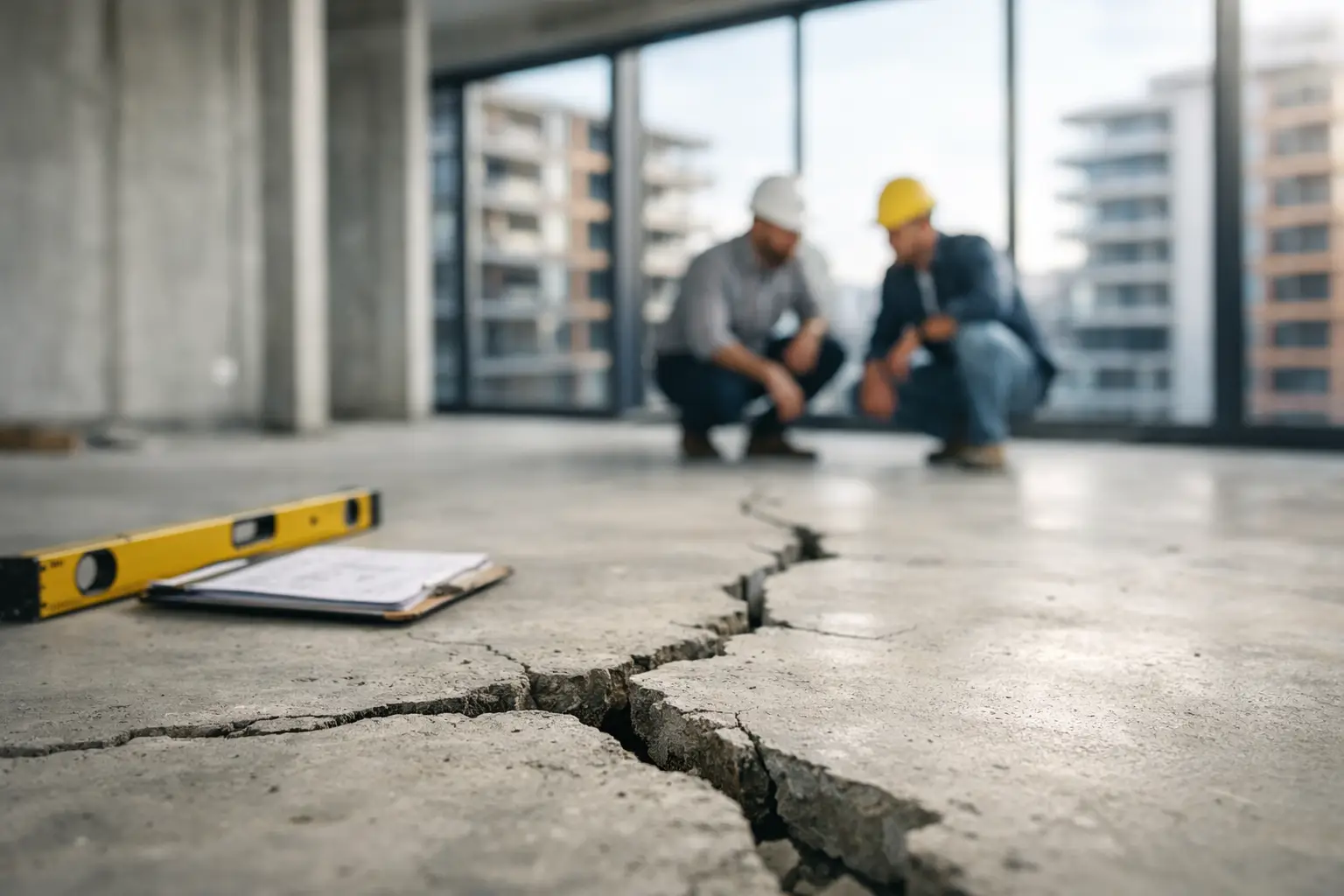
The most recognised signs are cracking, rust staining and spalled concrete. You may also see drummy or delaminated areas, uneven surfaces, exposed reinforcement or recurring leaks around affected zones. In some cases, there is no major breakout yet, but staining and fine cracking suggest corrosion is developing beneath the surface.
For strata managers and asset owners, the real risk is delay. Concrete cancer does not repair itself. Once reinforcement is actively corroding, deterioration generally progresses unless the moisture source and the affected concrete are properly addressed.
Why root-cause diagnosis matters more than a quick patch
A frequent mistake is treating concrete cancer as a surface defect. Loose concrete is removed, a repair mortar is applied and the area is painted. That may improve appearance for a period, but if the surrounding concrete remains carbonated, chloride-contaminated or exposed to unresolved moisture ingress, the problem often returns.
A sound remedial approach starts with investigation. Depending on the building and extent of deterioration, that may include hammer sounding, concrete breakout, cover surveys, carbonation testing, chloride testing, moisture assessment and engineering review. The goal is to establish not just where the damage is visible, but why it has occurred and how far it extends.
That process also informs scope, staging and compliance decisions. On occupied buildings, there may be sequencing, access, safety and waterproofing implications that need to be coordinated carefully. For higher-risk or more extensive deterioration, engineered design and properly documented remedial works are not optional extras. They are part of responsible asset management.
What a proper repair strategy usually involves
The exact method depends on the cause, severity and location of the deterioration. In broad terms, effective remediation requires removal of unsound concrete, treatment or replacement of affected reinforcement where necessary, reinstatement with compatible repair materials and protection of the repaired element against future moisture or contaminant ingress.
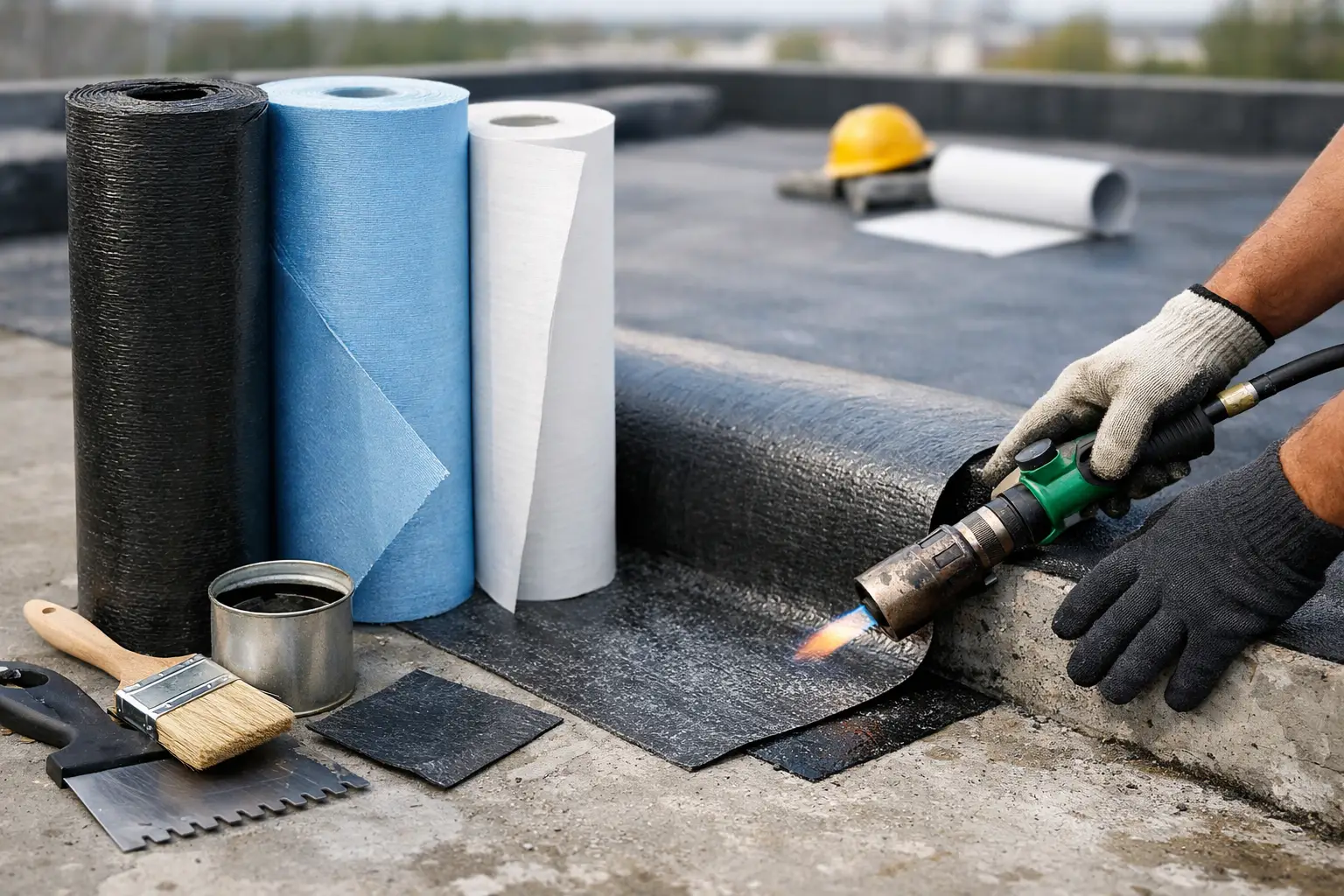
Just as important is addressing the contributing defect. That might mean membrane replacement, facade sealing, crack injection, joint repairs, drainage correction or more substantial structural works. Where corrosion risk remains in surrounding areas, additional protective measures may be needed. There is no one-size-fits-all detail, which is why generic patching rarely delivers long-term performance.
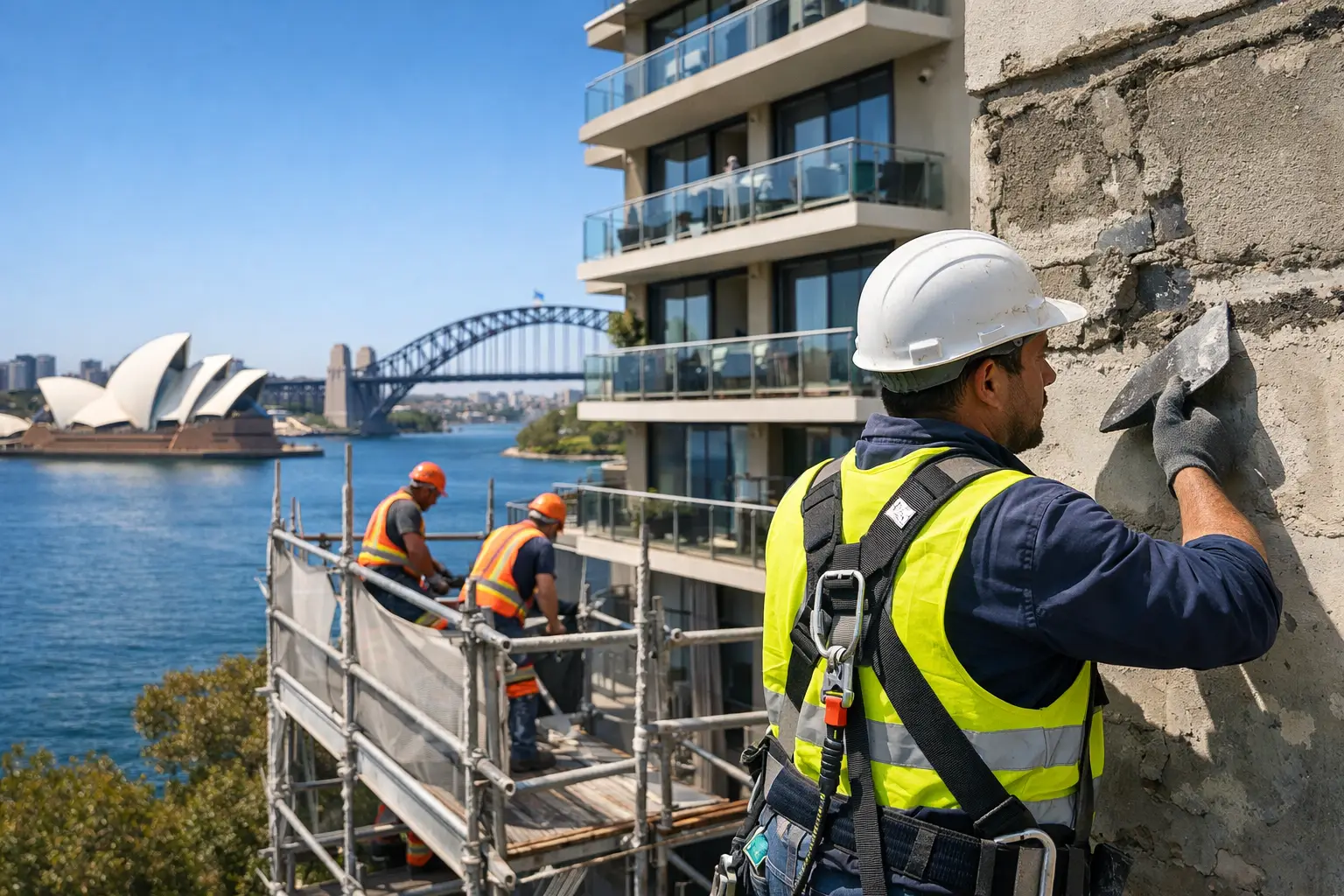
On multi-storey residential and commercial assets, project coordination matters as much as repair technique. Access systems, resident communication, safety controls, engineering review, approvals and quality assurance all affect the outcome. Remedial Building Practitioners works within that reality by focusing on diagnosis, coordinated delivery and repairs that deal with the underlying failure, not just the symptom.
Can concrete cancer be prevented?
In many cases, yes – or at least significantly delayed. Preventative maintenance does not eliminate every risk, but it can extend the life of reinforced concrete elements and reduce the scale of future repairs. The key is to act before corrosion becomes advanced.
Regular inspections, timely crack repairs, membrane maintenance, drainage upkeep and early investigation of leaks all help. So does paying attention to exposed building elements in marine or high-moisture environments. For owners corporations and commercial asset managers, planned maintenance is usually far more cost-effective than waiting until concrete starts to detach or reinforcement is exposed.
There is also a compliance and duty-of-care dimension. Once deterioration affects safety, access or structural reliability, delayed action can create broader risk for building stakeholders. Early intervention gives more options. Late intervention usually means larger scopes, more disruption and greater cost.
Concrete cancer is best understood as a building failure process, not a single defect. It starts when reinforced concrete loses its ability to protect steel, but it becomes a bigger problem when moisture sources, detailing failures and maintenance gaps are left unresolved. The sooner the cause is properly identified, the better the chance of a repair that lasts.