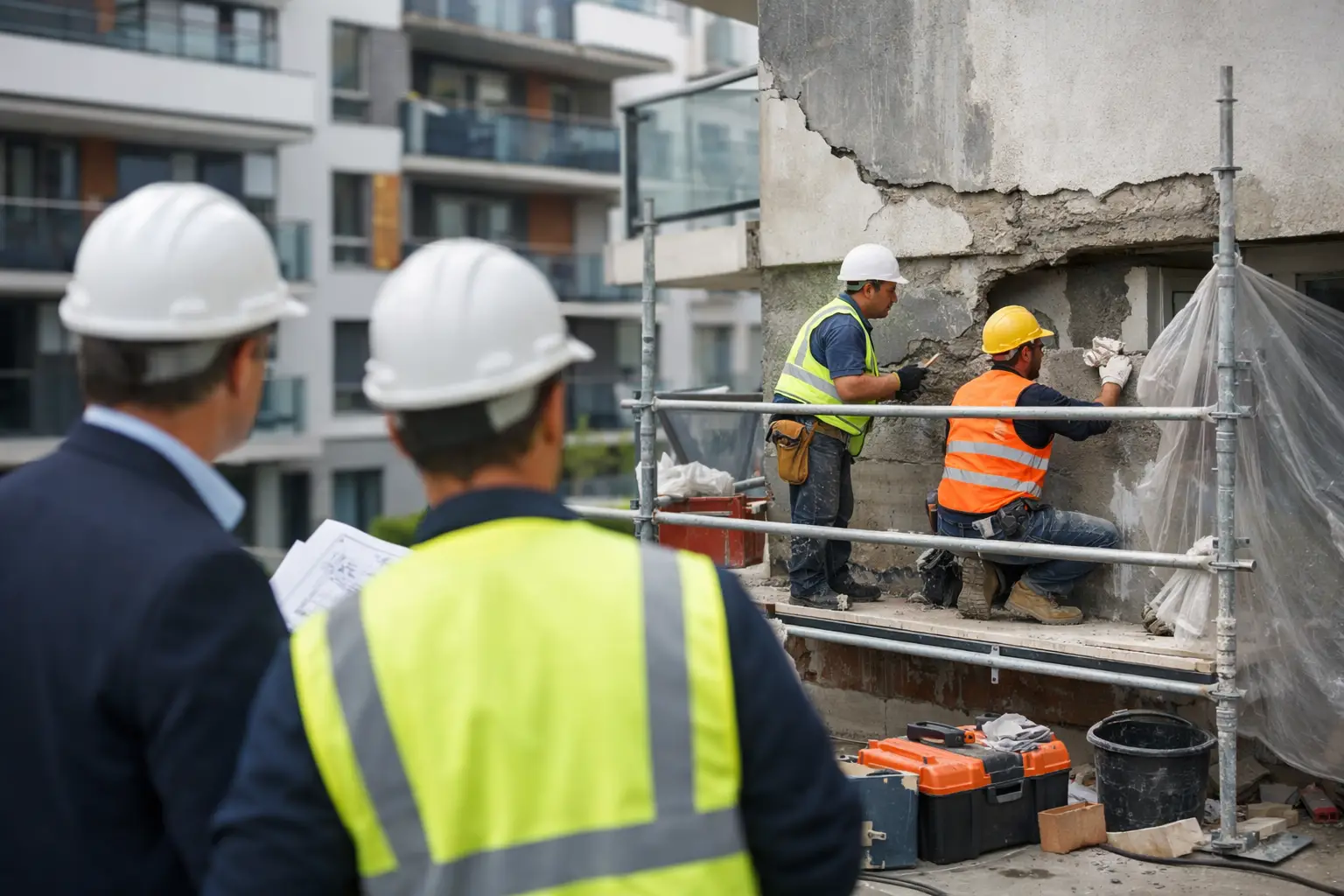
A balcony leak rarely stays a balcony leak for long. In strata buildings, water ingress can move into wall cavities, damage finishes, corrode reinforcement and trigger disputes about responsibility before the true cause is even understood. That is why owners corporation remedial works need to start with diagnosis, not patching.
For committees, strata managers and building stakeholders, remedial works are not just another maintenance item. They often sit at the intersection of safety, compliance, budget control, resident expectations and asset protection. A poor decision early on can lock the building into repeat failures, escalating costs and avoidable disruption. A disciplined approach does the opposite – it isolates root causes, defines the right repair methodology and gives the owners corporation a clearer path from investigation to completion.
What owners corporation remedial works actually cover
Owners corporation remedial works are building rectification works carried out to address defects, deterioration or failure in common property and, in some cases, elements affecting the broader building envelope or structure. The scope can range from localised crack repairs to major facade restoration, structural strengthening, concrete cancer repairs, waterproofing replacement or defect rectification in Class 2 buildings.
What makes these projects different from routine maintenance is the reason they are being undertaken. Remedial works are usually required because something has failed, is failing or was not constructed correctly in the first place. The objective is not cosmetic improvement. It is to restore performance, safety, serviceability and durability.
That distinction matters. Repainting a wall stained by moisture is maintenance if the substrate is sound. Removing failed waterproofing, tracing moisture pathways, repairing damaged concrete and reinstating the system properly is remediation. One treats the symptom. The other addresses the cause.
Why reactive repairs often cost more
Owners corporations are often under pressure to act quickly, especially where residents are affected by leaks, falling concrete, rust staining or visible cracking. Urgency is understandable, but urgency can also lead to short-term fixes that do not match the defect mechanism.
A common example is repeated sealant replacement around windows when the actual failure sits in facade joints, membrane terminations or concealed flashing details. The building may appear improved for a short period, yet water continues to track behind finishes and into structural elements. By the time the issue is properly investigated, the repair scope is broader and more expensive.
The same pattern appears in concrete spalling. If loose concrete is simply patched without understanding carbonation depth, chloride exposure, reinforcement condition and moisture ingress, the repair may fail prematurely. The visible damage returns, often adjacent to the original patch, because the deterioration process was never properly interrupted.
This is why experienced remedial contractors push for investigation-led planning. It can feel slower at the front end, but it usually reduces waste, variation and repeat expenditure over the life of the asset.
The right starting point for owners corporation remedial works
The best remedial outcomes are usually built on a staged process. First comes defect identification and evidence gathering. That may involve site inspections, intrusive opening-up works, moisture testing, concrete assessment, facade access investigations or engineering review depending on the issue.
Next comes cause analysis. This is the point where many projects either become controlled or drift off course. Buildings do not fail for one reason alone. A leak might involve membrane breakdown, poor falls, defective detailing and blocked drainage. Cracking might be cosmetic, structural or movement-related. Without separating these possibilities, repair recommendations can be inaccurate.
Once the causes are understood, the scope should be documented clearly enough to support pricing, procurement, approvals and construction planning. That often means coordinated input from remedial builders, consultants, engineers and, where required, registered design practitioners. For larger or higher-risk projects, that coordination is not an administrative extra. It is essential risk control.
Common categories of remedial work in strata buildings
In practice, most owners corporation remedial works fall into a handful of recurring categories, although the technical complexity can vary significantly from one building to the next.
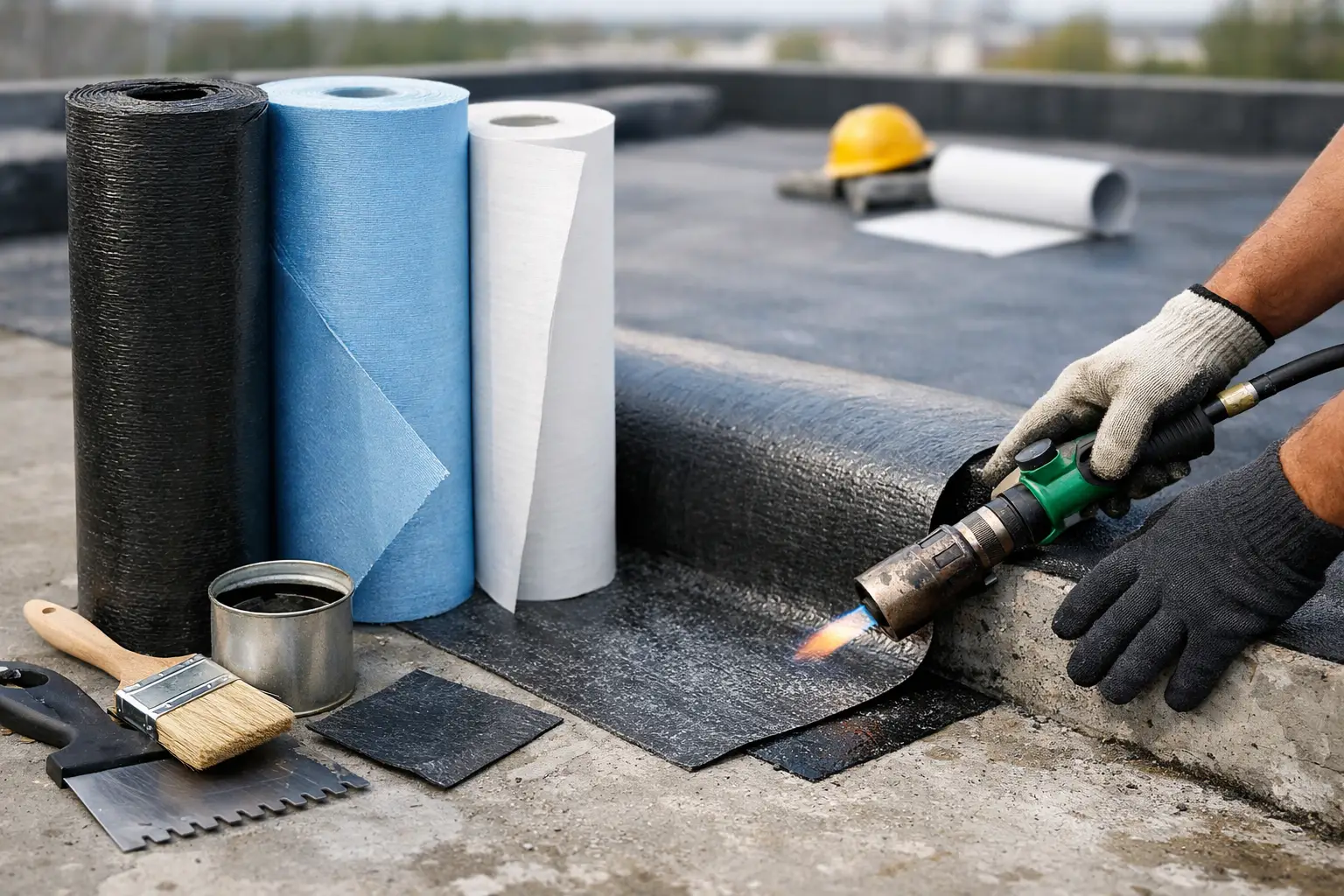
Waterproofing failures are among the most common. These can affect rooftops, podiums, planter boxes, balconies, wet areas and basement structures. The visible problem may be a ceiling stain or mould growth, but the actual defect may be buried within membranes, screeds, thresholds or drainage interfaces.
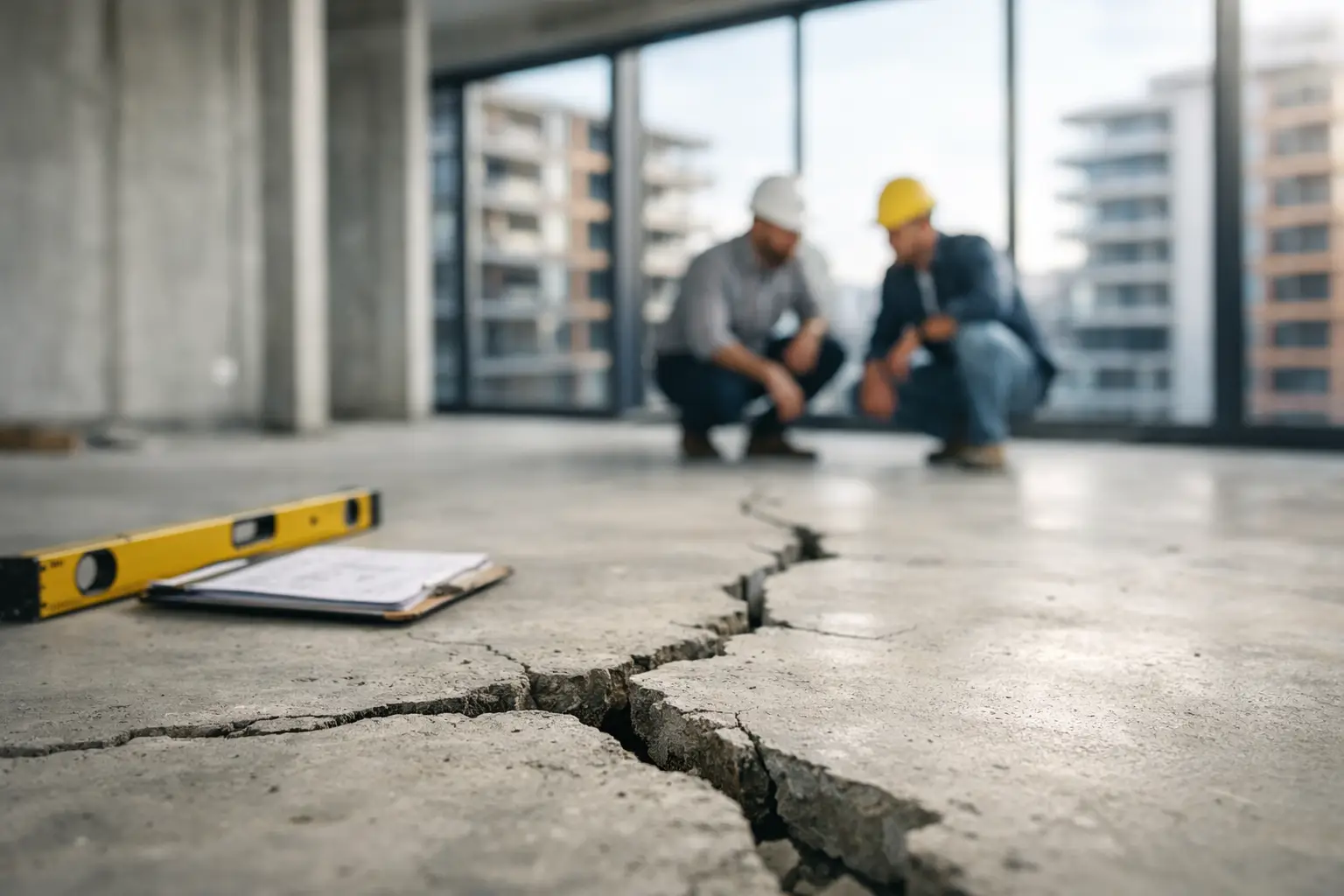
Concrete repair is another major area, particularly in older buildings or properties exposed to coastal conditions. Spalling, cracking and corrosion are not only visual issues. Left untreated, they can compromise durability, create safety hazards and increase future repair scope.
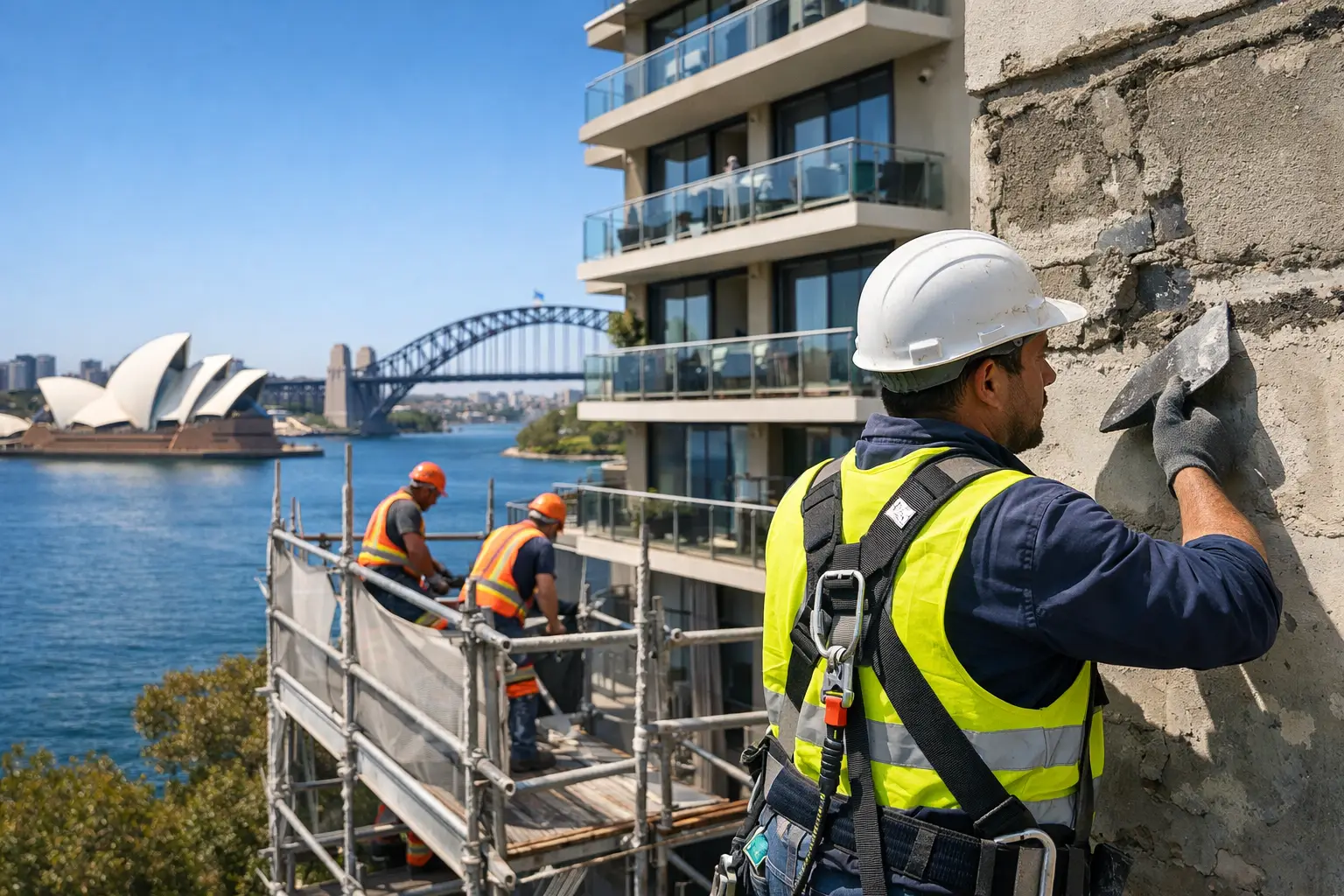
Facade remediation is also frequent in multi-storey strata assets. Failed sealants, cracked render, deteriorated joints, loose elements and water penetration through wall systems all require careful assessment. Access methodology, resident safety and staging become major considerations.
Structural repairs sit in a different category again. Where movement, loading issues or material degradation affect structural performance, the project must be engineered and executed with a higher level of control. Temporary works, sequencing and certification all become more critical.
Compliance is not a side issue
For owners corporations, compliance is often where uncertainty starts. There may be questions around design obligations, approvals, notices, certification, access requirements, WHS responsibilities and how works should be documented. Those questions matter because remedial projects can expose committees and managers to risk if they are handled informally.
In New South Wales, the compliance pathway depends on the building type, the nature of the defect and the scope of work proposed. Some projects may involve design compliance obligations, especially in Class 2 buildings. Others may trigger development approval, heritage considerations or specific council requirements. Even where formal approval pathways are limited, the need for proper documentation, safe delivery and traceable decision-making remains.
This is one reason a coordinated Design and Construct approach can be effective on complex defect projects. When investigation, methodology development, engineering coordination and construction delivery are managed within one accountable framework, there is less room for scope gaps and conflicting advice. That does not remove the need for independent input where appropriate, but it can improve clarity and project control.
Budget, scope and the trade-offs owners corporations face
Every owners corporation wants durable repairs, but few have unlimited funds. The challenge is deciding where staged works are sensible and where they simply defer risk.
Sometimes a staged program is practical. If defects are localised and the building has a clear remediation roadmap, works can be prioritised by risk, weather exposure or budget cycle. This can help spread cost while still moving the asset in the right direction.
Other times, staging is false economy. Replacing part of a failing membrane system when adjacent areas are built to the same defective detail may only postpone broader failure. Likewise, local concrete patching across a heavily deteriorated facade may create an uneven repair profile that still requires major intervention later.
Good advice should make those trade-offs explicit. Committees need to know what a partial repair will and will not achieve, how long it is expected to perform and what residual risks remain. Transparency matters more than optimism.
Choosing a contractor for owners corporation remedial works
Price will always be considered, but remedial works should not be procured like straightforward maintenance. The real test is whether the contractor understands defect causation, can work within a compliant delivery framework and has the capability to coordinate technical inputs rather than simply follow a superficial brief.
That means looking closely at how the contractor approaches investigation, methodology, sequencing, quality control and communication. In occupied strata buildings, stakeholder management is also a practical issue. Access notices, resident disruption, site safety and programme transparency all affect how smoothly the project runs.
For Sydney buildings in particular, exposure conditions, ageing stock and varying construction quality across different eras can create defect patterns that need local experience to interpret properly. A contractor familiar with those conditions is more likely to recognise recurring issues before they become costly surprises on site.
What a well-run remedial project looks like
A strong remedial project is usually quiet in the right ways. There is less confusion about scope, fewer reactive variations, clearer reporting and better alignment between what was diagnosed and what is being built. Site issues still arise, because existing buildings are rarely predictable, but they are addressed within a structured process rather than through ad hoc decisions.
That process should include clear defect records, coordinated repair details, realistic programming, quality hold points and transparent communication with the owners corporation. Where latent conditions are uncovered, they should be documented and assessed promptly so the committee can make informed decisions based on evidence, not pressure.
Remedial Building Practitioners works in this space because buildings with real defects need more than surface-level fixes. They need methodical investigation, coordinated repair planning and accountable delivery that protects the asset beyond the immediate patch.
The most useful question for an owners corporation is not how quickly a defect can be covered up. It is whether the proposed works will leave the building in a demonstrably better, safer and more durable condition five or ten years from now.