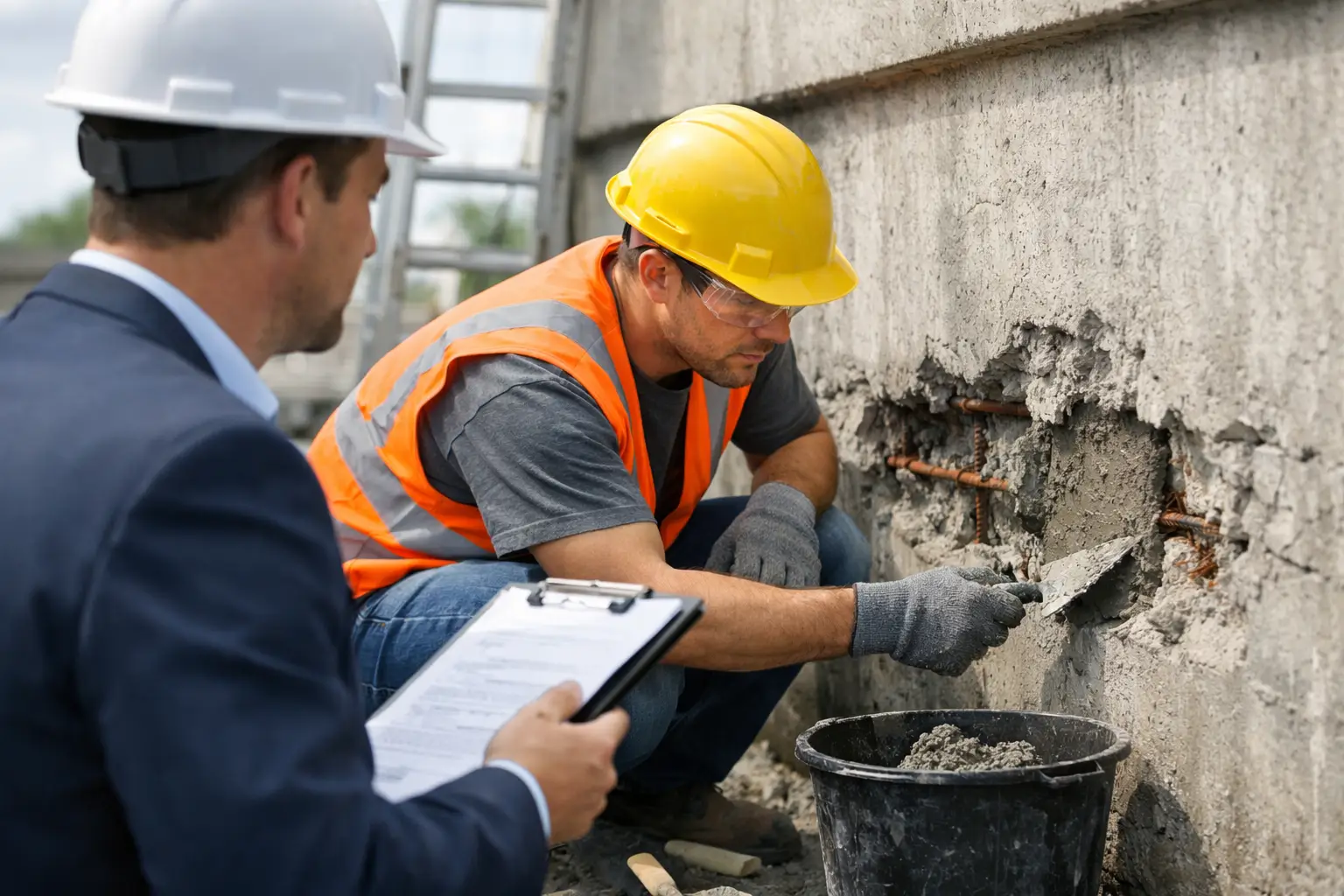
Concrete does not start shedding sections of cover without a reason. When soffits, balcony edges, columns or facade elements begin cracking, rust staining or breaking away, the issue is already beyond a cosmetic defect. Choosing the right spalling concrete repair contractor matters because the visible damage is usually only one part of a broader deterioration mechanism.
For strata committees, owners corporations and asset managers, the real risk is not simply loose concrete. It is uncertainty. Is the damage localised or widespread? Is water ingress feeding reinforcement corrosion? Has movement contributed to cracking? Will a patch repair hold, or will adjoining areas fail next year? Those questions are why spalling repairs need to start with investigation, not product selection.
What a spalling concrete repair contractor should actually do
A competent contractor should not begin with a grinder and a bag of repair mortar. Spalling concrete is a symptom. The repair methodology has to respond to the cause, the condition of the substrate, the extent of reinforcement corrosion and the exposure environment.
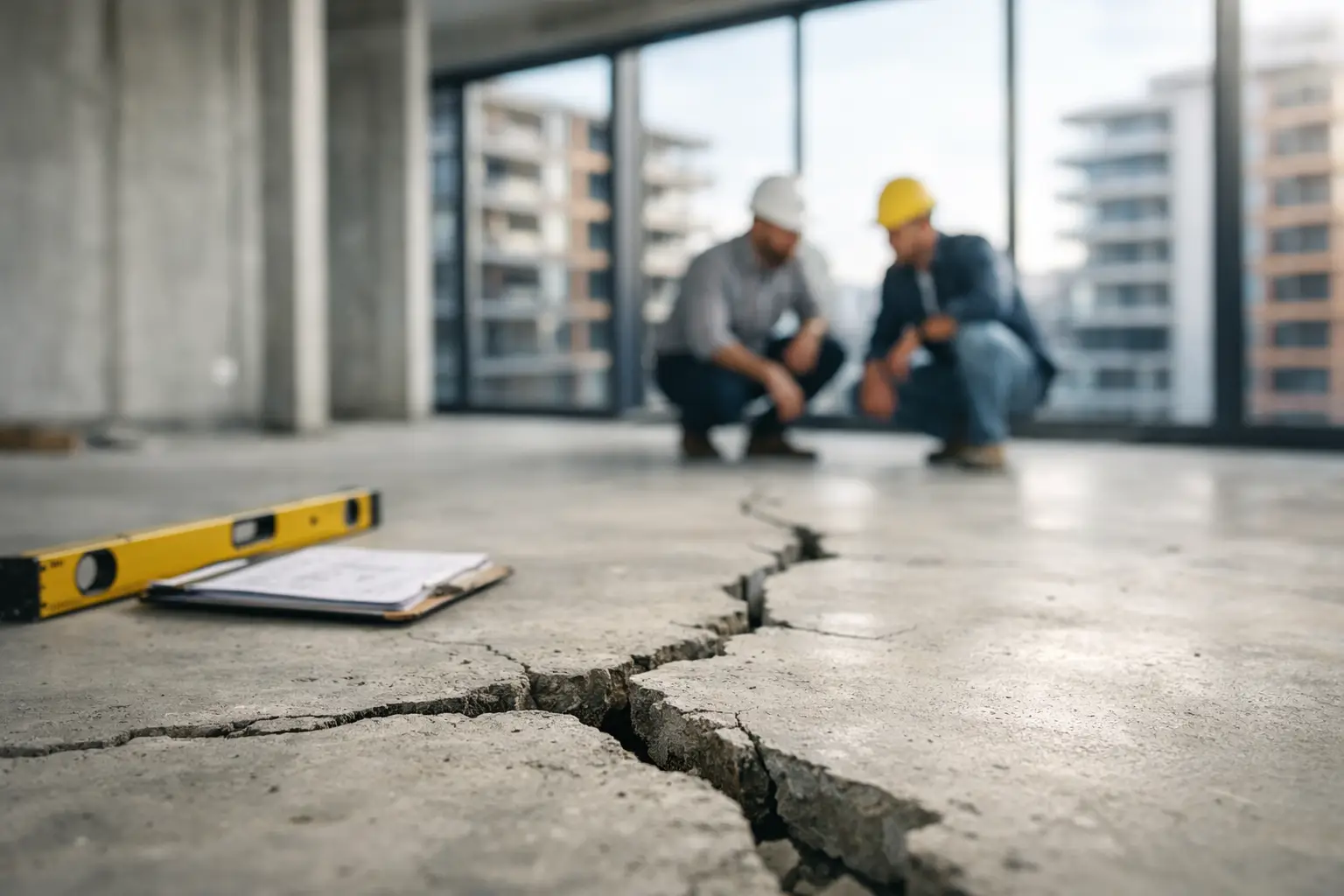
In practical terms, that means the contractor should assess more than the broken area you can see from the ground. Sounding, defect mapping, cover assessment, reinforcement exposure, moisture pathways and adjacent deterioration all influence the final scope. On multi-storey residential and commercial buildings, access constraints and public safety requirements also shape how the works need to be planned.
This is where many projects go wrong. A low-cost quote may cover breakout, steel treatment and patching, but fail to address the water ingress or membrane failure that accelerated the damage in the first place. If the source of moisture remains active, the repair can deteriorate prematurely, even if the patch itself was installed correctly.
Why spalling happens in the first place
Concrete spalling commonly occurs when embedded reinforcement corrodes and expands. That expansion creates internal pressure, which cracks and dislodges the surrounding concrete cover. In many buildings, water ingress is the trigger, especially around balconies, planter boxes, slab edges, roof interfaces and facade junctions.
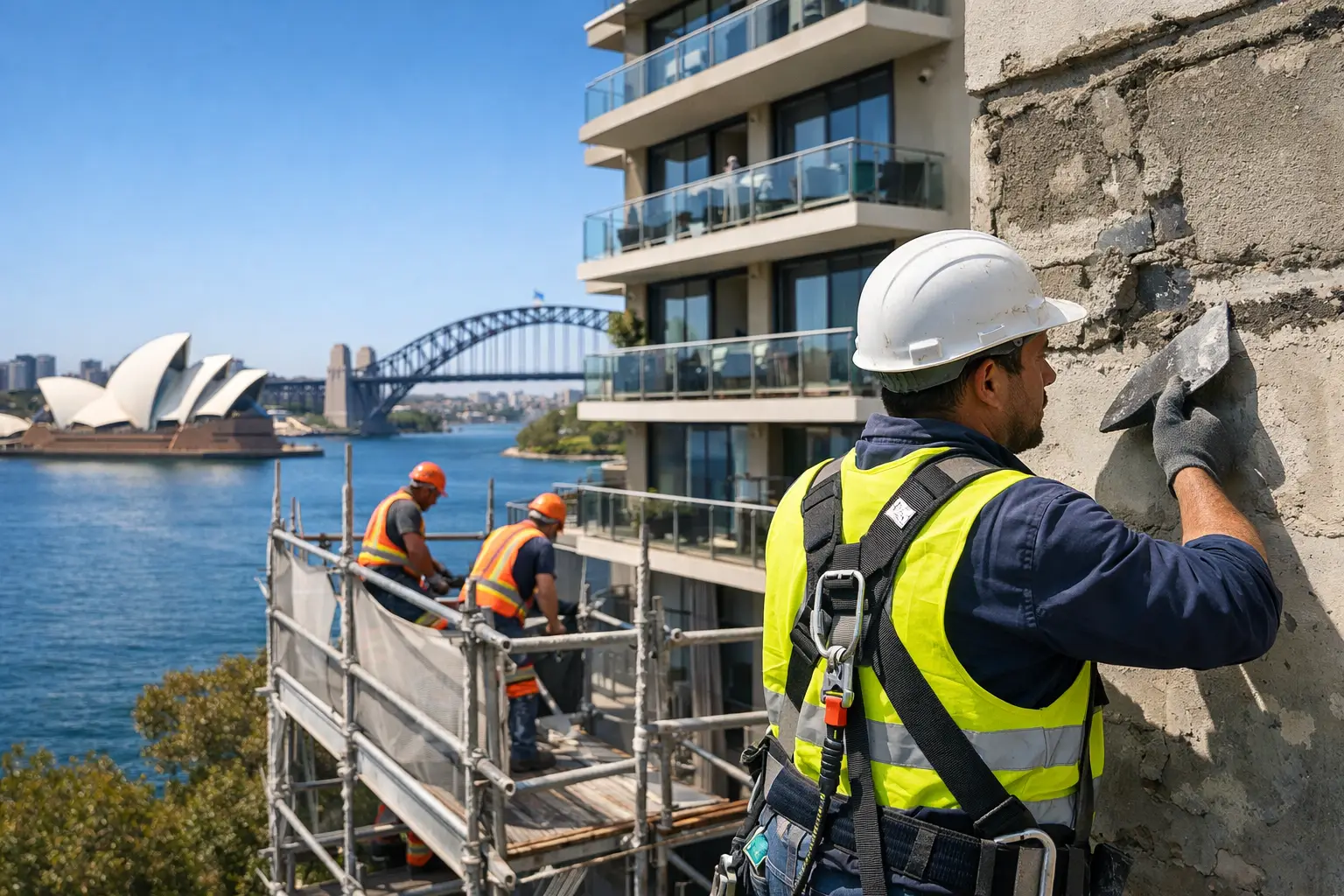
Carbonation and chloride contamination can also break down the protective environment around steel reinforcement. In older buildings, inadequate cover, poor past repairs or long-term exposure to harsh coastal conditions may accelerate the problem. In Sydney, that exposure profile matters. Buildings near the coast, or those with persistent waterproofing defects, can experience faster deterioration than inland sites with better envelope performance.
That is why repair pricing varies so widely. Two balconies may look similar from below, but one may need localised patching while the other requires membrane replacement, concrete remediation, coating reinstatement and engineering review of structural capacity. The defect presentation can be similar even when the repair obligation is not.
What to look for before appointing a contractor
The right contractor should be able to explain the repair logic in plain terms. Not just what they will do, but why that methodology suits the building. If a proposal jumps straight to repair products without discussing cause, extent and durability, it is worth asking more questions.
Look for evidence of a structured remedial process. That includes defect identification, scope validation, coordination with engineers or design practitioners where required, and a clear sequence for making safe, repairing, protecting and finishing the area. On occupied strata and commercial sites, communication around access, staging and disruption is just as important as the repair detail.
It also helps to check whether the contractor regularly works on remedial projects rather than general building maintenance. Spalling concrete repair often intersects with waterproofing, facade systems, structural considerations, access equipment, compliance obligations and live-site safety management. A contractor that understands those interfaces is far better placed to deliver a durable outcome.
The difference between patching and proper remediation
Not every spalled area requires major reconstruction, but every repair should be proportionate to the actual defect. There is a difference between isolated local damage and systemic deterioration. A disciplined contractor will distinguish between the two rather than applying the same patch repair approach everywhere.
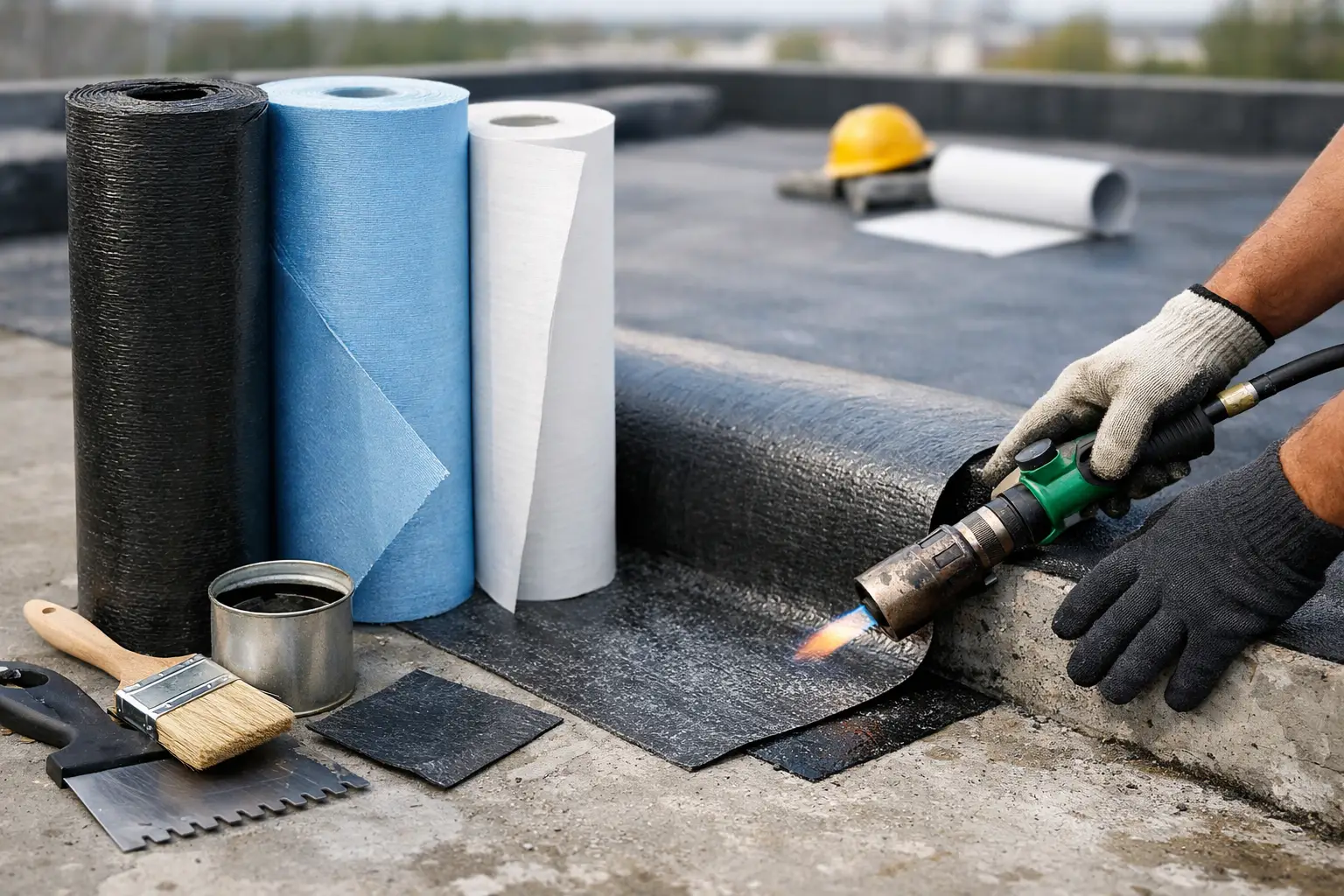
Proper remediation usually includes removal of unsound concrete, cleaning or replacement of affected reinforcement where necessary, reinstatement with compatible repair materials, and protective treatment to surrounding areas if required. Just as importantly, it should address the source of deterioration. That may mean waterproofing works, drainage correction, crack injection, joint replacement or facade sealing.
A narrow repair scope can appear economical at tender stage and become expensive later. If the immediate patch fails because upstream defects were ignored, the building pays twice – once for the repair, and again for access, rectification and disruption.
Compliance, documentation and accountability
For strata and commercial stakeholders, concrete spalling is rarely only a trade issue. It can become a compliance, safety and risk management issue very quickly. Loose concrete above pedestrian areas, entrances, car parks or neighbouring boundaries may require urgent make-safe measures, restricted access zones or interim protection while the full extent of works is investigated.
That is one reason documentation matters. A professional spalling concrete repair contractor should be able to document findings, assumptions, exclusions and methodology clearly. If engineering input is required, the repair should be coordinated accordingly. If the building falls within a regulated class or the works trigger approval requirements, that process needs to be considered upfront rather than midway through the job.
Accountability also shows up in how variations are handled. Because hidden damage is common once concrete is opened up, some change in scope can be legitimate. The key issue is transparency. Building stakeholders need to understand what has been uncovered, how it affects structural integrity or durability, and what options exist to proceed responsibly.
Questions worth asking a spalling concrete repair contractor
Before works begin, ask how the extent of deterioration will be confirmed. Ask what assumptions sit behind the quoted scope. Ask whether waterproofing or other building envelope defects are contributing to the issue. Ask how reinforcement damage will be assessed once exposed, and what criteria determine repair versus replacement.
It is also reasonable to ask about access strategy, resident communication, QA procedures and finish matching. On exposed facades and balconies, visual consistency matters, but it should never override repair integrity. A contractor focused only on surface appearance may deliver a neat finish over a weak remedial approach.
If the works affect a larger asset portfolio or occupied strata environment, ask who is coordinating the end-to-end process. Remedial projects are often delayed or diluted when investigation, engineering, approvals and construction are split across multiple parties with no clear lead. An integrated delivery model can reduce that fragmentation and improve accountability, particularly on complex defect matters.
When urgent repairs are not the full answer
There are situations where immediate repair is necessary for safety, but still not sufficient as the long-term response. A fallen fragment from a balcony soffit may justify urgent make-safe works today, while the broader building still requires staged investigation and a capital works strategy.
This is an important distinction for owners corporations managing budgets. A temporary response may reduce immediate risk, but it should not be mistaken for complete remediation. If defect patterns suggest widespread chloride ingress, membrane failure or facade deterioration, the smarter decision may be to plan a coordinated program rather than keep reacting to isolated failures.
That broader view is where specialist remedial contractors add value. Firms such as Remedial Building Practitioners approach spalling concrete as part of the building system, not as an isolated patching exercise. That means connecting deterioration to waterproofing, structural exposure, compliance obligations and long-term asset performance.
A better basis for comparing quotes
Price matters, but it is a poor sole measure for remedial work. Two quotes can differ significantly because they are not proposing the same outcome. One may be pricing visible patch repairs only. Another may include investigation, access planning, protective coating systems, associated waterproofing rectification and proper allowance for latent conditions.
The more useful comparison is scope depth, methodology clarity and risk coverage. Does the quote identify root causes or just symptoms? Does it explain what happens if additional corrosion is found? Does it account for occupied-building constraints and safety controls? Does it align with the level of assurance your asset actually needs?
A cheap repair on a deteriorating structure is rarely cheap for long. Good remedial work should be measured by durability, traceability and how effectively it reduces future defect recurrence.
When concrete begins to spall, the building is telling you something specific about moisture, corrosion or protective failure. The best contractor response is not the fastest patch. It is the one that identifies the mechanism, scopes the repair honestly and restores confidence that the defect has been handled properly.