A leaking balcony rarely stays a balcony problem for long. Once water tracks past failed membranes, joints or thresholds, it starts affecting adjoining interiors, slab edges, balustrade fixings and lower levels. That is why balcony waterproofing failure repair needs to begin with a proper defect investigation, not a quick reseal around tiles or a surface coating applied in hope.
For strata committees, building managers and owners, the real difficulty is not spotting that something has gone wrong. It is working out whether the issue is isolated, whether it points to a broader building defect, and what level of repair will actually hold up. In many cases, the visible leak is only the final symptom of a larger breakdown in design, installation, drainage or maintenance.
Why balcony waterproofing systems fail
Most balcony leaks do not come from one dramatic event. They develop over time as water finds a path through compromised elements. The membrane may have been poorly installed from the start, terminated incorrectly at upturns, punctured during later works, or allowed to age beyond its service life. Falls may be inadequate, drainage may be restricted, and movement joints may have failed or been omitted.
On occupied buildings, repeated patch repairs often make matters worse. Tiles are regrouted, cracks are sealed and outlets are cleaned, yet the membrane below remains defective. Water ingress continues behind the finished surface and deterioration progresses out of sight.
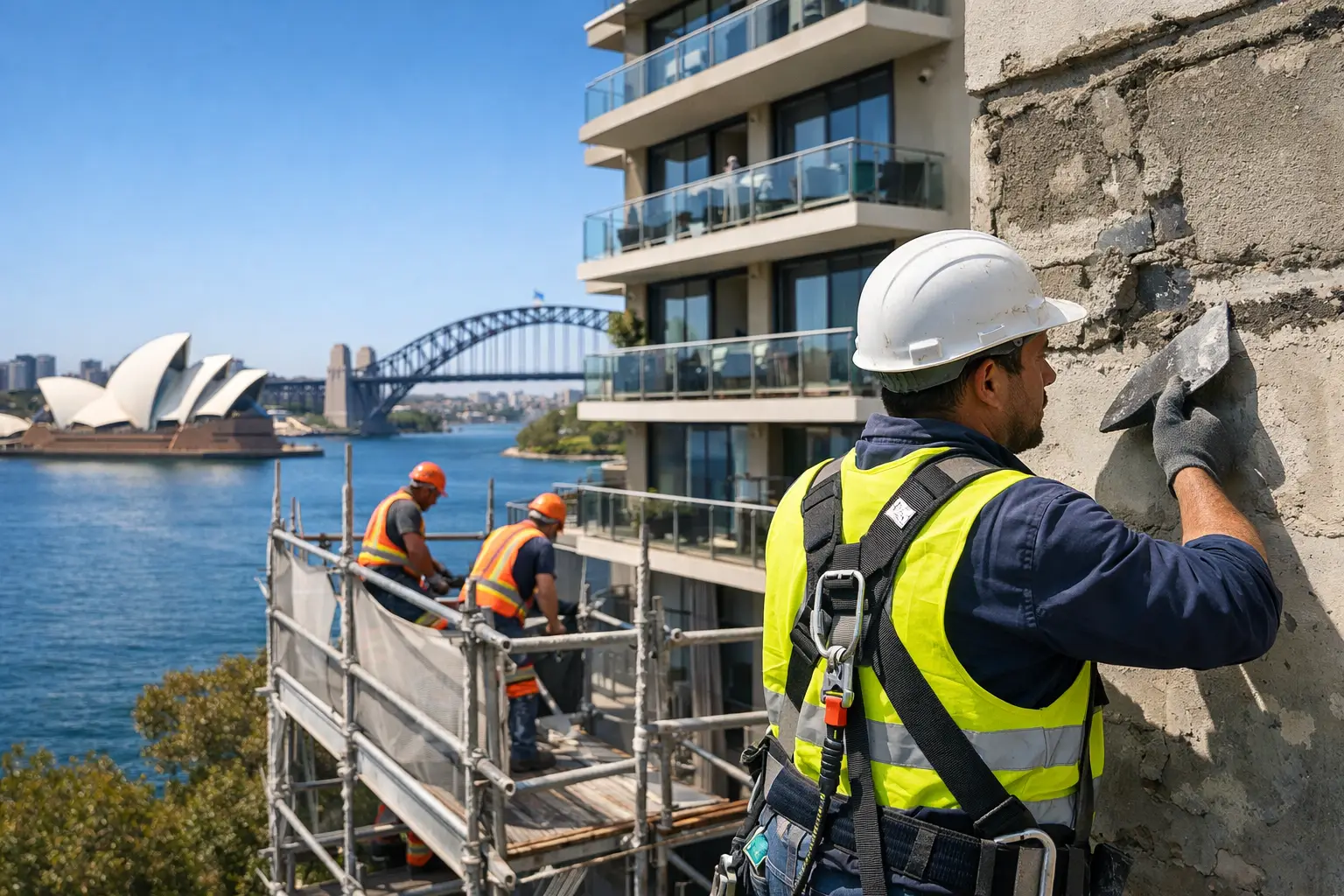
In Sydney, exposure conditions can accelerate this pattern. Balconies deal with direct rainfall, UV exposure, thermal movement and, in some locations, wind-driven rain. Where there are coastal influences, salt can also contribute to deterioration around concrete and metal components. A balcony is a small area, but it sits at the junction of multiple failure points – waterproofing, structure, facade interfaces and drainage.
Balcony waterproofing failure repair starts with diagnosis
The first question is not how to patch the leak. It is where the water is entering, how far it has travelled, and what damage has already occurred. Effective balcony waterproofing failure repair depends on identifying the full defect pathway.
That usually means looking beyond the tile finish. Moisture may be entering through the field of the balcony, but it can also come through door thresholds, wall-to-floor junctions, planter boxes, balustrade penetrations, cracked render, failed sealants or adjacent facade defects. If the balcony forms part of a suspended concrete slab, prolonged moisture ingress can also lead to reinforcement corrosion, cracking and spalling at slab edges and soffits.
A disciplined investigation may involve moisture testing, flood testing where appropriate, intrusive inspection, review of as-built details, and coordination with engineers or registered design practitioners. This is especially important on Class 2 buildings and larger strata assets, where compliance obligations and the risk profile are higher.
Without that level of assessment, repair scopes are often too narrow. The immediate leak may appear to stop, but the underlying mechanism remains active.
What a proper repair scope usually involves
Once the defect is understood, the repair methodology can be matched to the building condition. There is no single repair formula that suits every balcony. The right approach depends on the extent of membrane failure, substrate condition, drainage performance, movement, structural impact and access constraints.
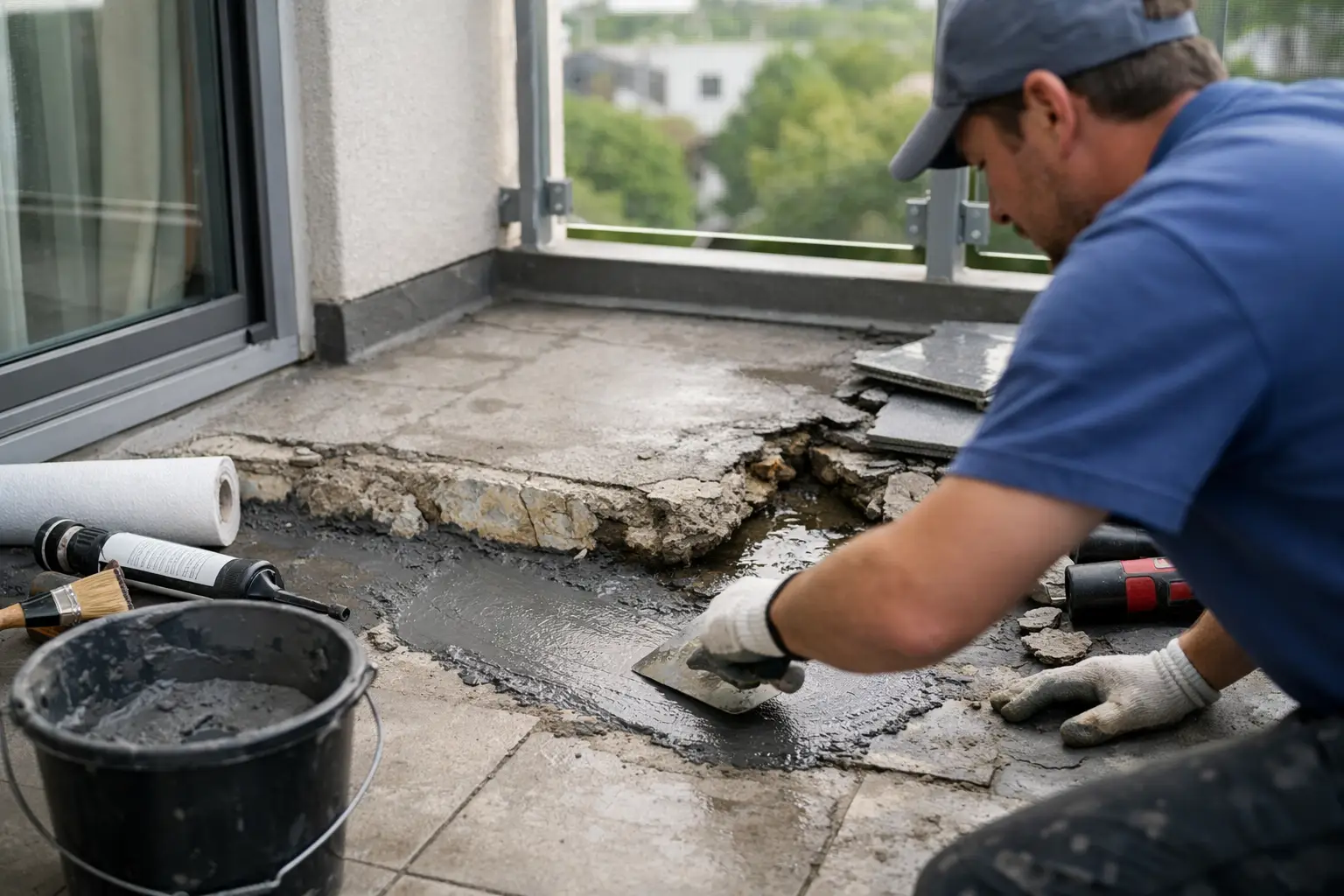
In some cases, localised works are viable. If the failure is genuinely limited and the surrounding system remains sound, targeted demolition and reinstatement may be enough. But this only works when the investigation confirms the defect is isolated and interfaces can be reinstated properly.
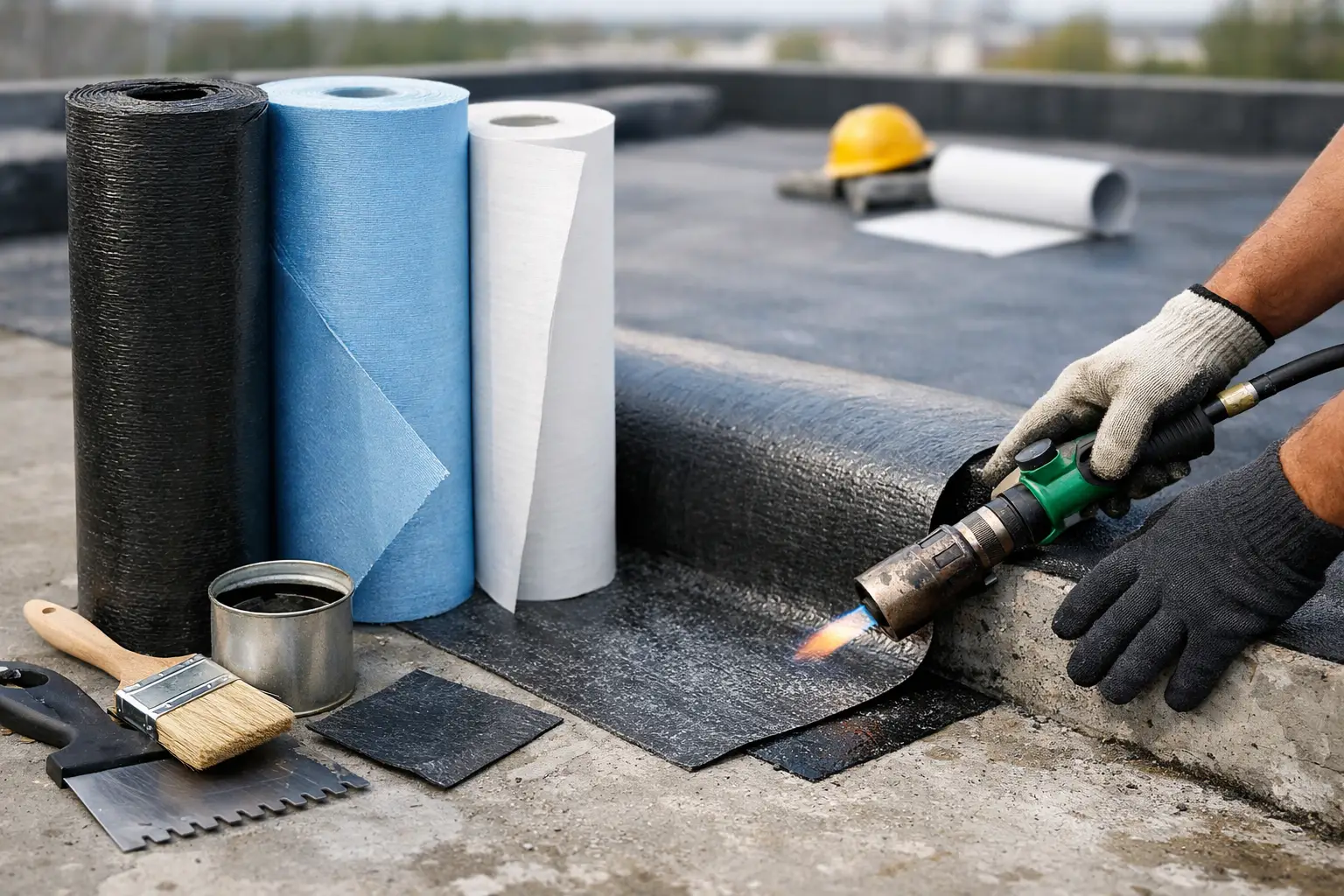
More often, failed balconies require strip-out back to the structural substrate. That may include removal of tiles, screeds, beddings, trims and existing membranes so the base can be inspected and rectified. Falls may need to be corrected, cracks repaired, outlets replaced or repositioned, and threshold detailing redesigned. Only then can a new compliant waterproofing system be installed and protected before finishes are reinstated.
The trade-off is straightforward. Local patching costs less upfront, but full remediation is often the only durable option where failure is systemic. Asset owners need to weigh short-term disruption against the cost of repeated defects, internal damage and escalating structural repairs.
The hidden issues beneath a leaking balcony
Waterproofing failure often exposes other defects that cannot be ignored once works commence. The most common is concrete deterioration. When moisture reaches embedded reinforcement, corrosion can expand the steel and force the surrounding concrete to crack and delaminate. By the time staining appears on the underside of a slab, the process may be well advanced.
Another issue is non-compliant detailing. Older balconies may lack adequate upturn heights, drainage provisions or threshold separation. In other cases, balustrade posts have been fixed through membranes in ways that create long-term leakage points. Surface finishes may also conceal poor substrate preparation or incompatible repair products from previous works.
This is where remedial coordination matters. A balcony leak is not just a waterproofing trade issue. It can involve structural repair, facade interfaces, door replacement, joinery adjustments and compliance review. Treating each piece in isolation is one of the main reasons repair programs become fragmented and underperform.
Compliance and design cannot be an afterthought
Balcony repair works need to do more than stop water. They need to align with current performance expectations, code requirements and the realities of the existing structure. On many projects, that means repair design should be documented clearly before demolition proceeds too far.
For strata and commercial stakeholders, this has practical value. A documented methodology improves scope clarity, supports procurement, reduces ambiguity on site and creates a clearer record of what has been rectified. Where the building falls within regulated classes or the works are substantial, the compliance pathway becomes even more important.
A design-and-construct remedial model can be useful here because it keeps investigation, design coordination and delivery aligned under one accountable framework. That does not remove the need for professional input – it strengthens it by connecting diagnosis with buildability and quality control.
When a balcony needs full replacement rather than repair
There are situations where repair is no longer the best option. If membrane failure is widespread across multiple units, if thresholds are fundamentally flawed, if slab deterioration is significant, or if previous patching has left inconsistent build-ups and detailing, full balcony reconstruction may be the more responsible path.
This can be a difficult decision for owners corporations because the capital cost is higher and resident disruption is greater. But a piecemeal approach across a deteriorated balcony stack often leads to inconsistent outcomes, recurring claims and ongoing access costs. In lifecycle terms, a coordinated renewal program may deliver better value and lower risk.
The same applies where internal finishes below have already been damaged. Reinstating ceilings and walls before the balcony defect is comprehensively addressed only creates rework.
How to reduce risk during repair works
Balcony remediation on occupied buildings needs careful staging. Access, safety, weather exposure, resident communication and quality hold points all affect the result. Waterproofing failures are unforgiving of rushed sequencing.
Substrates need to be dry enough and prepared properly. Membrane systems must suit the substrate, expected movement and finish build-up. Detailing at outlets, thresholds and wall junctions needs close supervision. Flood testing or other verification may be appropriate before finishes are applied, depending on the system and project requirements.
For larger sites, consistency is another challenge. If several balconies are being repaired, the methodology needs to be repeatable without becoming generic. Similar-looking balconies can have different defect conditions, especially on ageing buildings where prior repairs vary from lot to lot.
This is why experienced remedial contractors place so much emphasis on scope verification and on-site quality assurance. Good workmanship matters, but good workmanship applied to the wrong scope still fails.
What stakeholders should ask before approving repairs
Before proceeding, decision-makers should be clear on a few points. Has the root cause been identified, or only the visible symptom? Does the scope address adjoining defects and structural consequences? Is the proposed system compatible with the building condition and intended finish? Are approvals, design responsibilities and inspection requirements understood?
Those questions are not administrative extras. They are the difference between a repair that performs and one that simply resets the problem for another season of rain.
On complex assets, especially strata buildings with repeated water ingress history, early engagement with a contractor experienced in investigation-led remediation can save considerable time and cost later. Remedial Building Practitioners approaches these projects through coordinated diagnosis, repair design input and controlled delivery so the solution addresses the full defect chain rather than the easiest visible failure.
A balcony should shed water reliably and protect the building fabric beneath it. If it is not doing that, the answer is rarely another tube of sealant. The better path is a repair scope grounded in evidence, coordinated properly, and built to last.