
A leak in one lot rarely stays one lot’s problem for long. By the time water staining appears on internal finishes, corrosion starts showing at balcony edges, or cracking becomes visible in common areas, an owners corporation is usually dealing with more than an isolated maintenance issue. A proper strata building defect report is the document that separates guesswork from an evidence-based remediation pathway.
For strata managers and committee members, that matters because the cost of acting too late is obvious, but the cost of acting on the wrong advice can be just as serious. A superficial report may identify symptoms without establishing the defect mechanism, the extent of damage, or the practical sequence for rectification. That is how buildings end up with repeat repairs, disputed scopes, and unresolved compliance exposure.
Why a strata building defect report matters
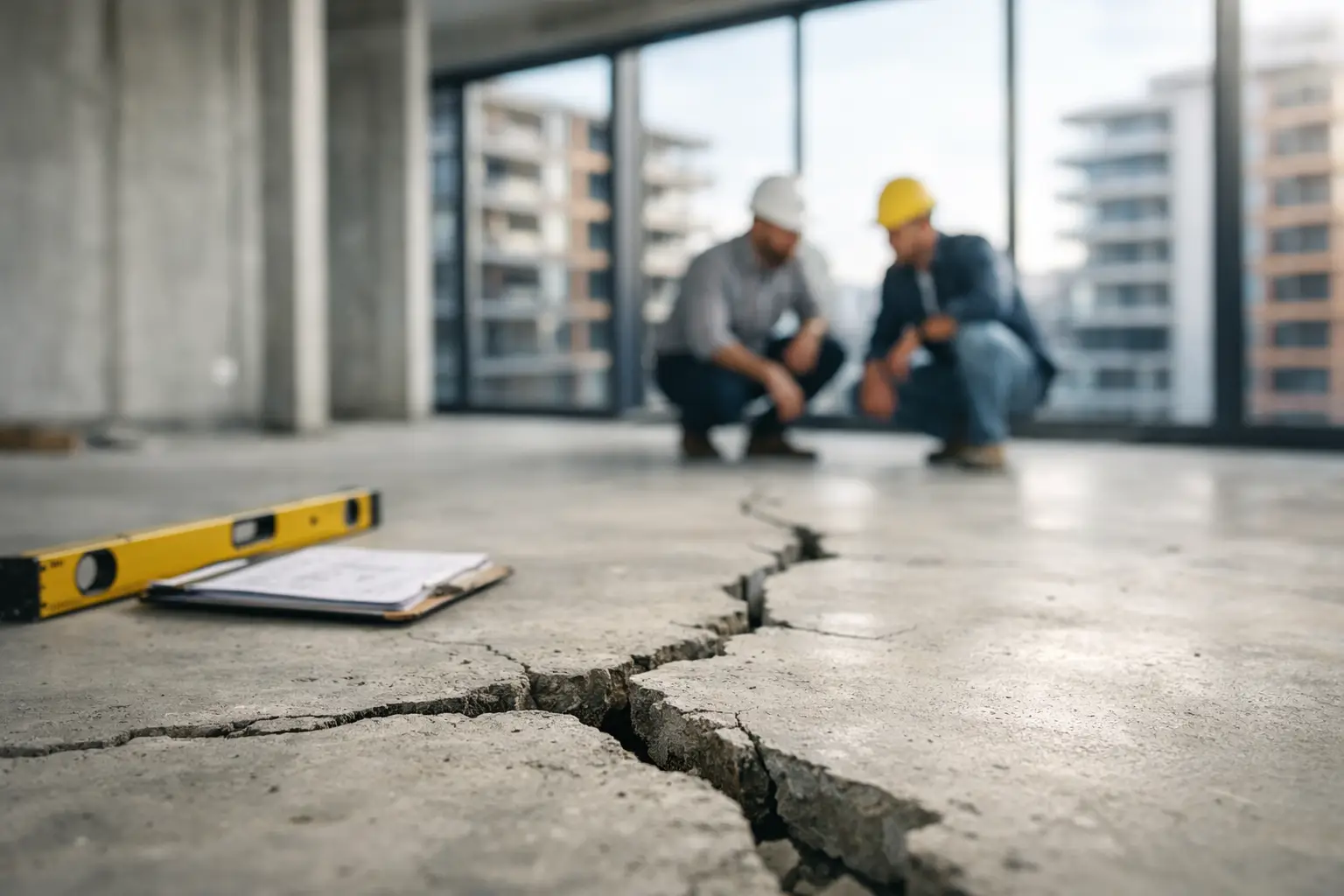
In strata environments, defects rarely sit neatly within one trade or one area of responsibility. Water ingress can be tied to failed membrane detailing, façade cracks, movement at construction joints, blocked drainage, poor balcony falls, or deterioration in sealants and flashings. Concrete spalling may reflect carbonation, chloride ingress, inadequate cover, or embedded steel corrosion driven by long-term moisture exposure. What presents as a visible defect often has several contributing causes.
A sound report gives decision-makers a technical basis for action. It helps an owners corporation understand what is happening, why it is happening, how far the issue extends, and what type of rectification is likely to be effective. It also provides a more reliable platform for budgeting, consultant engagement, tender review, insurance discussions where relevant, and planning works that may affect occupants.
Just as importantly, the report should reduce ambiguity. In remedial construction, ambiguity creates risk. If the diagnosis is vague, the repair scope often becomes reactive on site, and that usually means cost escalation, programme disruption, and disputes over responsibility.
What a strata building defect report should include
The quality of a report is defined less by its length and more by its rigour. A useful report should begin with a clear description of the observed issues, including where they occur, when they were first identified if known, and whether they appear active, intermittent, or progressive. It should record the building elements affected, such as rooftops, balconies, podiums, façades, planter boxes, wet areas, basements, or structural components.
The next critical step is methodology. A credible report explains how the assessment was carried out. That may include visual inspection, moisture testing, sounding of concrete, crack mapping, photographic documentation, review of available drawings, and consideration of maintenance and repair history. In some matters, especially where concealed conditions are likely, limited intrusive investigation may be needed to confirm build-up, membrane termination, reinforcement condition, or substrate deterioration.
Without that methodology, conclusions can be difficult to rely on. A report should show how the findings were reached, not just state them.
Root-cause analysis, not symptom listing
This is where many reports fall short. Listing defects is not the same as diagnosing them. A stain on a ceiling is not the defect in itself. It is evidence of moisture entry. The report should assess the probable entry pathway, the failed element, and the factors that allow the problem to persist.
For example, balcony leakage may involve a combination of inadequate falls, membrane failure at thresholds, cracked grout, poor drainage detailing, and movement at wall-floor junctions. If the report simply recommends resealing tiles, it may understate the problem and produce a short-lived outcome. A proper defect report should distinguish between cosmetic deterioration, secondary damage, and the primary building failure that must be rectified.
Extent and severity of damage
Decision-makers also need to know whether the issue is localised or systemic. A report should comment on the likely extent of damage, any limitations in visibility, and the implications for adjacent areas or related elements. This is especially important in older buildings and Class 2 assets where hidden deterioration may be more advanced than visible symptoms suggest.
Severity matters as well. Some defects are serviceability issues that can be programmed into planned remediation. Others raise urgent durability or safety concerns, particularly where loose façade elements, advanced spalling, structural movement, or persistent water ingress are involved. The report should help prioritise action based on risk, not simply on what looks worst at first glance.
The difference between a basic inspection and a report fit for remedial works
Not every inspection report is suitable for procurement or delivery planning. Some are prepared for preliminary screening only. That can be appropriate at the earliest stage, but strata stakeholders should understand the limitation. A basic condition report may identify visible defects and recommend further assessment, yet it may not provide enough detail to develop a rectification methodology or compare contractor proposals properly.
A report intended to support remedial works should move beyond broad observations. It should provide enough technical clarity for engineers, design practitioners, and remedial contractors to understand likely failure mechanisms and the scope of investigation or repair required. Where there are compliance implications, it should also acknowledge the need for appropriate design, approvals, and regulated documentation.
That distinction affects cost planning. A lower-cost report that leaves major uncertainties unresolved can create larger downstream costs if works are under-scoped or repeatedly revised.
How the report informs the next stage
A strata building defect report should not pretend to be every document in the process. Its role is to diagnose and guide, not to replace detailed design, engineering certification, or construction documentation. Still, the best reports make the next step clearer.
That may mean recommending further intrusive investigation before a final scope is set. It may mean identifying the need for structural engineering input, waterproofing design, façade access planning, or staged rectification to manage occupant disruption. In more complex matters, a coordinated pathway is needed from investigation through to design, approvals, contractor engagement, and on-site delivery.
For strata clients, this coordination is often where projects either stabilise or unravel. Defect rectification can involve multiple disciplines, and if the report is prepared in isolation without considering buildability, sequencing, access, and compliance, practical issues emerge later. A disciplined process works better when diagnosis, consultant coordination, and construction planning are aligned early.
Common issues that deserve careful reporting
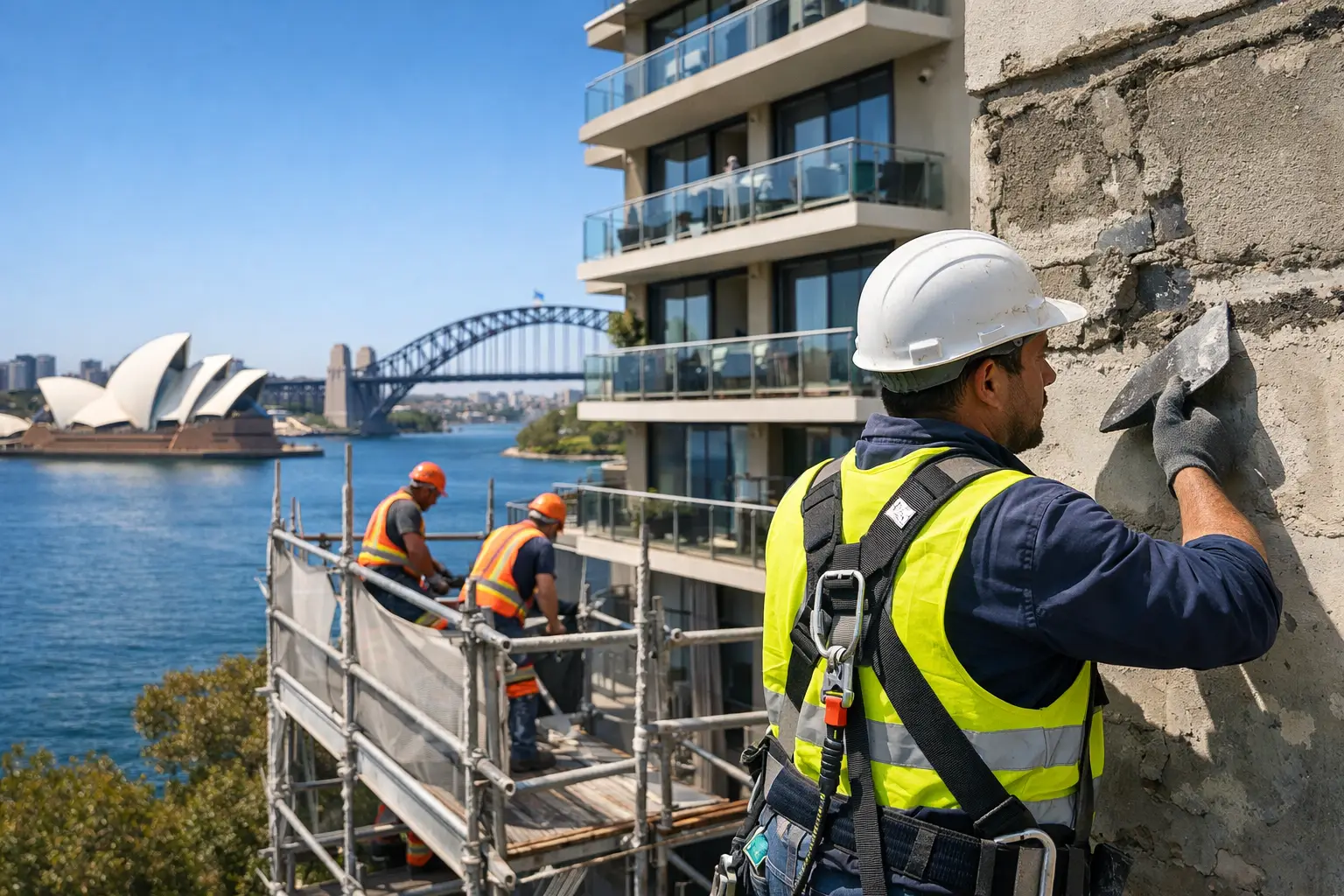
In Sydney strata buildings, recurrent defect categories often include waterproofing failure, concrete cancer, cracking, façade deterioration, roof leakage, basement seepage, and damage associated with poor drainage or movement. Each one requires a slightly different reporting approach.
Waterproofing issues often demand close attention to transitions, penetrations, thresholds, drainage performance, and signs of concealed moisture migration. Concrete deterioration needs assessment of delamination, reinforcement corrosion, cover depth, and environmental exposure. Cracking needs to be classified properly, because shrinkage, thermal movement, structural stress, and substrate failure do not lead to the same repair response.
This is why trade-offs matter. A fast visual assessment may be enough to confirm obvious membrane failure in one area, but not enough to explain widespread recurring moisture ingress. Intrusive testing adds cost and time, yet in many buildings it is the only way to avoid a false economy.
What strata committees should look for before relying on a report
A useful report should be clear, specific, and technically disciplined. It should include photographs and location references that help non-technical stakeholders understand the issue, but it should also contain enough depth to support professional review. Vague phrases such as “monitor as required” or “repair affected areas” are not particularly useful unless they are tied to defined triggers, likely causes, and practical repair intent.
It also helps when the report recognises uncertainty honestly. Sometimes the available evidence supports a probable cause, not a final conclusion. In that case, the report should say what remains unknown and what further investigation is needed. That is stronger than overstating certainty.
For owners corporations managing significant defect exposure, accountability matters as much as diagnosis. Reports are most valuable when they feed into a coordinated remedial strategy rather than sitting on file as a standalone opinion. That is the difference between documenting a problem and moving towards a durable resolution.
A good report does not just tell you what is wrong with the building. It gives you a dependable basis for deciding what to do next, in what order, and with what level of urgency. For strata stakeholders carrying legal, financial, and safety responsibilities, that clarity is not a paperwork exercise. It is the start of getting control back.