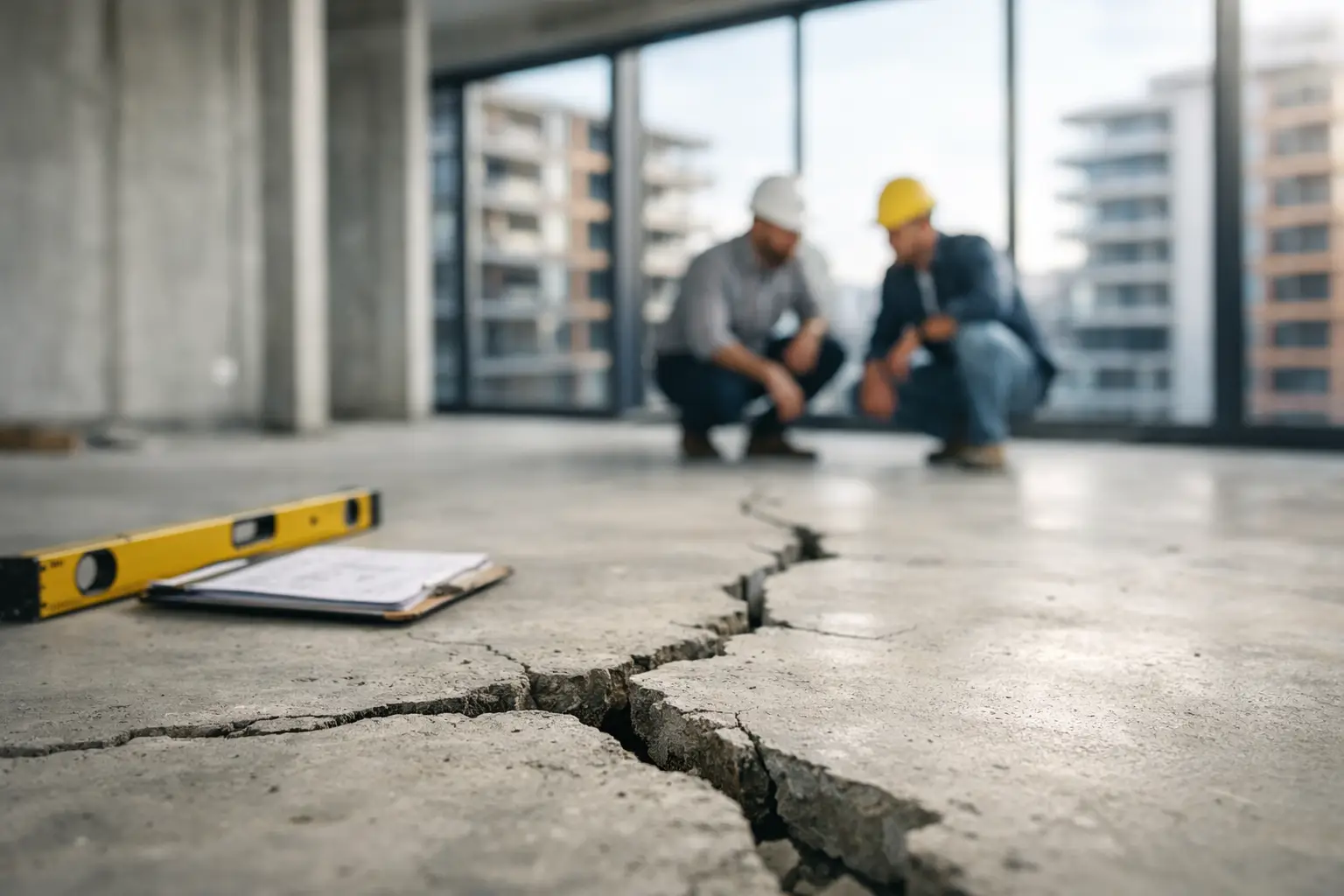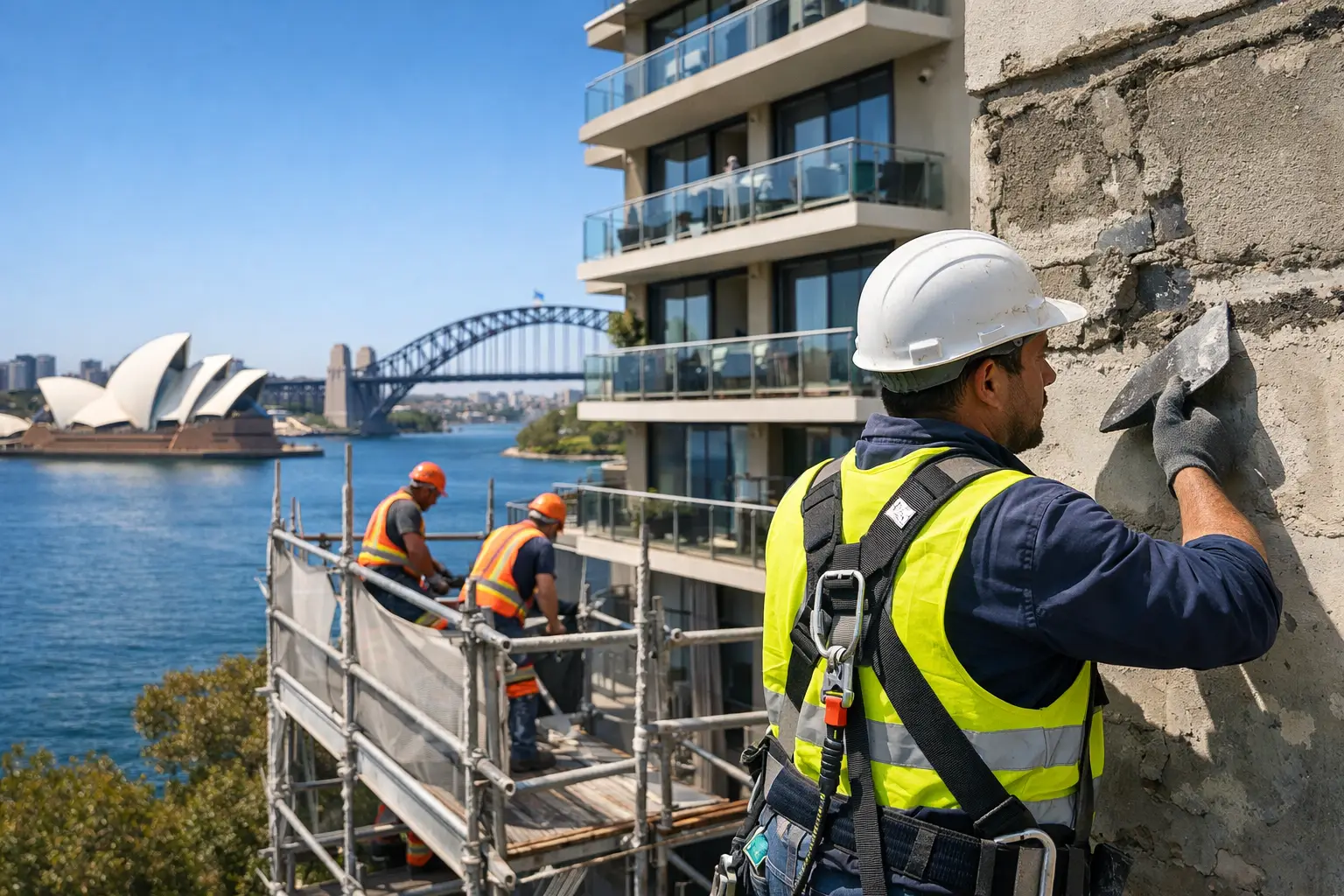
A leaking podium, cracked façade, or recurring concrete spalling rarely sits neatly inside one trade or one consultant brief. By the time a defect is visible, the cause may involve waterproofing failure, structural movement, poor detailing, drainage issues, or a combination of all four. That is where a design and construct remedial builder can materially reduce risk. Instead of separating investigation, design coordination and delivery across disconnected parties, the project is managed through one accountable framework focused on diagnosis, repair strategy, compliance and construction.
For strata committees, owners corporations, commercial asset managers and property owners, that model is not simply about convenience. It is often about controlling technical uncertainty. Remedial works fail when the symptom is repaired but the cause remains. They also fail when consultants, contractors and stakeholders are not aligned on scope, sequencing, access, certification requirements and long-term performance.
What a design and construct remedial builder actually does
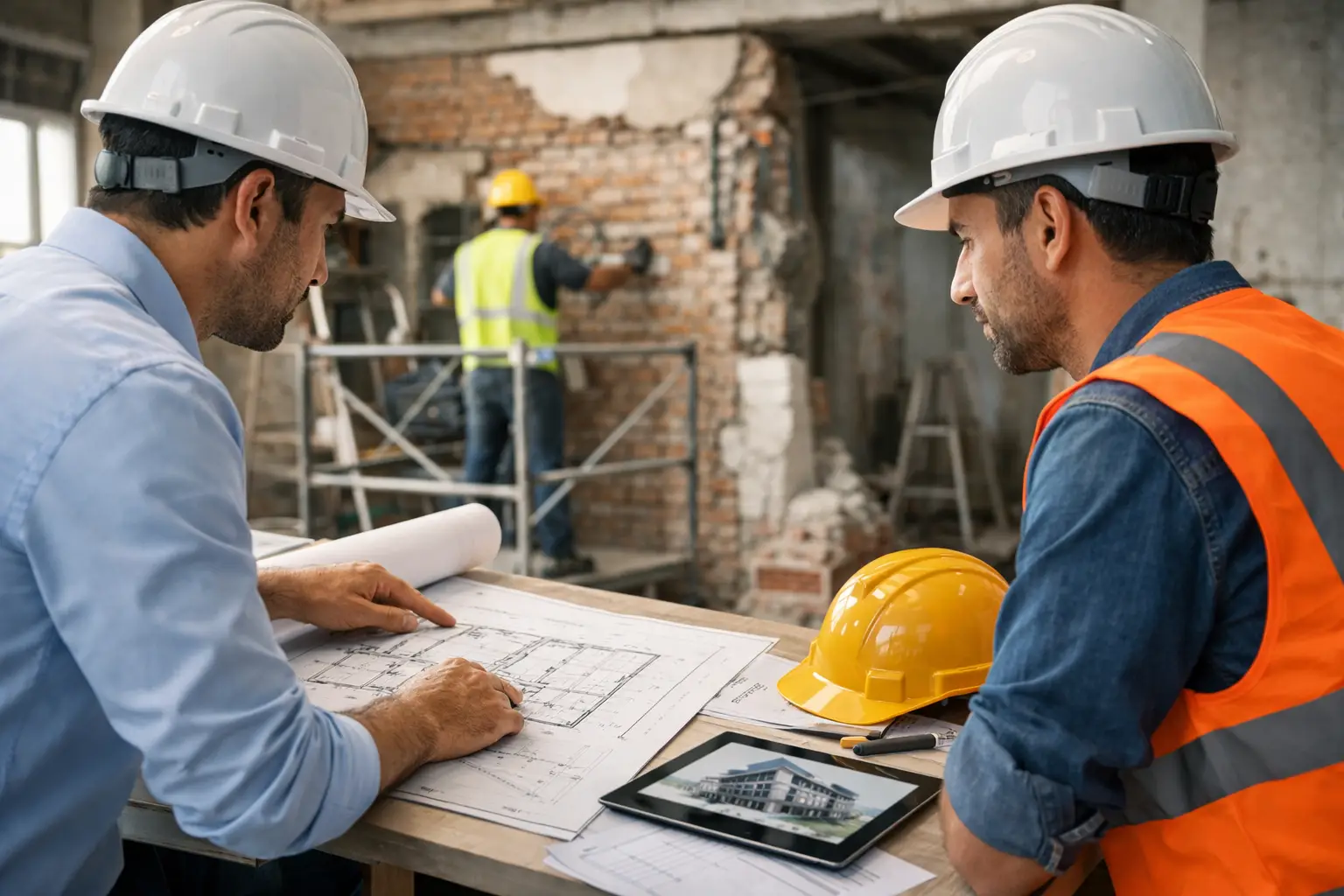
A design and construct remedial builder manages the project from early defect identification through to on-site rectification, while coordinating the required design input from engineers, waterproofing consultants, façade specialists and other registered practitioners where needed. The builder is not replacing specialist design advice. The value lies in integrating that advice into a buildable, compliant and properly sequenced repair outcome.
In practice, that can start with site inspections, intrusive investigations, review of existing documentation and analysis of deterioration patterns. Once the likely causes are understood, the builder works with the relevant design professionals to develop a repair methodology, define the scope, address statutory and approval requirements, and then deliver the works under controlled site conditions.
This matters because remedial projects are rarely linear. Opening up defective areas often reveals concealed damage, undocumented construction changes or multiple failure points. A coordinated model makes it easier to respond without losing control of quality, cost or compliance.
Why this model suits complex remedial work
Traditional procurement can work well on straightforward construction. It is less effective when the problem itself is still being defined. If a strata scheme tenders repairs based on incomplete information, the lowest price can quickly become the most expensive pathway once variations, delays and disputes begin.
A design and construct remedial builder is generally best suited to projects where the repair scope depends on investigation findings, engineered input and staged decision-making. Common examples include concrete cancer repairs, façade restoration, structural cracking, balcony and podium waterproofing failures, heritage restoration, and Class 2 rectification works where compliance obligations are significant.
The key advantage is continuity. The team involved in diagnosing the issue is connected to the team planning the methodology and the team carrying out the construction. That continuity supports better buildability, clearer communication and fewer gaps between design intent and site execution.
There are trade-offs. This model relies on engaging a contractor with genuine remedial capability, not a general builder applying a design and construct label to a repair job. It also requires transparency in how investigations are undertaken, how consultants are appointed, how repair options are assessed and how latent conditions are handled. The model works well when accountability is real, not assumed.
Design and construct remedial builder versus separated delivery
The alternative is a more fragmented pathway. An owners corporation may appoint one consultant to diagnose the defect, another to prepare documentation, and a separate contractor to price and deliver the works. In some cases, that is entirely appropriate, particularly where the scope is stable, the defect is well understood, and independent design separation is preferred for governance reasons.
However, separation introduces handover risk. Drawings may not fully reflect site realities. Tenderers may interpret details differently. Repair methodologies may be priced without enough practical input from the team that will actually execute the works. Once construction begins, the project can stall if the original design does not accommodate access limitations, substrate condition, weather exposure, occupied building constraints or sequencing with other trades.
By contrast, a coordinated remedial builder can test proposed solutions against site conditions early. That does not remove technical complexity, but it usually improves the project’s ability to manage it.
What to look for before you appoint one
Not every contractor is equipped for this kind of work. Remedial construction requires a different mindset from new build delivery. The priority is not just building what is documented. It is understanding why the defect occurred, how it has progressed, what hidden risks may sit behind it, and what repair approach is most likely to hold up over time.
Look for evidence of investigation-led methodology. A credible contractor should be able to explain how root-cause analysis informs scope development, what consultant disciplines are likely to be involved, how they manage staged discoveries on site, and how they document compliance obligations.
Past experience also matters, but only if it is relevant. There is a significant difference between cosmetic refurbishment and structural or envelope remediation. A contractor who regularly handles waterproofing failures, façade degradation, concrete repairs and complex occupied-site work will generally have better judgement around containment, sequencing, access, and defect recurrence risk.
Just as important is communication. Strata and commercial stakeholders need clear reporting, realistic programming and transparency around exclusions, assumptions and provisional allowances. Remedial works almost always involve uncertainty. The issue is not whether uncertainty exists. The issue is whether it is being identified and managed properly.
Compliance is not a box-ticking exercise
In remedial building, compliance shapes the project from the outset. That can include building code considerations, product suitability, design practitioner requirements, engineering certification, fire safety interfaces, heritage obligations and Class 2 regulatory duties depending on the building and the scope.
A capable design and construct remedial builder treats compliance as part of the repair strategy, not an administrative step added at the end. That means coordinating with the right professionals early, confirming what approvals or declarations are required, and ensuring the installed work aligns with the documented methodology.
This is particularly important in Sydney, where ageing building stock, coastal exposure, waterproofing failures and increasingly rigorous compliance expectations can combine to make even a seemingly localised defect more complex than it first appears. The cost of getting the diagnosis wrong is not limited to rework. It can extend to safety risks, resident disruption, asset devaluation and prolonged stakeholder disputes.
Where owners and strata teams often get caught out
One of the most common mistakes is treating visible damage as the full scope. A cracked render line may be movement. Bubbling paint may be trapped moisture. Rust staining may point to reinforcement corrosion well beyond the stained area. If the repair brief is written around appearance rather than cause, the project can be under-scoped before it begins.
Another issue is false certainty in early budgeting. Stakeholders understandably want firm numbers, but remedial pricing is only as reliable as the information available. A disciplined contractor will distinguish between confirmed scope and likely latent conditions. That can feel more conservative upfront, but it is usually a better basis for decision-making than an unrealistically fixed figure built on assumptions.
Procurement timing also matters. Bringing a remedial builder into the conversation after months of disconnected consultant work can reduce the benefit of coordinated delivery. Early involvement often produces better repair sequencing, clearer methodology and more practical scope definition.
The value of end-to-end accountability
When defects affect occupied buildings, accountability matters as much as technical skill. Residents want to know what is happening, committees need confidence in the process, and asset managers need a clear line of responsibility. A fragmented project structure can make that difficult. Everyone may be involved, yet no one fully owns the outcome.
An end-to-end model creates a more direct path between diagnosis, recommendation and delivery. That does not eliminate the need for consultants, independent certification or stakeholder oversight. It simply means the moving parts are being actively coordinated by a party with both delivery responsibility and practical construction knowledge.
For many projects, that is the difference between reactive patching and structured remediation. The best outcomes come from combining investigation, engineering input, compliant design development and disciplined site execution into one coherent process.
If your building issue is recurring, technically uncertain or likely to involve multiple disciplines, choosing a design and construct remedial builder is often less about speed and more about control. The right team helps you make decisions on evidence, not guesswork, and that is usually where durable results begin.