When cracking, delamination or water ingress starts showing up across a building envelope, the real risk is rarely the visible defect alone. Facade restoration contractors are often brought in after the problem has already affected tenants, budgets and compliance obligations. At that point, the quality of diagnosis matters just as much as the repair itself.
For strata committees, owners corporations, asset managers and commercial property owners, facade works sit in a high-stakes category of remedial construction. The facade protects structural elements, controls moisture entry, influences occupant safety and affects the building’s long-term value. Choosing the right contractor is not about who can patch the surface fastest. It is about who can identify why the facade has failed, coordinate the right consultants and deliver a repair methodology that stands up over time.
What facade restoration contractors should actually do
The term gets used broadly, but not every contractor offering facade works is equipped for full remedial restoration. Some providers are geared toward cosmetic upgrades such as painting, sealant replacement or isolated patching. Those services may have a place, but they are not a substitute for defect-led remediation where the building fabric is deteriorating.
A capable facade restoration contractor should be able to investigate defect patterns, interpret existing construction details, coordinate with engineers and design practitioners where required, and build a repair scope around underlying causes. That may involve concrete cancer repairs, crack injection, masonry stabilisation, façade recladding interfaces, waterproofing upgrades, movement joint remediation or replacement of corroded embedded elements.
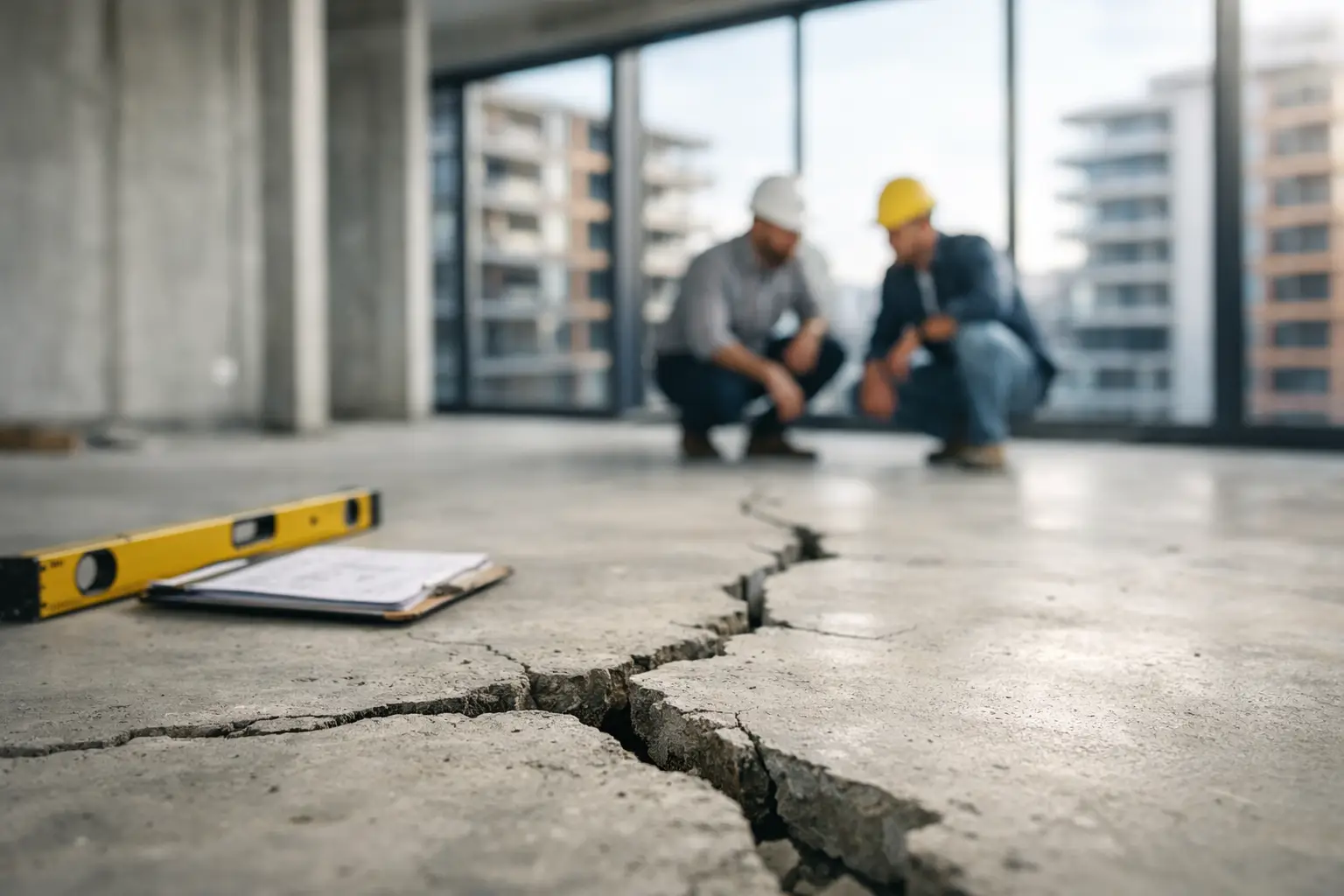
This distinction matters because facade distress is often connected to broader building issues. Water ingress may be entering through failed joints but causing internal substrate damage elsewhere. Concrete spalling may be the visible result of reinforcement corrosion driven by long-term moisture exposure. Cracking may reflect structural movement, thermal expansion, poor detailing or material incompatibility. Without proper investigation, repairs can look complete while leaving the actual failure mechanism active.
Why diagnosis comes before scope
One of the most common problems in facade projects is going to market with a repair brief that is too narrow. If the initial scope is based only on what can be seen from ground level or from a brief site walk, the contractor is being asked to price assumptions rather than a defined remedial strategy.
That creates predictable problems. Variations increase once concealed conditions are exposed. Programmes stretch. Committees lose confidence. Most importantly, the completed works may not address the real source of deterioration.
Experienced facade restoration contractors will usually push for a more disciplined front-end process. Depending on the building, this can include close-up inspections, sounding, moisture testing, destructive investigation, review of historical reports, facade access planning and engineering input. On complex buildings, especially older strata and commercial assets in Sydney, this stage is not an administrative extra. It is what allows a repair methodology to be designed around evidence rather than guesswork.
There is a cost to proper investigation, but the trade-off is clarity. Owners are better able to understand defect severity, likely causes, repair sequencing and realistic budget exposure before site works escalate.
Compliance is not a side issue
Facade remediation is no longer something to treat as a simple maintenance item where a contractor turns up, makes good and leaves. Depending on the building type, access method, defect class and extent of replacement, there may be significant compliance obligations to manage through design, approvals, documentation and construction delivery.
For Class 2 buildings in particular, remedial works can intersect with regulated design and documentation requirements. Heritage assets bring a different layer of controls, where material selection, restoration methods and presentation outcomes must be handled carefully. Occupied sites add safety, access and communication pressures that need active management rather than reactive site supervision.
This is where contractor capability becomes very clear. Some contractors can carry out physical repair works competently but struggle when approvals, engineering coordination and regulatory interfaces become part of the project. Others operate with a more accountable model, where investigation, documentation, consultant coordination and on-site delivery are handled as one integrated process.
For building stakeholders, that difference affects risk. A fragmented delivery model can leave gaps between diagnosis, design intent and final construction outcomes. A coordinated remedial contractor is better placed to align the scope, methodology, sequencing and records needed for compliant delivery.
How to assess facade restoration contractors
Tender comparisons often focus too heavily on price, especially when committee pressure is high and defects are already causing concern. Price matters, but only after the scope has been properly framed and the contractor’s methodology has been tested.
Start by looking at how the contractor approaches defect investigation. Do they ask detailed questions about water ingress patterns, crack movement, previous repairs and structural context? Do they identify where assumptions remain unresolved? Contractors with genuine remedial experience are usually careful at this stage because they understand how often visible symptoms mask broader deterioration.
Next, assess their ability to coordinate technical inputs. Facade remediation can require structural engineers, waterproofing advice, facade access specialists, heritage consultants or registered design practitioners. If the contractor treats consultant coordination as someone else’s problem, the owner may end up carrying the burden of interface management. In more complex projects, that can create delay and accountability gaps.
It is also worth examining how the contractor talks about repair outcomes. If the discussion is limited to making defects look good again, that is a warning sign. A stronger contractor will explain substrate preparation, corrosion treatment, compatible repair materials, movement considerations, weather exposure and maintenance implications. They should be able to articulate not just what they will fix, but why that method is appropriate for the building.
Finally, ask about delivery controls. Occupied buildings need staged access planning, resident communication, site safety procedures and quality assurance records. A dependable contractor should be able to describe how these will be managed before works begin, not after complaints start arriving.
The trade-off between patching and proper restoration
Not every building needs a major restoration campaign. In some cases, localised defects can be treated effectively with targeted repairs and ongoing monitoring. In others, isolated patching simply spreads cost over multiple years while the building continues to deteriorate.
The right approach depends on defect extent, material condition, access cost, building age and exposure. For example, if a facade requires rope access, mast climbers or extensive scaffold to reach a limited area, it may be more economical to complete broader works while access is in place. If multiple elevations show similar distress, treating one section at a time may offer short-term budget relief but poor whole-of-asset value.
Good facade restoration contractors will not apply a one-size-fits-all recommendation. They should be able to explain whether the building is better served by staged remediation, priority safety works, targeted repairs or a comprehensive facade programme. What matters is that the recommendation is grounded in condition evidence and lifecycle thinking, not just immediate contract value.
Why end-to-end delivery reduces risk
On facade projects, many failures are not caused by poor labour alone. They result from disconnects between diagnosis, documentation and execution. A scope written without enough investigation leads to unsuitable details. Site teams adapt on the run. Variations multiply. The owner is left trying to work out who is responsible.
An end-to-end remedial model reduces that risk because there is clearer ownership from early defect assessment through to construction delivery. When one experienced team manages investigation, repair development, consultant coordination and on-site execution, it becomes easier to maintain continuity between the cause of the defect and the chosen remedy.
That is particularly valuable on ageing strata and commercial buildings where several issues may overlap – facade cracking, failed waterproofing, corrosion, joint breakdown and structural movement can all be linked. Treating each trade package in isolation may appear simpler at procurement stage, but it often creates more uncertainty once works begin.
What building stakeholders should expect from the process
A sound facade remediation process should provide more than a quote and a start date. Stakeholders should expect clarity around defect findings, recommended methodology, assumptions, exclusions, programme constraints and likely latent condition risks. They should also expect realistic communication about what is known, what still needs investigation and where cost sensitivity sits.
That level of transparency matters. Committees and asset managers are often making decisions under pressure from residents, insurers, consultants and compliance timelines. Overconfident promises create problems later. Measured advice, supported by evidence and coordinated planning, usually leads to better decisions and fewer disputes during delivery.
For complex buildings, the contractor selection decision is really a risk management decision. The right team helps protect the asset, manage compliance and reduce the likelihood of recurring defects. The wrong team can leave the building with a tidier surface and the same underlying problem.
If your facade is showing signs of failure, the practical next step is not to ask who can fix the symptom fastest. It is to ask who has the discipline to investigate the cause, coordinate the right repair pathway and stand behind the result.