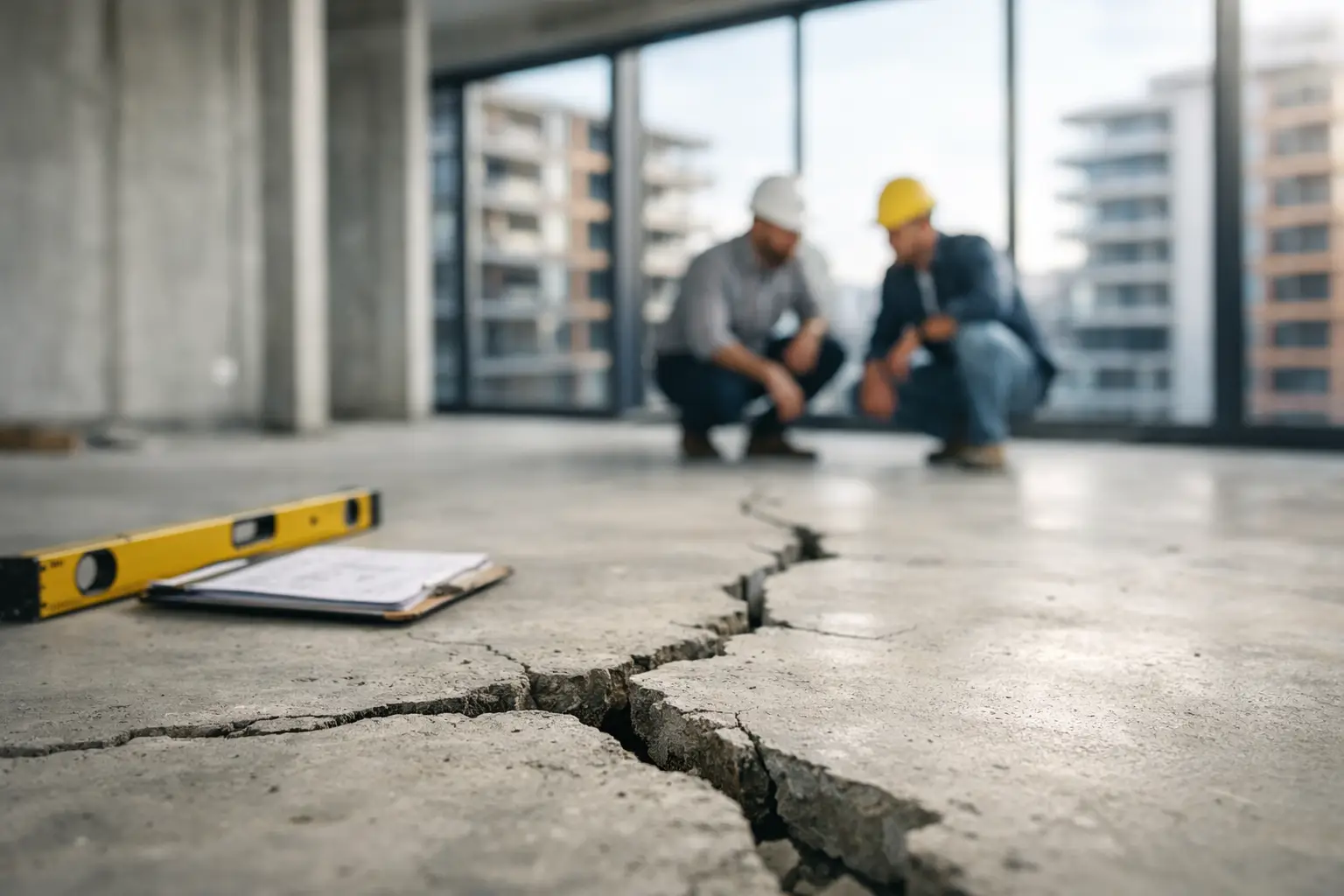
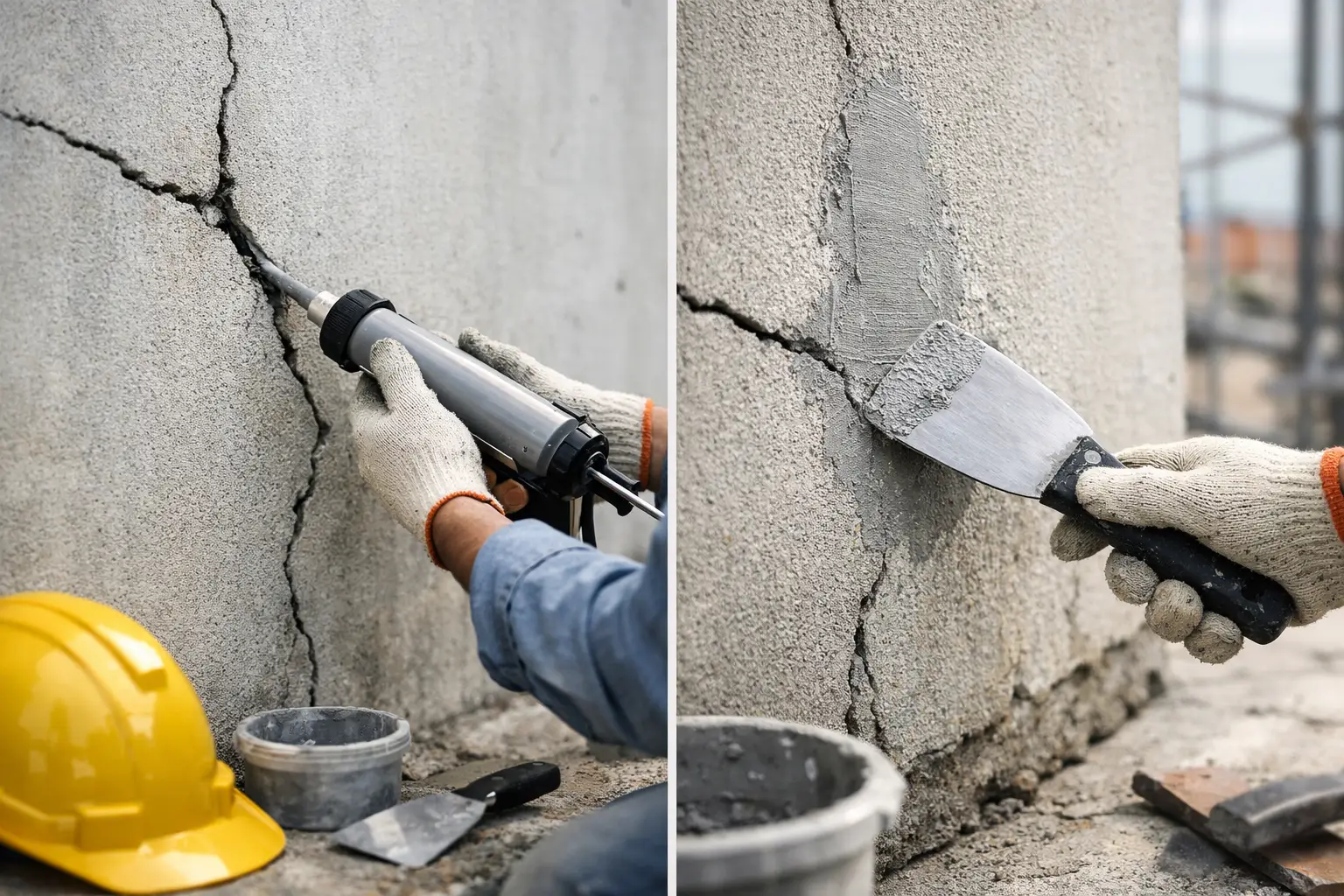
A crack in a wall, slab or facade is rarely just a surface issue. Effective building crack repair methods start with one question: why has the crack formed in the first place? For strata committees, owners corporations and asset managers, that distinction matters. A cosmetic patch may improve presentation for a short time, but if the underlying movement, moisture ingress or structural stress remains, the defect usually returns – often with a higher repair cost and a broader compliance risk.
In remedial construction, cracks are assessed by behaviour, location, material type and likely cause before any repair method is selected. That process is what separates durable rectification from short-term make-good work.
Why crack repair should never start with filler
The visible crack is only one part of the problem. In concrete, cracking may be linked to corrosion, shrinkage, thermal movement, overloading, poor detailing or water ingress. In masonry and rendered facades, it may reflect substrate movement, lintel distress, foundation settlement, failed articulation, moisture-related expansion or incompatible past repairs.
This is where many projects go wrong. The repair method is chosen too early, usually based on what is easy to access or cheapest to apply. If a crack is active, a rigid repair may fail. If reinforcement corrosion is present, sealing the surface without treating the steel can trap moisture and accelerate deterioration. If the issue is structural, cosmetic treatment can create a false sense of security.
A disciplined assessment typically considers crack width, pattern, depth, recurrence, moisture exposure, surrounding damage and whether movement is ongoing. In higher-risk settings, that may also involve engineer review, monitoring, hammer sounding, cover surveys, moisture testing or opening-up works.
Building crack repair methods depend on the crack type
Not all cracks are equal, and they should not be repaired as though they are. Hairline shrinkage cracking in render requires a very different response to a structural crack in a suspended slab or a water-affected crack through a podium wall.
Dormant cracks, where the original movement has stabilised, can often be repaired with rigid systems designed to restore continuity. Active cracks, where seasonal, thermal, moisture or structural movement continues, generally need a flexible detail or a movement-management approach. The key is matching the repair to actual crack behaviour, not assumed behaviour.
In practical terms, the repair strategy usually falls into one of several categories: sealing, injection, stitching, patch repair, joint modification, structural strengthening or partial rebuild. Sometimes more than one method is required on the same elevation or structure.
Epoxy injection for dormant structural cracks
Epoxy injection is commonly used where a concrete crack is fine to moderate in width, dry or suitably prepared, and considered dormant. The purpose is not simply to fill the crack. A correctly specified epoxy can bond the concrete back together and restore a degree of structural integrity.
This method suits some beams, walls, columns and slabs, but only where the cause has been understood and movement has ceased or is negligible. It is less suitable where cracking is moisture-affected, contaminated, or expected to keep moving. If those conditions are ignored, bond failure is likely.
Surface preparation, crack port placement, resin selection and injection pressure all matter. Poor workmanship can leave voids, incomplete penetration or resin staining without resolving the defect.
Flexible sealants for moving cracks
Where movement is expected, flexible sealant systems are often more appropriate than rigid fillers. This is common in facade cracks, joints around openings, parapets, precast panel interfaces and rendered surfaces exposed to thermal cycling.
That said, flexible sealants are not a cure-all. They perform best when the crack is correctly routed or converted into a suitable joint geometry, with proper backing materials and compatible sealant selection. Applying sealant directly over an unstable or friable surface usually gives a neat finish for a while, then fails at the bond line.
For buildings exposed to frequent weather variation or water ingress, the waterproofing detail around the crack can be just as important as the sealant itself.
Routing and sealing in masonry and render
For non-structural cracking in masonry or cement render, routing and sealing can be a practical repair where the substrate remains sound and movement is limited. The crack is opened in a controlled manner, cleaned, and filled with a suitable repair material, often followed by localised reinstatement of the render system or protective coating.
The limitation is straightforward: if the wall continues to move, if embedded steel is corroding, or if moisture is driving expansion behind the finish, the crack will often reappear nearby. In those cases, the visible crack is only part of a larger remediation scope.
Stitching and reinforcement where continuity is needed
Crack stitching uses stainless steel bars or helical reinforcement installed across a crack line, typically in masonry or sometimes concrete, to help redistribute tensile forces and improve continuity. It can be effective for localised cracking associated with stress concentrations, movement around openings or isolated masonry distress.
However, stitching is not a substitute for addressing foundation movement, structural deflection or severe material degradation. It works best as part of an engineered repair design, not as a standalone fix applied to every stepped crack in brickwork.
Concrete patch repair when cracking is linked to corrosion
Where cracking is accompanied by rust staining, delamination or spalling, concrete patch repair is often required. In this scenario, the crack may be a symptom of reinforcement corrosion rather than the primary defect. The repair typically involves breakout to sound substrate, steel treatment or replacement as required, reinstatement with a compatible repair mortar, and protective coating where specified.
This is one of the clearest examples of why root-cause analysis matters. If chloride ingress, carbonation, membrane failure or inadequate cover is driving corrosion, patching only the visibly damaged area may not be enough. A broader corrosion management strategy may be needed, particularly on balconies, planter boxes, podiums and exposed facade elements.
When structural movement changes the repair scope
Some cracks point to issues that sit beyond local repair. Differential settlement, slab deflection, failed waterproofing systems, inadequate articulation, rusted lintels, or load-path changes can all produce recurring cracking patterns. In those cases, the correct method may involve structural strengthening, joint redesign, waterproofing replacement, facade rebuild sections or coordinated remedial works across multiple trades.
For strata and commercial assets, this is where project coordination becomes critical. A crack repair can interact with facade access, waterproofing details, balustrades, fire compliance, occupancy constraints and consultant documentation. Isolated trade-based repairs often miss those interfaces.
A well-managed remedial process usually starts with investigation, then moves to defect diagnosis, repair design, scope definition, approvals and staged construction delivery. That reduces the chance of repairing the same defect twice.
Choosing the right building crack repair methods
The most reliable building crack repair methods are selected through diagnosis, not guesswork. That means asking a few practical questions early. Is the crack structural or cosmetic? Is it active or dormant? Is water involved? Is there corrosion, deflection or substrate failure behind it? Will the repair need to satisfy engineer certification, strata reporting or Class 2 compliance obligations?
Those questions affect materials, sequencing and cost. They also affect how long the repair is likely to last. A cheaper method that does not suit the building condition is rarely cheaper over the life of the asset.
In Sydney, this is particularly relevant for older apartment buildings, coastal structures and mixed-use assets where moisture exposure, ageing concrete and movement between building elements are common. What appears to be a simple facade crack may in fact be linked to membrane failure, embedded steel corrosion or long-term water ingress.
What clients should expect from a proper crack repair process
A credible crack repair process should be transparent about uncertainty where it exists. Not every crack can be diagnosed from a photo or a quick site walk. Some need monitoring. Some need opening-up. Some need engineer input before a final scope is set.
Clients should also expect repair recommendations to explain not only what will be done, but why that method is suitable for the condition observed. That includes identifying limitations, likely service life, interface works and any downstream maintenance requirements. Where the building has multiple contributing defects, the repair strategy should show how those issues will be managed together.
That level of detail matters because crack repairs sit at the intersection of safety, waterproofing, structural performance and asset presentation. If the repair is under-scoped, the defect returns. If it is over-scoped without evidence, cost rises unnecessarily. Good remedial practice sits between those extremes.
The best time to treat a building crack is usually before it escalates into water damage, concrete spalling, corrosion or occupant concern. But the right repair is not the fastest patch – it is the one that reflects the building’s actual condition and gives the asset a defensible, durable path forward.