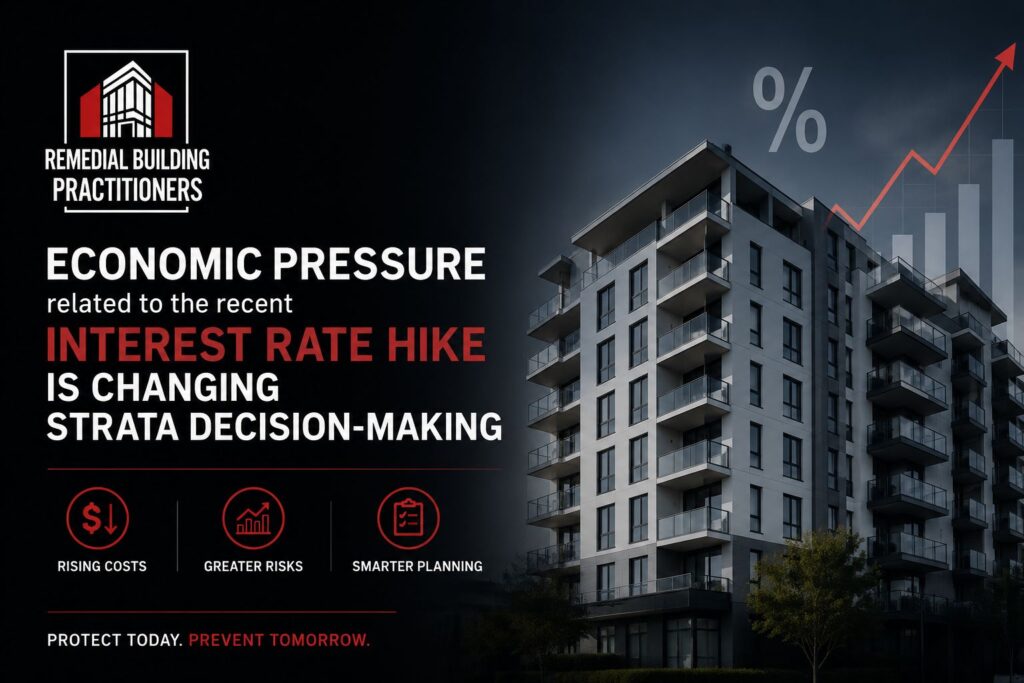
Economic Pressure related to the recent interest rate hike is Changing Strata Decision-Making
With ongoing interest rate pressure across Australia, we have noticed that many strata schemes are delaying or tend to postponing major remedial works in an attempt to reduce short-term financial strain. It is a very difficult situation, as when it comes to foundational repairs and concrete spalling, postponement often leads to even higher costs, greater structural risk and more difficult financial decisions later.
In the current market, if not acting on remediation at the right time, it could create a compounding problem:
- Construction costs continue to rise
- Borrowing later may become more expensive
- Repair scopes expand as deterioration spreads
- Emergency works often carry higher costs and disruption
What may be manageable today can quickly become financially overwhelming for owners corporations if ignored.
Remedial Building Practitioners understand that strata committees and managers are balancing structural obligations with increasing financial pressure. Our approach focuses on helping clients manage both technical risk and budget realities through practical, staged and strategic solutions.
Strategic Staging of Works
Rather than pushing unnecessary large-scale projects, we help strata schemes prioritise repairs based on urgency, structural risk, and available funding.
This allows committees to:
- Spread expenditure across multiple stages
- Address critical defects first
- Reduce immediate levy pressure on owners
- Maintain compliance while managing cash flow
A staged remedial strategy often prevents buildings from reaching the point of major structural failure requiring significantly larger capital expenditure.
Detailed Defect Identification
Many buildings are overquoted because the underlying cause of deterioration has not been properly diagnosed.
Our investigations focus on identifying:
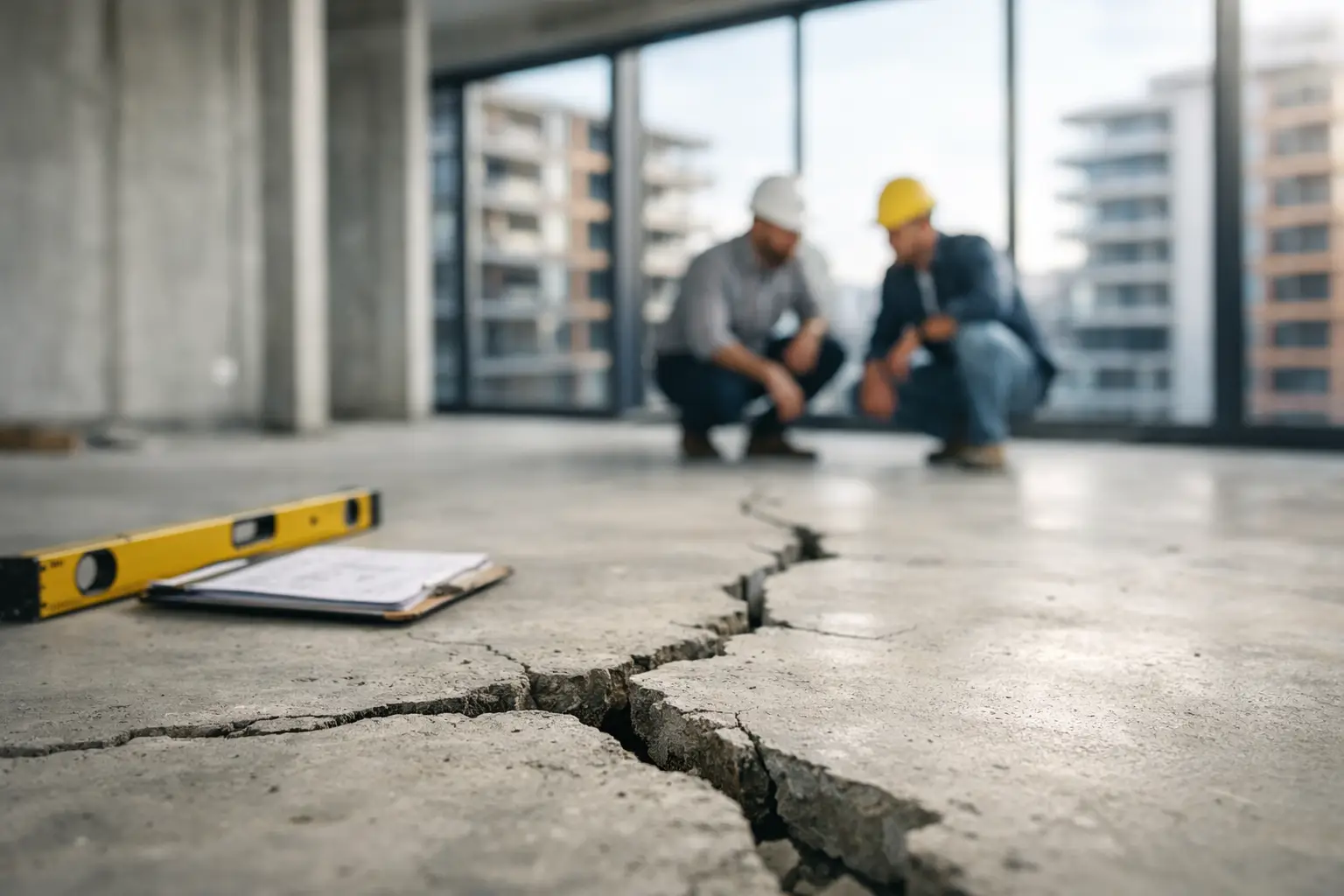
- Root causes of spalling and cracking
- Active water ingress pathways
- Structural movement and concrete deterioration zones
- Waterproofing and façade failures
This allows us to recommend targeted, cost-efficient repairs rather than broad unnecessary replacement works.
Early Budget Forecasting & Cost Planning
We work closely with strata managers and committees early in the process to provide realistic cost forecasting before defects escalate.
This helps owners corporations:
- Plan capital works more effectively
- Prepare levy strategies in advance
- Reduce financial shock to owners
- Improve decision-making at AGM and committee level
Early planning provides significantly greater financial flexibility compared to urgent reactive works.
Minimising Long-Term Financial Exposure
Delaying some issues for example: concrete repairs, rarely reduces costs, it usually multiplies them.
By intervening early, we help minimise:
- Escalating structural damage
- Emergency repair scenarios
- Insurance and liability exposure
- Resident disruption and access issues
- Future borrowing requirements at higher interest rates
Our objective is not simply to repair defects, but to protect the long-term value, safety and financial stability of the asset. In today’s economic climate, proactive remedial planning is not optional for ageing strata assets, it is essential. The cost of delay is no longer limited to concrete deterioration alone, but now includes rising construction costs, increasing financing pressure and growing exposure to structural and legal risk.
Remedial Building Practitioners help strata committees and managers take control early, before minor defects become major financial liabilities.
info@remedialbuildingpractitioners.com.au
ph+ 1300 145 014