via: Getty Image
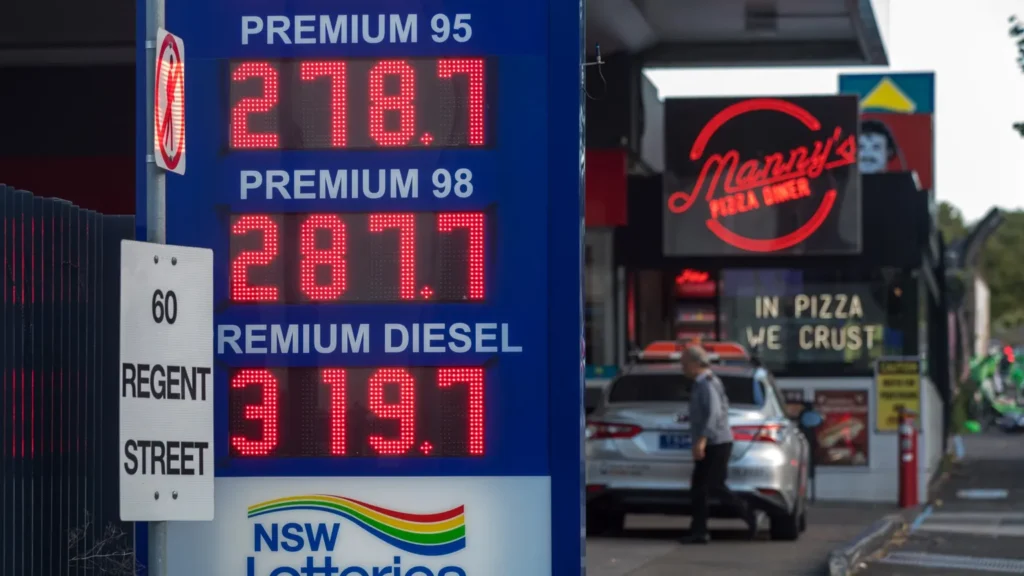
Like many across Australia, we are seeing fuel price increases create a multi-layered cost escalation effect, influencing not only transportation but the entire construction supply chain.
Industry data* indicates:
- Concrete supply costs increasing by approximately $8/m³
- Waste removal costs rising by around $4/m³
- Delivery charges and key materials, such as PVC piping, increasing by up to 33%
This reflects what builders are now experiencing as a “triple pressure effect”:
- Increased operational costs for plant, vehicles, and site mobilisation
- Higher logistics and transport costs
- Flow-on increases in material pricing and supply chain instability
Implications for Tendering and Project Delivery
From a Building Practitioner’s perspective, these conditions directly impact how projects are priced and delivered.
Remedial works are inherently complex:
- Projects are often reactive and condition-based
- Scope clarity can evolve during delivery
- Contracts are frequently fixed or competitively tendered
In this environment, rapid and unpredictable cost increases introduce:
- Reduced margin certainty
- Increased financial risk during project execution
- Greater pressure on accurate forecasting at the tender stage
This makes tendering more strategic than ever — requiring not only pricing accuracy, but also strong risk management and technical foresight.
Our Approach: Absorbing Pressure Through Strategy, Not Passing It On
Despite these industry-wide pressures, our position remains clear. At RBP, we make a conscious effort not to simply pass rising costs directly onto clients where ever it is viably possible.
We try to focus on:
- Procurement optimisation — leveraging supplier relationships and forward planning
- Efficient construction methodologies — reducing unnecessary handling and transport
- Staging and sequencing — minimising rework, variations during construction, and downtime
- A value-driven tender process — delivering performance-based, cost-effective solutions to strata clients
Our objective is to maintain project feasibility while consistently delivering high-quality outcomes. As builders and building practitioners, we are also very mindful of our contractual obligations — particularly for Class 2 projects, where liability extends to 2 years for minor defects and 10 years for major defects.
We don’t step away from challenges — we approach them with careful assessment, considered pricing and disciplined risk management.
In the current climate, ongoing cost escalation across materials, logistics and operations has required a more measured approach to pricing. While we always aim to absorb as much of this impact as possible, there are times when adjustments are necessary to reflect the true cost of delivering a project properly.
Market conditions can vary and different contractors may adopt different commercial strategies. Our focus remains on delivering projects that are not only competitive, but also realistic, sustainable and aligned with long-term performance.
Ultimately, this approach allows us to stand behind our work with confidence — both during delivery and well beyond completion.
The Bigger Picture
The current fuel-driven cost environment is not just a short-term disruption — it is contributing to broader industry challenges, including projects delivery constraints and project viability.
At RBP, we don’t just respond to defects. We navigate complexity, manage risk and deliver long-term solutions — even in uncertain market conditions.
Because in today’s environment, the value of a builder is not defined by cost alone and if it is than that’s not the client we want to work with anyway as that would be considered a red flag high risk client, our value is demonstrated by how effectively we are able to manage the issues and the level of support provided to clients throughout the process.
*Source: Master Builders NSW
info@remedialbuildingpractitioners.com.au
Ph+ 1800 070 431