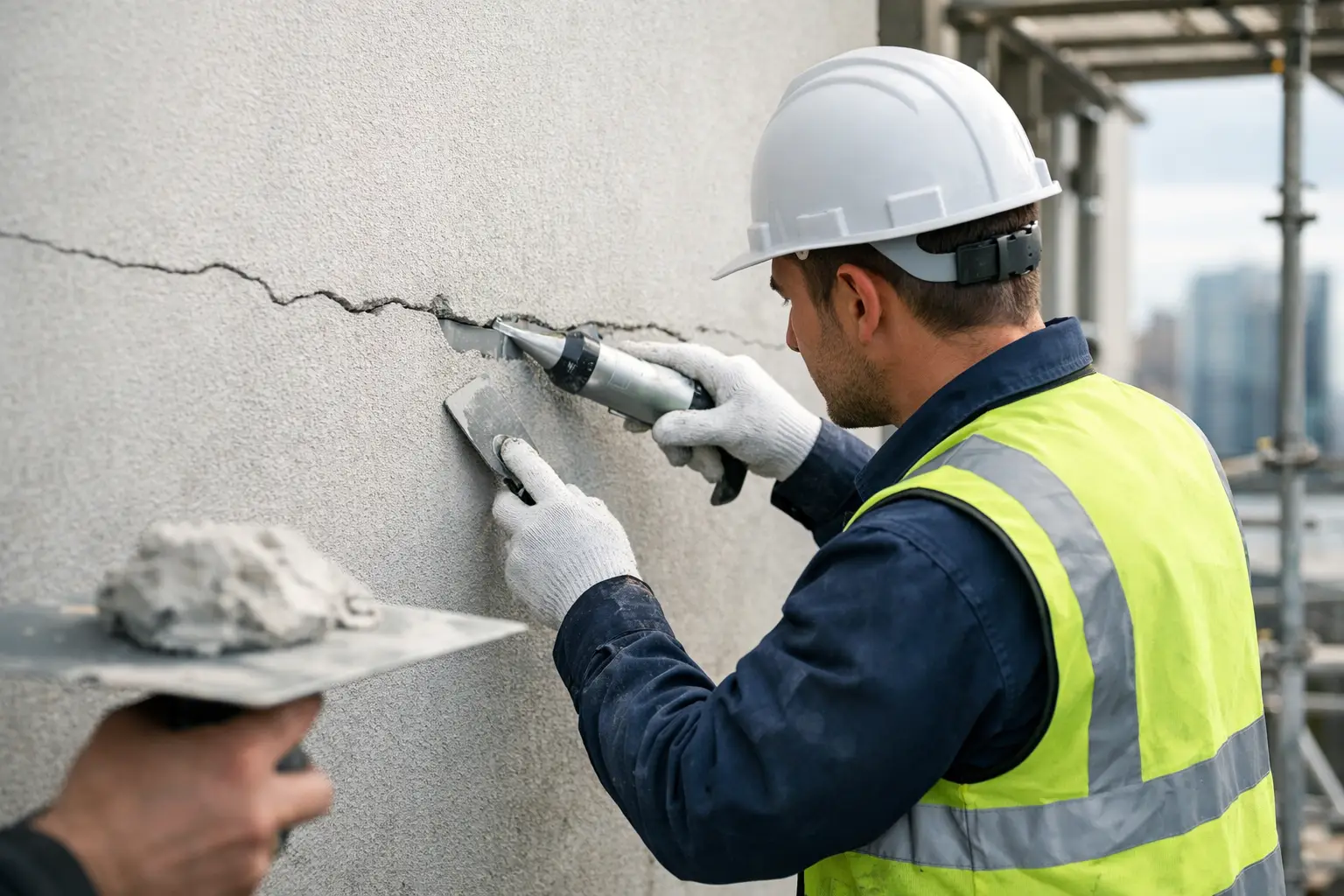
A crack across a rendered wall, concrete spandrel or masonry facade may look like a contained maintenance issue. It can also be the visible path of water ingress, corrosion, movement or a failing connection behind the surface. Knowing how to repair facade cracks starts with resisting a quick seal-and-paint response. The repair method must address why the crack formed, not simply make it less visible from the street.
For strata committees, building managers and commercial asset owners, this distinction affects safety, programme certainty, future maintenance costs and the building’s long-term performance. A repair that appears sound at handover but opens again after the next season of movement has not resolved the defect.
Start by establishing why the facade cracked
Facade cracks arise from a range of mechanisms, and more than one can be present on the same elevation. Thermal expansion and contraction, concrete shrinkage, differential movement between materials, settlement, water penetration, corroding reinforcement and inadequate movement joints can all create cracking. On older buildings, deterioration of coatings and sealants may allow moisture to reach vulnerable areas and accelerate the underlying issue.
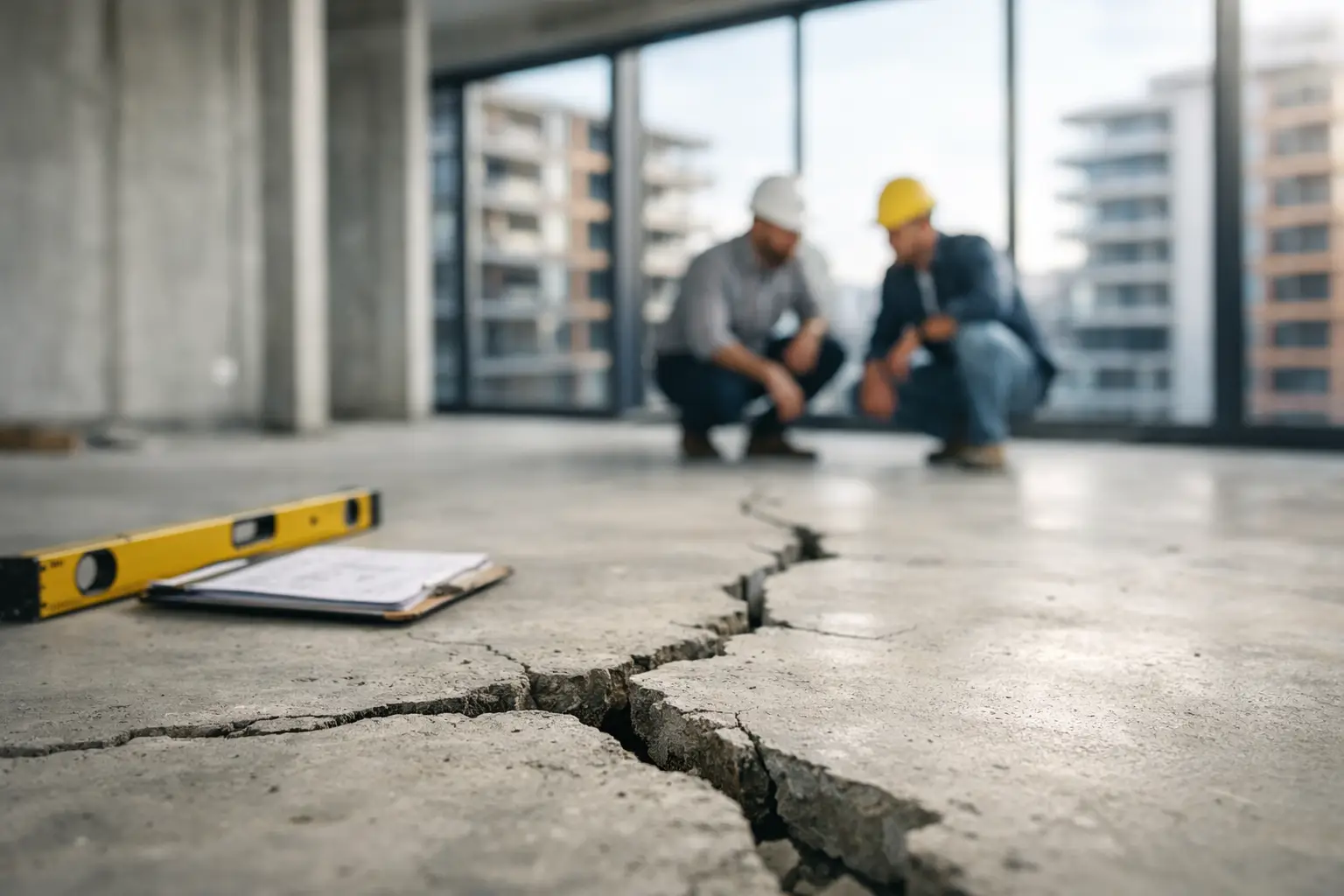
Crack location, direction, width and change over time provide useful evidence. Fine, relatively consistent cracking within a render finish may be superficial, while stepped cracks through masonry, diagonal cracks from window corners, or cracking paired with rust staining and concrete spalling warrants a more detailed assessment. Horizontal cracking along reinforcement lines is particularly concerning, as it can indicate concrete cancer.
A visual inspection alone is not always enough. A disciplined investigation may include facade access, sounding surveys, crack monitoring, moisture testing, review of original drawings, concrete testing and engineering input. The objective is to identify whether the crack is dormant, active, structural, water-related or confined to a coating system. This determines both the scope of repair and whether further work is required behind the facade.
Assess risk before any facade crack repair
Not every crack demands urgent structural intervention, but every external facade defect should be assessed in the context of its location and condition. Cracks near balconies, parapets, sunhoods, precast panels, heavy cladding elements or pedestrian areas can create a public safety risk if there is loose material or concealed deterioration.
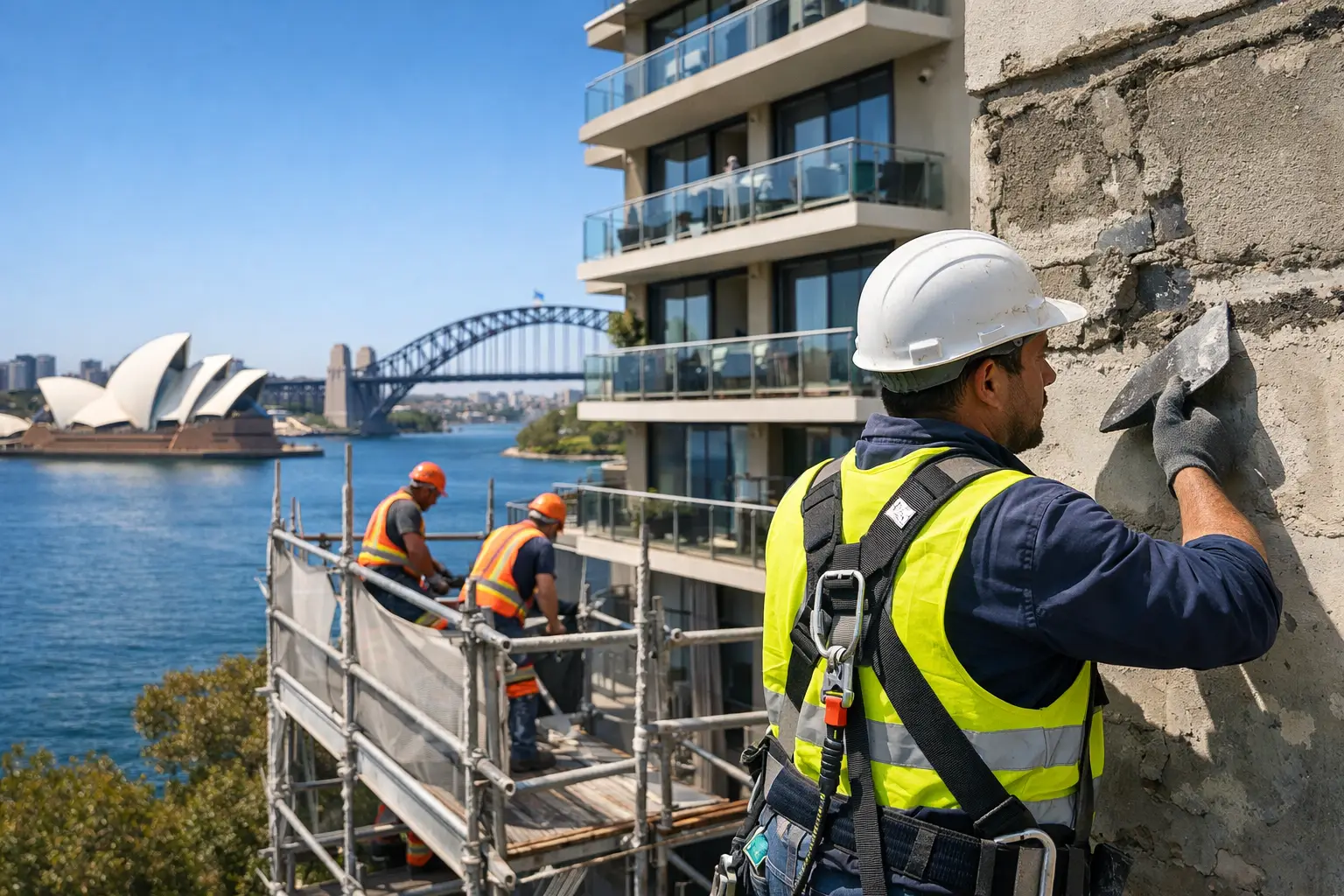
Where concrete is delaminating, fragments are displaced, or there is evidence of corrosion, temporary risk controls may be necessary before permanent repairs begin. These can include exclusion zones, protective gantries, make-safe works and controlled access arrangements. Work at height also requires an appropriate access strategy, whether that involves scaffolding, elevated work platforms, rope access or mast climbers.
For occupied residential and commercial buildings, planning must also account for residents, tenants, footpath access, noise, dust, parking and emergency egress. A technically correct repair can still become a difficult project if site controls and communication are not managed carefully.
How to repair facade cracks based on the material
The correct method depends on the facade construction and the cause of movement. Applying a generic filler across every crack is rarely an appropriate remedial strategy.
Rendered and painted masonry
For stable, non-structural cracks in render, the usual process involves removing loose or drummy material, preparing the substrate, opening and cleaning the crack where required, and applying a compatible repair mortar or flexible crack-treatment system. The repaired area is then finished with a coating system selected for the substrate, exposure and expected movement.
If the masonry behind the render is cracked, the investigation must go deeper. Repointing, masonry stitching, local rebuilding or movement-joint upgrades may be required before the render is reinstated. Coating over movement in the substrate will only delay its reappearance.
Concrete facades and precast panels
Concrete cracking requires particular care because cracks may allow water and chlorides to reach reinforcing steel. When steel corrodes, it expands and places pressure on the surrounding concrete. This can lead to cracking, hollow areas and eventual spalling.
A durable concrete repair generally involves breaking out unsound concrete, exposing reinforcement, assessing and treating or replacing affected steel, applying compatible repair materials, and reinstating protective coatings. Depending on the defect, crack injection using an epoxy or polyurethane resin may be considered. Epoxy is commonly used where structural bonding is required in dry, stable cracks, while polyurethane can suit certain active water-ingress conditions. The selection must follow the defect diagnosis and engineering requirements.
Precast panel systems introduce further considerations. Cracks may be linked to panel joints, failed sealants, fixings, connection movement or water pathways at interfaces. Repairing the face of the panel without addressing joints and connections can leave the building exposed to repeat leakage and deterioration.
Brick and heritage facades
Brickwork can crack because of foundation movement, corroded lintels, moisture-related expansion, failed ties or inadequate allowance for movement. Repairs may range from local repointing to lintel replacement, crack stitching and selective rebuilding. Mortar selection matters, particularly on heritage assets, where an overly hard mortar can damage softer historic brickwork.
Heritage facade repairs require a measured approach. Matching the original material appearance is important, but so is protecting the building fabric and retaining evidence of its construction. Investigation, sample panels and careful material selection help avoid repairs that look acceptable initially but age poorly or cause further damage.
Treat water management as part of the repair
Many facade cracks become serious because water is allowed to enter and remain within the building envelope. The source may be a failed sealant joint, unsealed penetration, defective flashing, blocked drainage path, deteriorated coating or crack itself. Water can travel well beyond the point where it becomes visible internally.
A repair scope should therefore consider adjacent interfaces, including windows, balcony doors, roof-to-wall junctions, parapet cappings, control joints and penetrations. Testing may be needed to confirm the water pathway before facade finishes are opened up or reinstated.
There is a trade-off in every scope. A narrow patch repair may be suitable where investigation confirms a local, isolated defect. If coatings, sealants and joints have reached the end of their serviceable life across an elevation, a broader facade restoration programme can offer better long-term value than repeated reactive repairs.
Coordinate engineering, compliance and construction delivery
On complex or high-risk buildings, facade remediation is not a collection of isolated trades. It requires a coordinated process from investigation through design, approvals, site delivery and quality assurance. Structural engineers, facade consultants, waterproofing specialists, registered design practitioners and builders may all have a role, depending on the building type and proposed work.
For Class 2 buildings in NSW, applicable design and building practitioner obligations must be considered early. The required documentation, declarations and construction controls will depend on the nature and extent of the works. Leaving compliance review until construction is underway can create avoidable delays and scope changes.
The repair specification should set out substrate preparation, products, compatible materials, detailing, curing requirements, coating thicknesses, sealant installation and inspection hold points. Photographic records and progressive quality checks are valuable because much of the critical work becomes concealed by the final finish.
A Design & Construct approach can be effective where defects are uncertain at the outset, provided the process remains transparent. The client needs clear reporting on findings, provisional items, design decisions and any variation required once areas are opened for repair. Accountability is strongest when the investigation team, engineering coordination and on-site delivery work to one agreed remedial strategy.
Avoid the common shortcuts
The most common failure is treating every visible crack as a cosmetic defect. Other avoidable shortcuts include applying rigid materials over active movement, coating damp substrates, omitting corrosion treatment, using incompatible repair mortars, and failing to reinstate waterproofing details around the repaired area.
It is also risky to assess an elevated facade solely from ground level. Binocular observations can help prioritise areas, but access is often needed to confirm crack depth, bond condition, moisture damage and the extent of hidden deterioration. What appears to be a hairline crack from below may be associated with a much larger delaminated area.
Plan for inspection after the repair
A completed repair should not disappear from the asset management plan. Facade inspections after significant weather events, periodic checks of joints and coatings, and monitoring of previously active cracks can provide early warning of further movement or water ingress.
For Sydney buildings exposed to driving rain, salt-laden coastal air or substantial temperature variation across sun-facing elevations, preventative maintenance is particularly valuable. Maintaining sealants, coatings, drainage and movement joints protects the repairs as well as the wider facade system.
The right facade crack repair is rarely the fastest patch. It is the repair supported by evidence, designed for the building’s materials and movement, and delivered with enough quality control to protect the asset long after the scaffold comes down.